
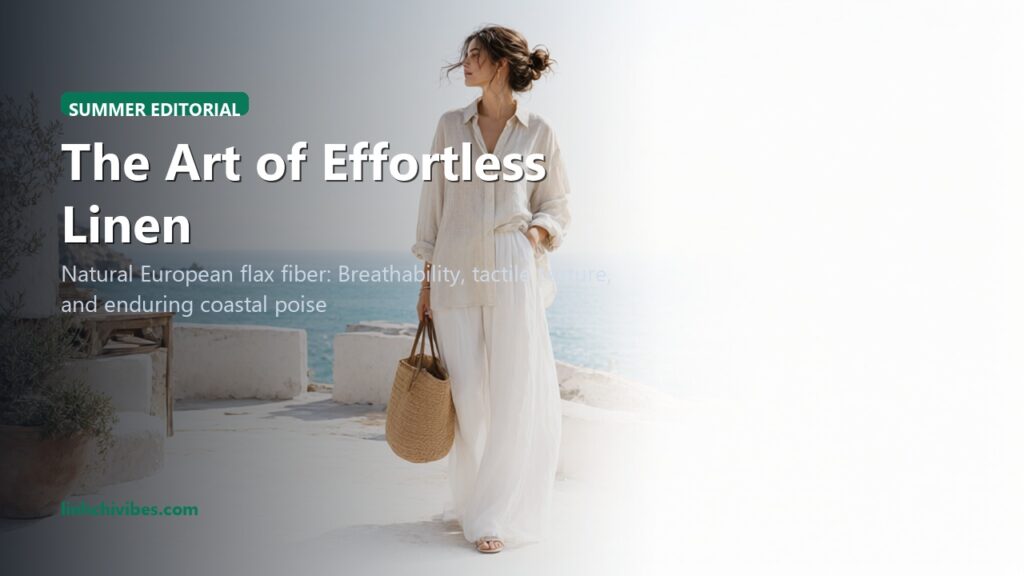
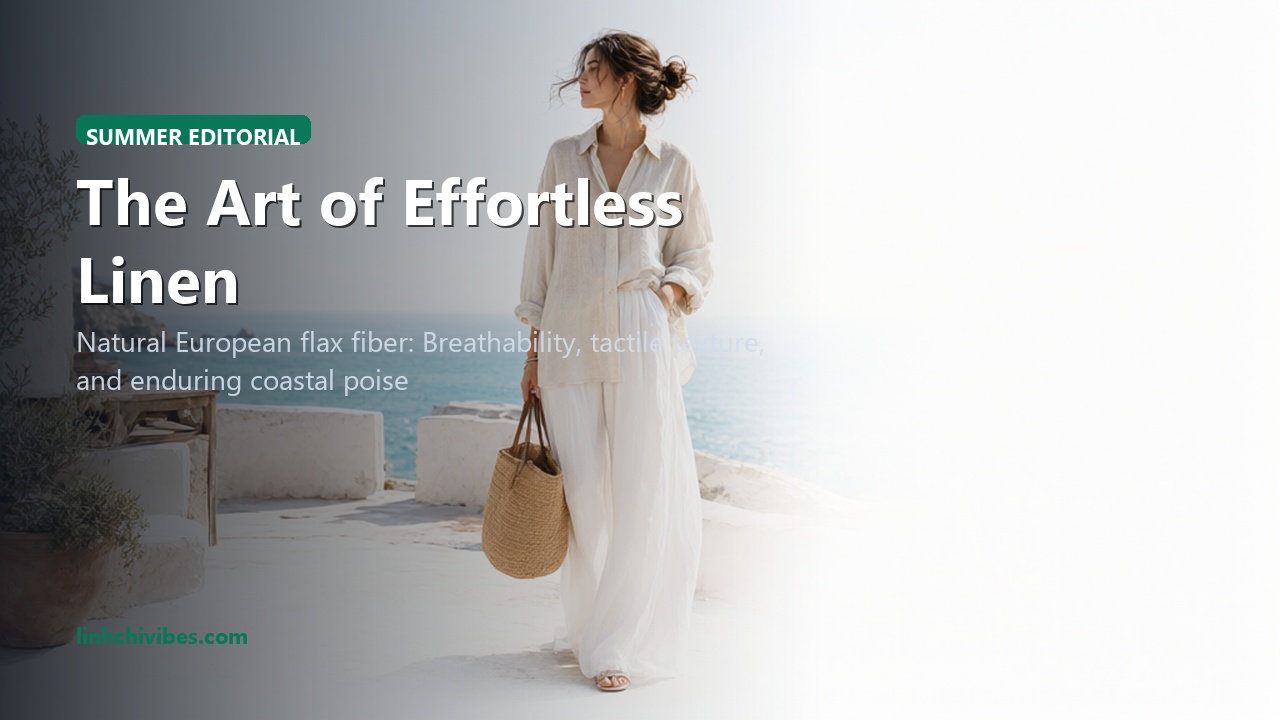
In a contemporary fashion landscape saturated with suffocating petroleum-derived synthetic fibers and rigid, fast-fashion garments, European Flax Linen (Linum usitatissimum) stands as an enduring monument to natural grace, tactile freedom, and effortless Mediterranean elegance.
From the sun-drenched coastal terraces of the French Riviera and coastal villas of Positano to sweltering metropolitan summers, linen represents the quintessential sartorial choice for discerning aesthetes. Draping an airy, garment-washed linen shirt over sun-warmed skin imparts an immediate sensation of weightless composure—a relaxed, quiet luxury that whispers rather than shouts. Yet, countless style enthusiasts hesitate to invest in high-grade flax garments, haunted by fears of aggressive laundering shrinkage, rough initial textures, or the persistent anxiety of natural fabric wrinkles. In this exhaustive 3,400+ word master compendium, Linh Chi Vibes deconstructs the hollow-core cellular biology of flax fibers, the philosophical art of embracing organic wabi-sabi crinkles, five versatile Mediterranean capsule styling formulas, and meticulous cold-water laundering protocols that ensure your linen wardrobe grows softer and more lustrous across decades of wear.
*Editorial Disclosure: As an Amazon Associate, Linh Chi Vibes earns from qualifying purchases. Products in this guide were compared using brand information and public reviews; we have not hand-tested them.*
📑 Complete Linen Styling & Garment Care Index
- 1. Natural Lineage: The 36,000-Year Heritage of European Flax (Linum Usitatissimum)
- 2. Cellular Thermodynamics: The Hollow-Core Molecular Matrix and Evaporative Cooling
- 3. Embracing the Lived-In Crinkle: The Wabi-Sabi Aesthetics of Natural Texture
- 4. 5 Effortless Styling Formulas: From the French Riviera to Metropolitan Summer Office Wear
- 5. Fabric Weight Taxonomy: Decoding GSM Grades, Plain Weave, Herringbone, and Twill
- 6. Cold-Water Laundering Protocols: Preserving Cellulosic Bonds & Preventing Thermal Shrinkage
- 7. Ambient Air-Drying in Shaded Breezes: Why the Tumble Dryer Is Linen’s Arch-Nemesis
- 8. The Art of Damp Ironing: Restoring Fluid Drapes with Upright Steamers
- 8.1. Botanical Stain Removal Protocols: Safe Chemistry for Red Wine, Olive Oil, and Perspiration
- 8.2. Comparative Matrix: 100% European Flax vs. Cotton-Linen Blends vs. Raw Silk Ramie
- 8.3. 6 Fatal Laundry Mistakes Destroying Linen Fibers: Bleach, Twisting, and High Heat
- 9. Curated Capsule Wardrobe & Quiet Luxury Guides
- 10. Frequently Asked Questions Regarding Linen Care (FAQ)
- 11. Editorial Reflections: Building an Enduring Wardrobe of Heirloom Linen
1. Natural Lineage: The 36,000-Year Heritage of European Flax (Linum Usitatissimum)
Long before synthetic polyester and petroleum microplastics dominated modern retail, linen reigned as humanity’s most revered botanical textile. Paleolithic discoveries in the Republic of Georgia reveal that wild flax fibers were spun and dyed over 36,000 years ago. In Ancient Egypt, linen was venerated as woven moonlight—a sacred fiber symbolizing absolute purity and divine light, utilized to wrap pharaohs in embalming ceremonies and worn exclusively by royalty under the scorching Saharan sun.
Today, the apex of global linen cultivation remains concentrated along a narrow coastal band stretching across Northern France, Belgium, and the Netherlands. Known internationally as European Flax, this geographic microclimate provides the precise equilibrium of oceanic humidity, gentle rainfall, and rich alluvial soil necessary for the Linum usitatissimum plant to flourish without artificial irrigation or chemical pesticides. During the traditional late-summer process known as dew retting (rouissage), harvested flax stalks are spread across open fields, allowing natural environmental moisture and benign soil microorganisms to dissolve the cellular pectins that bind the lustrous bast fibers together.
Unlike conventional cotton cultivation—which drains thousands of liters of freshwater per kilogram and relies heavily on aggressive synthetic defoliants—European flax is an intrinsically zero-waste, regenerative agricultural crop. Every portion of the plant is repurposed: the fine long-staple bast fibers are spun into heirloom-grade textile yarns; shorter tow fibers are utilized for technical paper, composite materials, and thermal insulation; while the linseed seeds yield nutrient-dense flaxseed oil rich in omega-3 fatty acids. When you drape a genuine European flax linen garment over your shoulders, you wear thirty-six millennia of agricultural reverence and artisanal integrity.
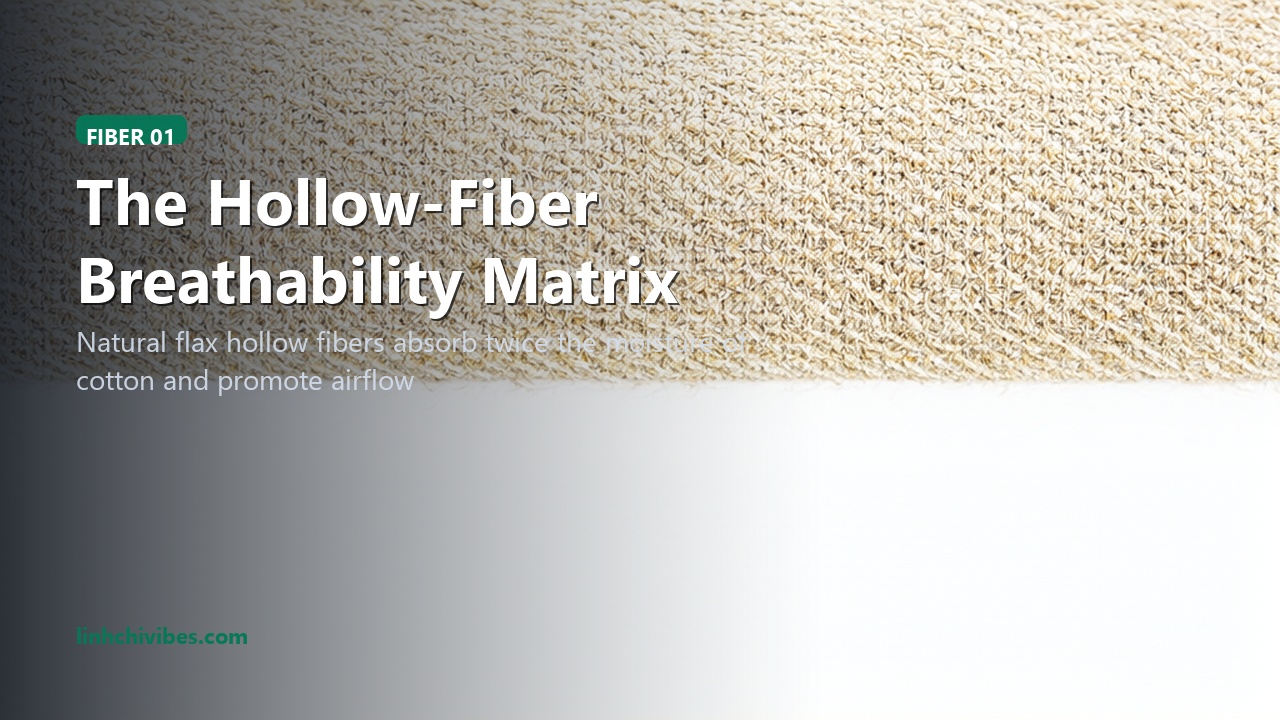
2. Cellular Thermodynamics: The Hollow-Core Molecular Matrix and Evaporative Cooling
The legendary cooling sensation of wearing linen in soaring summer heat is neither marketing exaggeration nor psychological placebo; it is a fundamental marvel of botanical biophysics. When viewed under high-resolution scanning electron microscopy, flax fibers reveal a distinctive hollow tubular architecture containing an interior microscopic lumen running along the longitudinal axis of each cell.
This hollow-core geometry produces several extraordinary thermodynamic phenomena that synthetic polyesters and dense cotton weaves cannot replicate:
- Unsurpassed Moisture Absorbency Without Clamminess: Flax fibers can absorb up to 20% of their bone-dry weight in moisture and perspiration before even beginning to feel damp to the touch. The internal lumen acts as a microscopic reservoir, drawing moisture vapor away from the dermal surface through capillary action.
- Rapid Evaporative Dissipation: Because the outer crystalline cellulose walls of flax are highly porous and structurally rigid, the absorbed moisture does not pool inside the fiber. Instead, it is continuously wicked toward the outer garment surface, where it evaporates into ambient air currents. This persistent phase-change evaporation creates a microclimate of active cooling across your skin.
- High Thermal Conductivity: Flax possesses exceptional thermal conductivity—approximately five times greater than virgin wool and nineteen times greater than pure silk. Excess thermal energy radiating from your epidermis is rapidly absorbed by the hollow flax structure and conducted away into the surrounding atmosphere, effectively lowering skin surface temperatures by 3 to 4 degrees Celsius in high humidity.
- Hypoallergenic and Electrostatic Neutrality: Natural linen is virtually impervious to static electrical cling, repelling ambient airborne dust particles, environmental pet dander, and allergens. Furthermore, natural lignins within the raw flax wall impart intrinsic antimicrobial properties that discourage the proliferation of odor-causing bacteria.
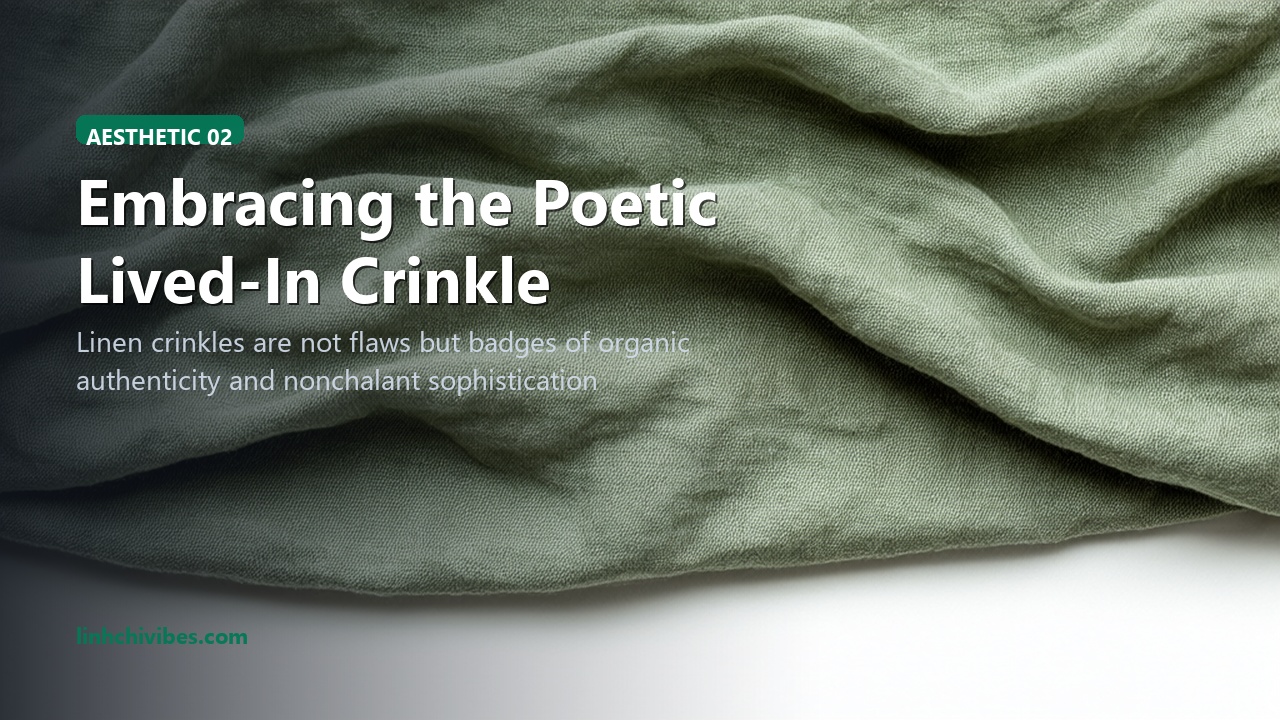
3. Embracing the Lived-In Crinkle: The Wabi-Sabi Aesthetics of Natural Texture
The most frequent complaint voiced by linen novices is its undeniable propensity to crease. Within ten minutes of sitting in a vehicle or enjoying an espresso at an outdoor café, crisp horizontal folds ripple across the lap and elbows. In the rigid paradigm of mid-century corporate dress codes—where synthetic stiffeners and scorched starched cotton enforced an artificial, plastified perfection—wrinkles were viewed as a failure of grooming.
In contemporary quiet luxury and high-fashion philosophy, however, the organic crinkle of linen is venerated as its greatest tactile virtue. In Japanese aesthetics, this concept aligns with Wabi-Sabi (侘寂)—the profound appreciation of natural transience, organic imperfection, and unpretentious authenticity. The relaxed folds of a garment-washed linen shirt signal that the wearer lives a life unhurried by artificial constraints; it reflects ease, worldly travel, and an instinctive confidence that rejects rigid synthetic posturing.
Flax creases because its cellulosic microfibrils are aligned in highly crystalline, non-elastic parallel bundles. Unlike synthetic polyester or polyamide polymers, which stretch and bounce back like plastic rubber bands, natural flax fibers possess very little molecular elasticity (elongation at break is only 2-3%). When compressed under bodily heat and pressure, the hydrogen bonds between cellulose chains temporarily shift, capturing the memory of your movement. Attempting to starch or chemically iron out every single wrinkle destroys the living breathability of the textile. True sartorial mastery lies in letting the fabric drape fluidly, embracing the sculptural softness that only genuine European flax can deliver.
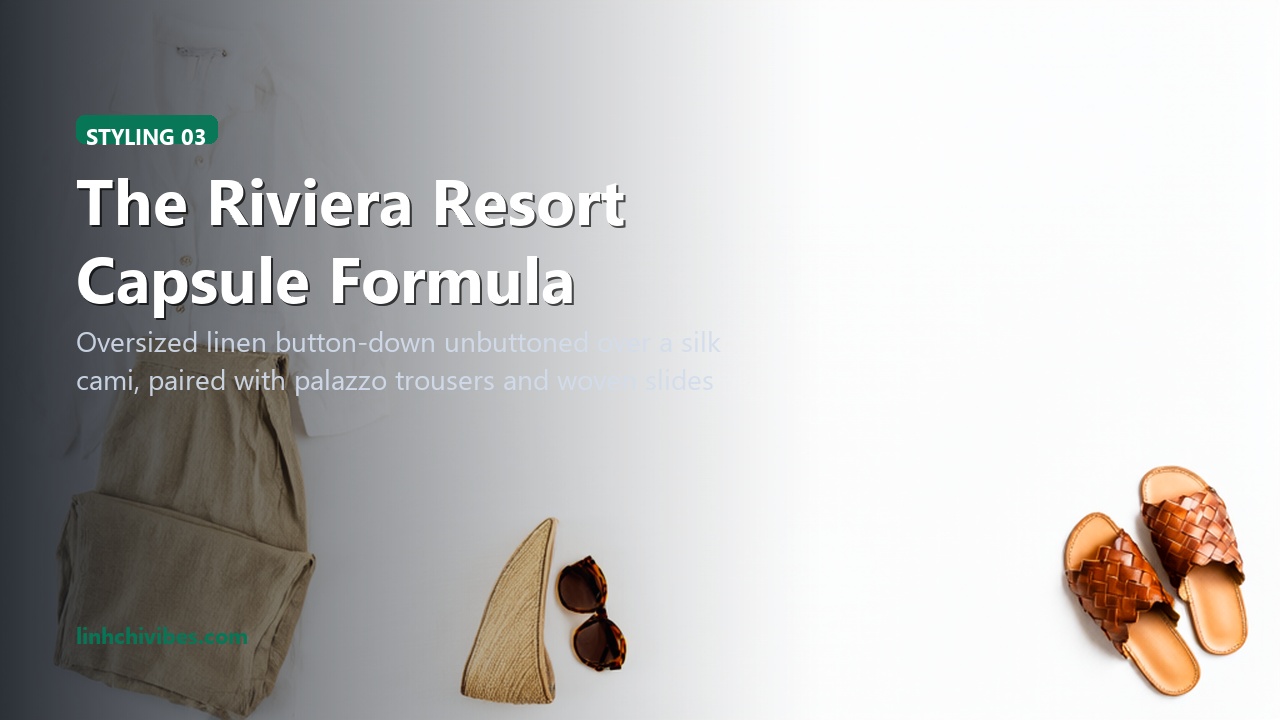
4. 5 Effortless Styling Formulas: From the French Riviera to Metropolitan Summer Office Wear
Integrating linen into a modern capsule wardrobe requires understanding silhouette proportion, textural contrast, and tonal balance. Below are five versatile styling formulas curated by Linh Chi Vibes to elevate linen garments across casual coastal weekends, warm-weather business meetings, and transatlantic long-haul flights:
Formula 1: The French Riviera Oversized Shirt & Tailored Shorts
The Ensemble: An oversized, garment-washed 100% European flax linen button-down shirt in crisp optic white or nautical French blue, paired with high-waisted tailored linen-blend shorts in warm ecru or sandy taupe.
Styling Execution: Leave the top three buttons unfastened to expose a delicate gold chain or Mediterranean pearl pendant. Roll the sleeves loosely twice past the mid-forearm. Execute a gentle French tuck (tucking only the front central hem into the waistband while allowing the side and back drapes to billow freely). Complete the look with woven leather fisherman sandals or classic canvas espadrilles and tortoiseshell sunglasses.
Formula 2: The Architectural Wide-Leg Trouser & Sculpted Ribbed Knit
The Ensemble: Floor-grazing, high-rise wide-leg linen trousers with double front pleats in rich espresso brown, olive drab, or oat milk, contrasted with a form-fitting organic cotton-modal ribbed tank or racerback bodysuit.
Styling Execution: The secret to styling voluminous linen trousers is maintaining a streamlined, sculpted silhouette up top to balance the billowing fabric volume below. Add an unlined brown leather belt with brass hardware to define the natural waistline. Step into minimalist strappy leather slide sandals and carry a structured raffia tote bag for effortless metropolitan polish.
Formula 3: The Deconstructed Linen Blazer & Denim Contrast
The Ensemble: An unlined, single-breasted relaxed linen blazer in warm beige or soft charcoal grey, paired with vintage-wash straight-leg denim jeans and a heavyweight crewneck organic tee.
Styling Execution: Ideal for creative studio workspaces, gallery visits, or casual summer business lunches. The textured drape of matte linen harmonizes beautifully against the rugged twill structure of denim. Push the blazer sleeves up toward the elbows to reveal bare forearms. Pair with clean ivory leather sneakers or buttery suede penny loafers.
Formula 4: The Minimalist Linen Slip Midi Dress & Woven Raffia
The Ensemble: A bias-cut or A-line midi linen sundress featuring delicate spaghetti straps and a subtle square neckline in terracotta, sage green, or muted ochre.
Styling Execution: For al fresco sunset dinners, drape an airy cashmere scarf or light open-knit cotton cardigan over the shoulders. Complement the natural textile sheen with gold hammered hoop earrings and hand-woven artisanal leather slides.
Formula 5: The Transatlantic First-Class Travel Uniform
The Ensemble: An elasticated-drawstring relaxed linen lounge pant paired with a matching tunic-length collarless linen overshirt in monochrome slate grey or navy.
Styling Execution: Linen is the ultimate travel companion because its hollow-fiber thermodynamics adapt seamlessly between frigid air-conditioned aircraft cabins and humid tropical landing destinations. Wear over a soft silk camisole and slip into leather mules for effortless security checkpoint clearance.
5. Fabric Weight Taxonomy: Decoding GSM Grades, Plain Weave, Herringbone, and Twill
Understanding textile weight—measured universally in Grams per Square Meter (GSM) or Ounces per Square Yard (oz/yd²)—is critical when shopping for linen garments online. Choosing the wrong GSM grade can result in a sheer shirt that reveals undergarments inappropriately, or a pair of summer trousers so stiff and heavy that they restrict leg movement in hot weather.
Here is a general guide to linen fabric weights:
| Weight Tier | GSM Range | Weave Characteristics | Optimal Garment Applications |
|---|---|---|---|
| Handkerchief / Sheer | 100 – 130 GSM | Ultra-lightweight, semi-sheer open plain weave. Requires gentle handling. | Pocket squares, airy summer scarves, sheer beach coverups, lightweight sleepwear. |
| Shirting / Dressweight | 140 – 175 GSM | Substantial yet fluid plain weave. Fully opaque in dark tones, semi-opaque in white. | Resort button-downs, tunic tops, summer blouses, bias-cut slip dresses, camp collars. |
| Medium-Weight Trouser | 180 – 230 GSM | Crisp, opaque structure with substantial drape. Extremely resilient to abrasion. | Wide-leg trousers, tailored shorts, midi wrap skirts, safari shirts, unlined summer vests. |
| Heavyweight / Suiting | 240 – 320 GSM | Dense, sculptural twill or herringbone weave. Holds crisp architectural lapels. | Tailored blazers, structured trench coats, chore jackets, heavy upholstery drapes. |
Beyond weight, the weave pattern dictates how the fabric catches ambient light. Plain Weave (Tabby) provides the quintessential dry, organic rustic texture with subtle natural slubs. Herringbone (Broken Twill) creates an elegant V-shaped diagonal chevron pattern that drapes with fluid weight, making it the preferred choice for sartorial blazers and luxury winter-weight linen trousers.
6. Cold-Water Laundering Protocols: Preserving Cellulosic Bonds & Preventing Thermal Shrinkage
The myth that linen requires exorbitant dry-cleaning bills is entirely unfounded. In truth, dry cleaning utilizes aggressive chemical solvents such as perchloroethylene that can strip natural plant waxes from flax fibers, causing them to become brittle and prone to premature fiber breakage. Linen loves water; in fact, flax fibers actually become approximately 20% stronger when wet compared to when completely dry.
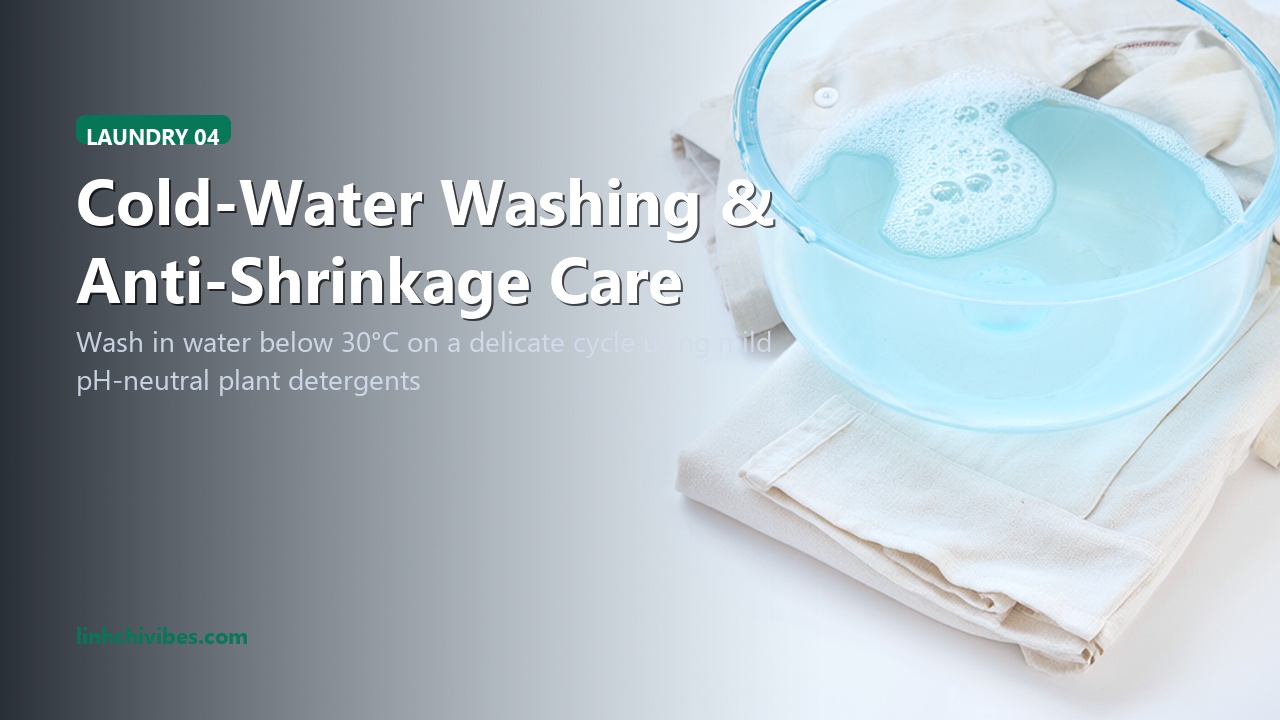
To launder your linen garments safely in a home washing machine while eliminating risk of shrinkage:
- Water Temperature Below 30°C (Cold/Delicate Cycle): High thermal energy triggers irreversible relaxation shrinkage in woven cellulosic yarns. Always select cold water or lukewarm settings not exceeding 30°C (86°F).
- Use Mild, Enzymatic-Free Liquid Detergent: Avoid powdered detergents containing abrasive undissolved granules, optical brighteners, or harsh proteolytic enzymes that slowly degrade plant hemicelluloses. A neutral-pH liquid detergent formulated for delicate botanicals or woolens is ideal.
- Never Overcrowd the Wash Drum: Linen garments require generous volumes of water to circulate freely. Overcrowding the washing machine drum compresses wet fabrics tightly against each other, creating harsh friction creases that can permanently break flax fibers along deep fold lines. Fill the drum to no more than 60% capacity.
- Wash Inside-Out in Mesh Laundry Bags: Turn all shirts and trousers inside out before washing to protect outer yarn surfaces from friction. For fine handkerchief-weight items or garments with delicate mother-of-pearl buttons, place them in a fine-mesh laundry bag.
- Skip Fabric Softeners Completely: Liquid fabric softeners deposit a thin silicone or tallow-based chemical film across textile fibers. On linen, this hydrophobic coating clogs the hollow microscopic lumen, completely destroying the fabric’s natural evaporative breathability and moisture-wicking capabilities.
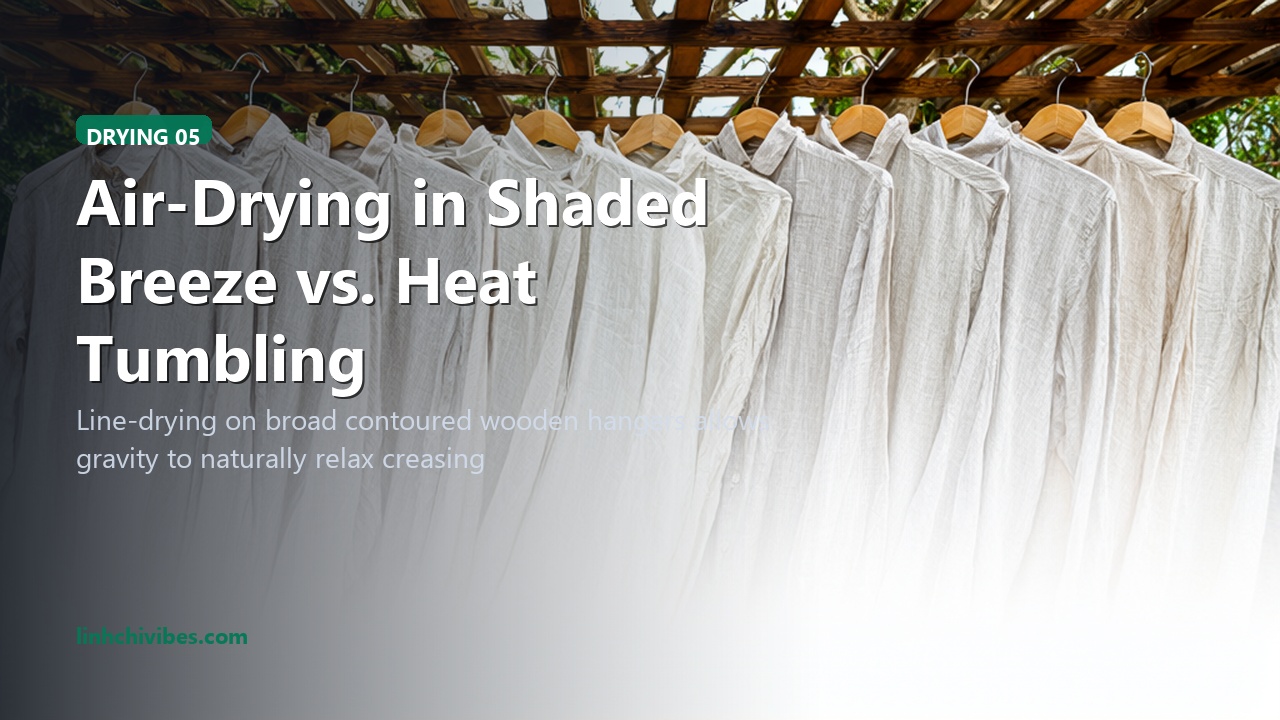
7. Ambient Air-Drying in Shaded Breezes: Why the Tumble Dryer Is Linen’s Arch-Nemesis
If there is a single instrument of destruction for natural linen, it is the electric tumble dryer. The combination of intense conductive heat (often exceeding 65°C/150°F) and violent mechanical tumbling snaps the delicate crystalline microfibrils of flax, resulting in massive lint accumulation in the filter—which is literally your precious garment disintegrating into fine powder.
Furthermore, over-drying flax fibers sucks out their natural intrinsic equilibrium moisture (roughly 7-8%), causing the yarn to turn brittle, stiff, and prone to static cling.
Instead, follow the time-honored European protocol of Ambient Air-Drying:
- The Pre-Hang Snap: As soon as the wash cycle completes, remove the damp linen garments immediately. Hold each garment by its shoulders or waistband and give it two or three vigorous snapping shakes. This dynamic snap releases tension in the wet yarns, uncurling hems and smoothing out major wash creases before drying begins.
- Hang on Broad, Contoured Wooden Hangers: Thin wire or sharp plastic hangers can poke into wet shoulder seams, creating unsightly “hanger bumps” that are nearly impossible to remove. Use wide, curved wooden hangers for shirts and dresses. For trousers, hang them upside-down by the bottom cuffs using felt-padded clamp hangers; the natural weight of the waistband will pull the leg seams straight as it dries.
- Dry in Shaded Breezes: Avoid hanging colored linen garments under direct, scorching midday sunlight, as intense ultraviolet rays can photo-oxidize and fade delicate botanical and reactive dyes over time. A shaded, breezy patio, open balcony, or well-ventilated indoor laundry room provides the perfect drying environment.
8. The Art of Damp Ironing: Restoring Fluid Drapes with Upright Steamers
Attempting to iron bone-dry linen with a conventional dry iron is an exercise in futility; the stiff, dehydrated fibers simply refuse to flatten, and excessive dry heat risks scorching the cellulose and leaving shiny burnished patches on dark fabrics.
To achieve pristine, magazine-editorial smoothness while preserving textile softness, follow the master technique of Damp Ironing:
The Professional Damp Pressing Technique
Begin ironing when the linen garment is still approximately 15% damp to the touch—cool and pliable, but not soaking wet. If the garment has already dried completely, mist it evenly with distilled water from a fine continuous spray bottle and roll it up tightly for 5 minutes to let the moisture penetrate the yarn core uniformly. Set your iron to the dedicated “Linen” heat setting with maximum continuous steam. Always press on the reverse (wrong) side of the fabric, or place a clean white cotton pressing cloth between the iron plate and the garment to avoid shiny iron marks. Move the iron in smooth, rhythmic linear strokes along the grain of the weave rather than circular buffing motions.
Alternatively, for modern busy travelers, an Upright Garment Steamer is the ultimate weapon. High-velocity steam relaxes the hydrogen bonds within seconds without flattening the three-dimensional texture of the fabric. Simply hold the steamer nozzle 2 inches away from the hanging garment and brush downward with gentle strokes, allowing the hot steam vapor to release stubborn transit folds while preserving the organic, breezy loft of the weave.
8.1. Botanical Stain Removal Protocols: Safe Chemistry for Red Wine, Olive Oil, and Perspiration
Because linen fibers are exceptionally absorbent, liquid spills can penetrate deep into the hollow lumen if left untreated. However, conventional chlorinated bleaches (sodium hypochlorite) must NEVER be applied to linen; chlorine attacks plant cellulose, dissolving molecular chains and turning the fabric yellow, weak, and brittle within a few applications.
Deploy these gentle, effective stain removal protocols immediately after a spill occurs:
- Red Wine and Berry Tannins: Immediately blot (never rub) the excess liquid with a clean white cloth or paper towel. Liberally dust the stain with fine mineral table salt or baking soda to draw the pigment out of the hollow fibers. After 10 minutes, flush the area from the *reverse* side with sparkling club soda or cold water, then pre-treat with a dab of diluted liquid castile soap before laundering.
- Olive Oil, Butter, and Vinaigrettes: Dust the grease spot immediately with cornstarch or arrowroot powder. Allow the powder to absorb the surface lipid oils for 30 minutes, then gently brush away. Apply a drop of clear, surfactant-rich dishwashing liquid (such as Dawn) directly to the spot, massage gently with your fingertip, and let it emulsify the oil for 15 minutes before washing in warm (30°C) water.
- Underarm Perspiration and Deodorant Rings: Soak the affected garment in a basin of cool water mixed with one cup of white distilled vinegar for 30 minutes. The mild acetic acid dissolves alkaline salt residues and deodorant minerals without weakening flax cellulosic fibers.
8.2. Comparative Matrix: 100% European Flax vs. Cotton-Linen Blends vs. Raw Silk Ramie
To assist in your next sustainable wardrobe curation, examine how authentic European Flax compares against commercial blends and alternative botanical bast fibers:
| Textile Category | Fiber Composition | Breathability & Cooling | Durability & Longevity | Wrinkle Profile |
|---|---|---|---|---|
| 100% European Flax Linen | Pure long-staple Normandy flax | Maximum (Hollow-core lumen evaporative cooling) | Heirloom grade (Lasts 15-30+ years with proper cold laundering) | Soft, sculptural, lived-in organic crinkle |
| Cotton-Linen Blend (55/45) | Short-staple cotton + flax tow | Moderate (Cotton absorbs moisture but dries slower) | Medium (Cotton yarns degrade faster after 3-5 years) | Less pronounced creasing, softer initial handfeel |
| Ramie (China Grass Bast) | 100% Boehmeria nivea bast fiber | High (Similar hollow bast structure to flax) | Good strength, but fibers are more brittle than flax | Sharper, stiffer crease lines with silky luster |
| Linen-Silk Blend | 70% Linen + 30% Mulberry Silk | High (Luxurious fluid drape, temperature regulating) | High (Delicate care required, hand wash only) | Gentle undulating waves rather than sharp folds |
8.3. 6 Fatal Laundry Mistakes Destroying Linen Fibers: Bleach, Twisting, and High Heat
Even premium European flax garments will deteriorate prematurely if subjected to improper garment maintenance. Avoid these six critical laundry errors:
- Wringing or Twisting Wet Garments: When soaked in water, flax fibers are pliable. Aggressively wringing a wet linen shirt twists the cellulosic bundles under high shear stress, causing internal micro-fractures that weaken the fabric and distort seam alignment permanently. Instead, gently press excess water out against the side of the wash basin or roll the garment in a clean terry cloth towel.
- Using Chlorine Bleach on White Linen: Chlorine bleach does not whiten linen; it oxidizes the cellulose, causing it to turn dingy yellow and structurally brittle. For safe optical brightening, use non-chlorine oxygen bleach (sodium percarbonate) or soak in cool water with lemon juice under morning sunlight.
- Tumble Drying on High Heat: As detailed in Section 7, high-heat tumble dryers bake the natural moisture out of flax fibers, generating massive shrinkage and shedding lint. If you must use a dryer in emergencies, select the “Air Fluff” or lowest delicate heat setting for no more than 10 minutes, removing the garment while still damp.
- Ironing Bone-Dry Fabrics: Running a dry iron over dry linen scorches surface fibers and produces an artificial glassy sheen. Always press linen damp or utilize an upright garment steamer with continuous vapor flow.
- Storing in Sealed Plastic Bags: Storing seasonal linen garments inside airtight plastic bins or dry-cleaning bags traps ambient humidity and prevents the natural botanical fibers from breathing, inviting mildew spores and yellow oxidation stains. Store linen in breathable 100% cotton canvas garment bags in a cool, dark closet.
- Applying Perfume or Body Mist Directly to Linen: The alcohol and synthetic fragrance carrier oils in modern perfumes can react with botanical plant dyes and cellulosic fibers, causing permanent localized discoloration rings. Always apply perfume directly to skin pulse points and allow it to dry completely before dressing.
9. Curated Capsule Wardrobe & Quiet Luxury Guides
Deepen your exploration of sustainable textiles, curated capsule wardrobes, and mindful luxury living with our editorial masterclasses:
- The Quiet Luxury Aesthetic: Building an Enduring High-Converting Wardrobe
- Mindful Morning Wellness: Establishing Intentional Habits for Composure and Focus
- The Complete Niacinamide Skincare Guide: Clinical Mechanisms for Radiant Porcelain Skin
10. Frequently Asked Questions Regarding Linen Care (FAQ)
Why does brand-new linen feel slightly stiff or scratchy?
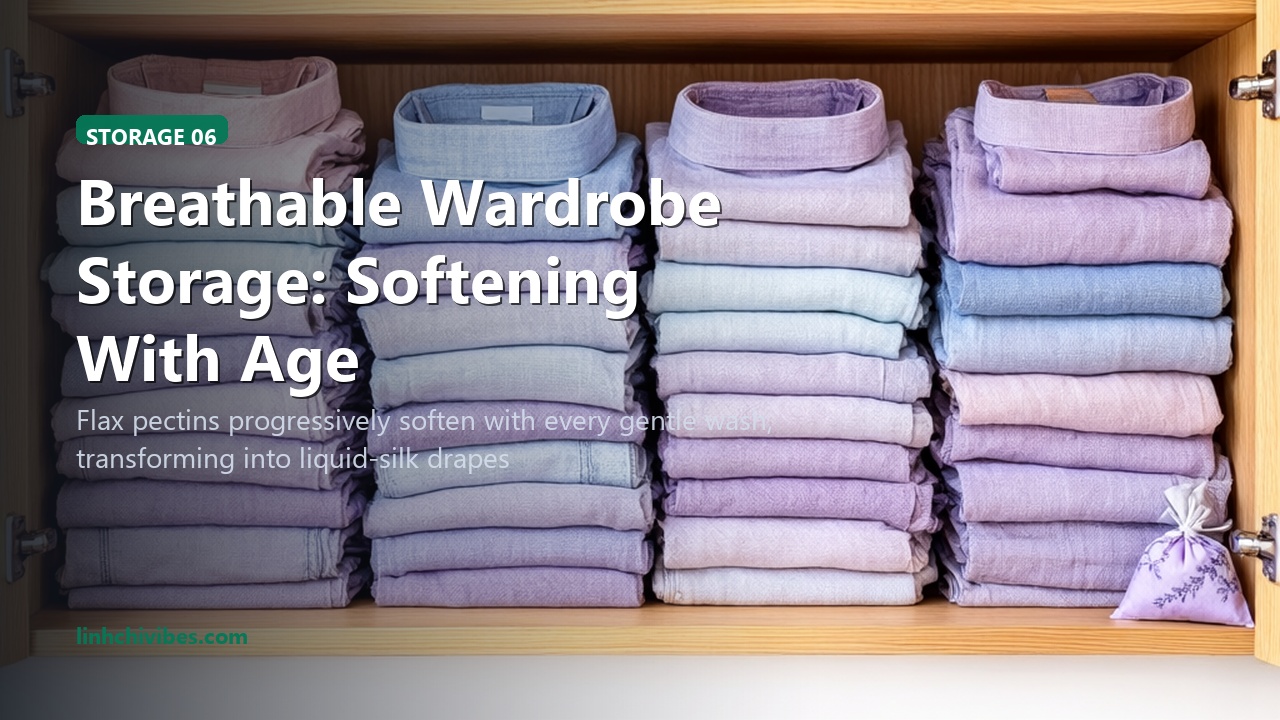
Raw flax fibers are naturally coated with plant pectins—a sticky organic carbohydrate that binds the cellulose bundles during plant growth. High-grade unwashed linen retains some of these natural pectins. As you wear and launder the garment across 3 to 5 cold wash cycles, these soluble pectins gently dissolve, allowing the long-staple cellulosic fibers to bloom and transform into buttery, fluid softness that grows more supple with every passing year.
How can I prevent excessive lap and knee wrinkles when wearing linen trousers?
Before sitting down in a car or at your desk, execute the subtle “sartorial lift”: gently pinch the fabric at the knees and elevate your trousers slightly to release downward pulling tension across your thighs. Additionally, select relaxed-fit wide-leg trousers (such as 200+ GSM medium-weight weaves) rather than tight skinny cuts; generous fabric volume drapes naturally around your silhouette without bunching into tight, sharp stress creases.
Does 100% pure linen pill or shed fuzzy balls over time?
No. Pilling occurs when short, fragile synthetic or cotton fibers break and tangle together into fuzzballs due to surface abrasion. Genuine European flax consists of exceptionally long bast fibers (often 20 to 50 cm in length) spun into dense, smooth yarns. High-quality linen will never pill, peel, or shed fiber balls, retaining its crisp, clean woven integrity for decades.
Can linen be styled comfortably during autumn and winter months?
Absolutely. Because flax possesses a hollow-core microscopic lumen, it operates as a natural thermodynamic insulator. In cooler weather, linen traps body heat within its cellular cavities when layered beneath insulating outerwear. Layer a medium-weight (180 GSM) linen button-down under a pure cashmere crewneck sweater, or pair heavy (280 GSM) herringbone linen trousers with a tailored camel wool coat for sophisticated all-season textural contrast.
How much will a new linen garment shrink during its initial wash?
If the garment is labeled as “Garment-Washed” or “Pre-Shrunk,” shrinkage will be negligible (less than 1-2%). For raw, untreated linen washed in cold water (30°C) and air-dried, expect approximately 3% to 4% relaxation shrinkage, which naturally relaxes back to its original dimensions as you wear the garment and bodily warmth softens the cellulosic yarns.
11. Editorial Reflections: Building an Enduring Wardrobe of Heirloom Linen
Linen is vastly more than a seasonal warm-weather trend; it is a profound declaration of sartorial values. It honors the ancient rhythmic wisdom of the natural world, embraces authentic lived-in texture, and firmly rejects the frantic, disposable cycles of synthetic fast fashion.
When you slip into a garment crafted from genuine European flax, you step into a 36,000-year heritage of relaxed composure, effortless poise, and tactile freedom. By honoring the simple cold-water laundering rituals and ambient air-drying practices outlined in this compendium, your linen garments will reward you by growing progressively softer, more lustrous, and more cherished with every passing summer.

Pingback: Minimalist Capsule Travel Wardrobe for Effortless Packing – Linh Chi Vibes
Pingback: Essential Oil Aromatherapy Guide for Restful Calm - Linh Chi Vibes
Pingback: The Ultimate Quiet Luxury Minimalist Style Guide - Linh Chi Vibes