
In an era dominated by high-potency chemical peels, concentrated retinoids, and aggressive resurfacing acids, our cutaneous barrier is facing an unprecedented ecological crisis. If exfoliating actives represent the attacking vanguard of skincare, Ceramides constitute the ultimate defensive fortress that keeps our biological architecture intact.
Far from being a mere inert emollient, ceramides make up a staggering 50% of the intercellular lipid matrix in the outermost stratum corneum. When this vital lipid mortar is depleted, transepidermal water loss (TEWL) accelerates exponentially, precipitating systemic erythema, acute stinging, and chronic barrier breakdown. In this definitive 3,600+ word dermatological guide, Linh Chi Vibes deconstructs the biophysical architecture of ceramides, the golden 3:1:1 equimolar ratio, and an evidence-based 14-day barrier resuscitation protocol to restore resilient, dewy suppleness to compromised complexions.
📑 Contents of the Complete Ceramide Masterclass
- 1. Biochemical Nature: What Are Ceramides and Why Do They Comprise 50% of Lipids?
- 2. The Brick and Mortar Paradigm: Anatomy of the Stratum Corneum Lamellar Bilayer
- 3. Transepidermal Water Loss (TEWL) and Clinical Signs of a Breached Barrier
- 4. Ceramide Taxonomy: Deconstructing Ceramide NP, AP, EOP, and Phytosphingosine
- 5. The Golden Equimolar Ratio (3:1:1): 50% Ceramides, 25% Cholesterol, 15% Free Fatty Acids
- 6. The 14-Day Barrier Rescue Protocol for Over-Exfoliated or Sensitized Skin
- 7. Layering Synergies: Pairing Ceramides with Niacinamide, Hyaluronic Acid, and Peptides
- 8. Critical Formulatory Pitfalls When Choosing Barrier Creams
- 9. Curated Editorial Skincare Guides in This Series
- 10. Frequently Asked Questions (FAQ)
- 11. Concluding Perspective from Linh Chi Vibes
1. Biochemical Nature: What Are Ceramides?
From an organic biochemistry perspective, ceramides belong to the sphingolipid family, composed of a sphingoid base backbone covalently tethered to a fatty acid chain via an amide bond. Far from functioning as inert grease, ceramides are active bioactive signaling molecules that orchestrate cellular differentiation, regulate epidermal homeostasis, and modulate programmed apoptosis within keratinocytes.
Within the stratum corneum, the extracellular lipid matrix maintains an exacting, evolutionarily conserved stoichiometric balance:
- Ceramides comprise approximately 50% of the total lipid mass, providing structural stability and forming dense lamellar gel phases.
- Cholesterol accounts for roughly 25%, modulating fluidity and maintaining membrane pliability across fluctuating environmental temperatures.
- Free Fatty Acids make up 15%, primarily long-chain saturated species (such as palmitic, stearic, and linoleic acids) that establish the antimicrobial acid mantle.
- Trace functional lipids (including cholesterol sulfate and phospholipids) constitute the remaining 10%.
Chronological aging, environmental desiccation, and surfactant misuse precipitate a catastrophic drop in endogenous ceramide levels—frequently plunging by 40% to 60% past the age of thirty. When these molecular rivets degrade, the lamellar lattice fractures, opening microscopic fissures through which vital hydration evaporates and airborne xenobiotics penetrate unchecked.
2. The Brick and Mortar Paradigm of the Epidermis
To conceptualize the critical function of ceramides, dermatological science relies universally upon Dr. Peter Elias’s seminal “Brick and Mortar” model:
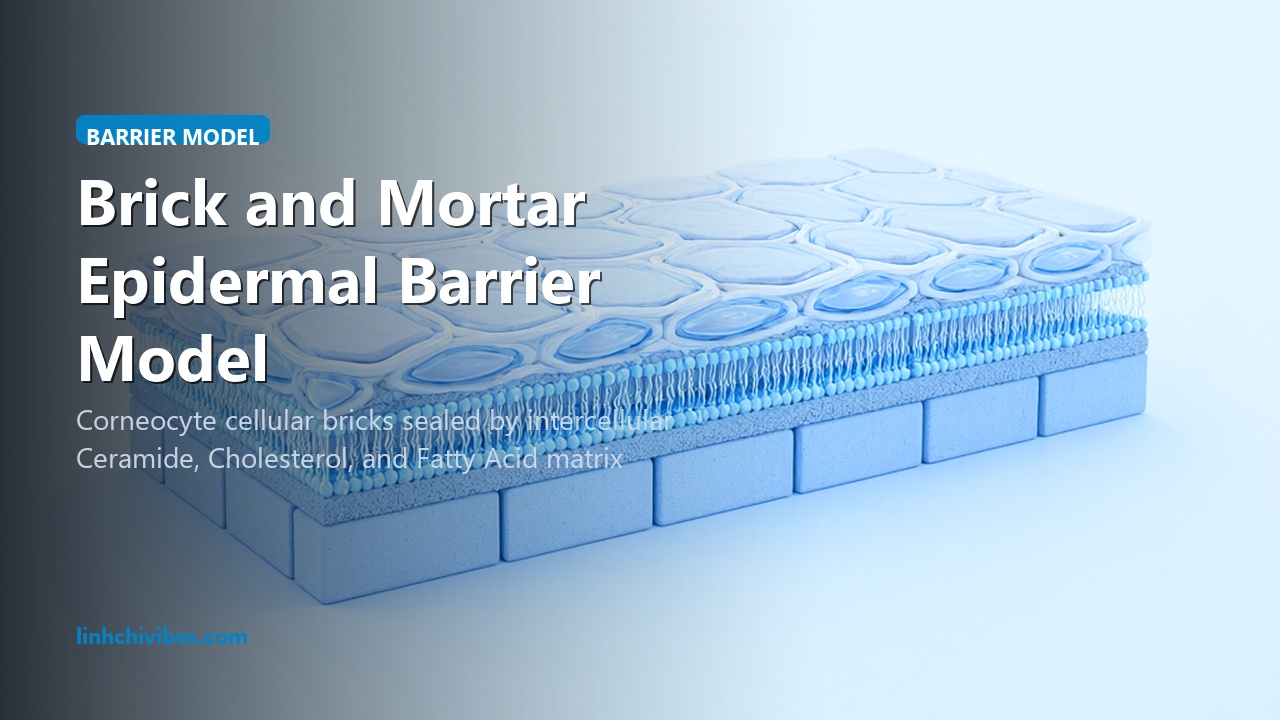
In this biological architecture:
- The Bricks (Corneocytes): Anucleated, protein-packed cellular envelopes stacked 15 to 20 layers deep. Each corneocyte is fortified with cross-linked keratin filaments and rich reserves of Natural Moisturizing Factor (NMF).
- The Mortar (Intercellular Lipid Lamellae): The continuous sheets of crystalline ceramide-cholesterol-fatty acid bilayers wrapping around each cellular brick. This lipid cement functions as a waterproof, pathogen-impermeable seal.
A fortress wall is only as impenetrable as its mortar. You may flood the skin with copious hydrophilic humectants, but if the ceramide mortar is fractured, subterranean moisture will dissipate within minutes. For a deeper understanding of how cellular precursors stimulate endogenous lipids, explore our complete guide to Niacinamide for glass skin resilience.
3. Transepidermal Water Loss (TEWL) Dynamics
Transepidermal Water Loss (TEWL) measures the quantitative vapor flux diffusing passively from the dermis through the stratum corneum into the atmosphere. Under physiological homeostasis, TEWL remains low and controlled.
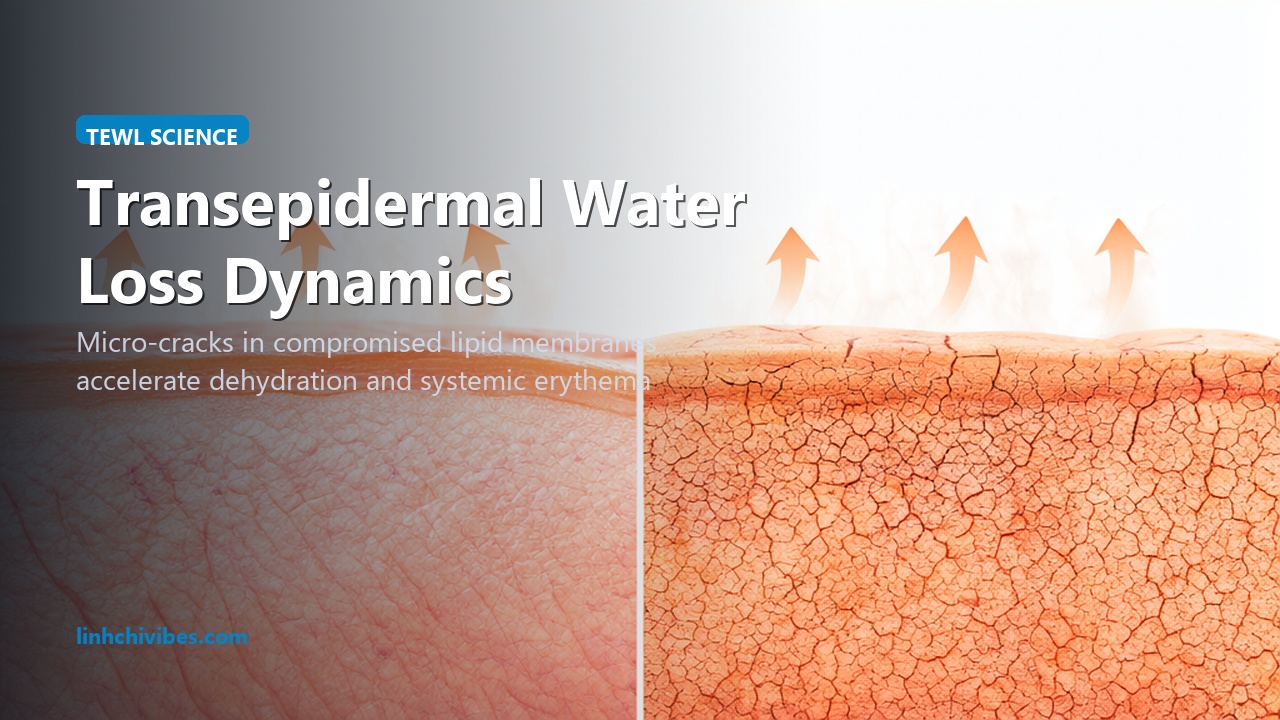
🚨 Five Cardinal Indicators of a Fractured Lipid Barrier:
- Immediate burning or stinging upon the application of bland, unfragranced creams or plain water.
- Paradoxical oiliness: Superficial tightness and flaking accompanied by a sudden surge in midday sebum production.
- Persistent facial erythema and chronic flushing triggered by minor ambient temperature shifts.
- Widespread micro-comedones and papules caused by bacterial translocation through ruptured lipid bilayers.
- Textural roughness, crepey surface micro-fissures, and accentuated expression lines resulting from cellular desiccation.
When multiple symptoms manifest, immediately suspend all chemical exfoliants. Continuing to apply AHA or BHA peeling acids to a compromised lipid matrix inevitably precipitates severe irritant contact dermatitis.
4. Ceramide Taxonomy: NP, AP, EOP, and Phytosphingosine
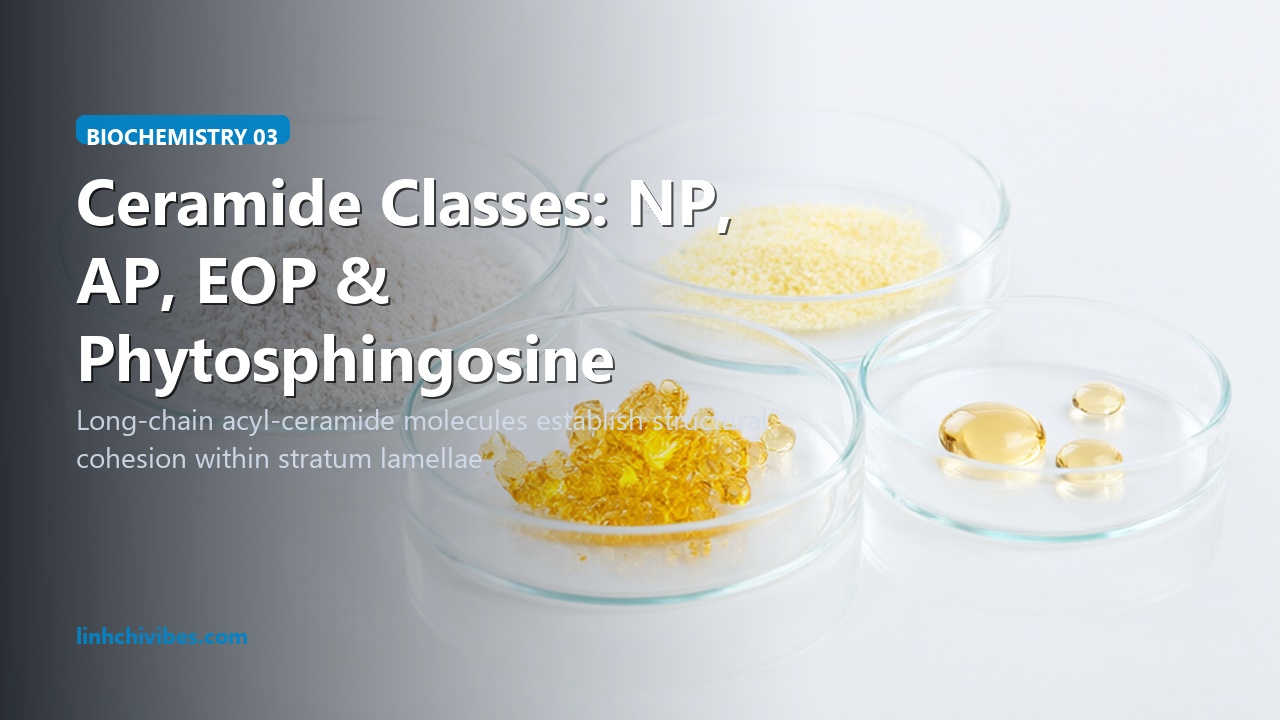
Scrutinizing cosmetic ingredient decks reveals specific alphanumeric designations. These denote precise structural configurations under the International Nomenclature of Cosmetic Ingredients (INCI):
| INCI Nomenclature | Legacy Designation | Dermatological Role & Architecture |
|---|---|---|
| Ceramide NP | Ceramide 3 | Non-hydroxy fatty acid linked to phytosphingosine; establishes baseline lamellar barrier cohesion and halts acute TEWL. |
| Ceramide AP | Ceramide 6-II | Alpha-hydroxy fatty acid with phytosphingosine; regulates natural desquamation and smooths cellular texture. |
| Ceramide EOP | Ceramide 1 | Esterified omega-hydroxy acyl-ceramide; features an exceptionally long carbon tail that cross-rivets adjacent lamellar sheets. |
| Phytosphingosine | Lipid Precursor | Natural antimicrobial sphingoid base that suppresses Cutibacterium acnes while supplying raw building blocks for de novo synthesis. |
An efficacious formulation rarely relies on an isolated ceramide isomer. The synergistic triad of Ceramide NP + AP + EOP anchored by Phytosphingosine mirrors human biology, simultaneously sealing micro-cracks and locking intercellular sheets together.
5. The Golden Equimolar Ratio (3:1:1)
One of the most consequential discoveries in epidermal biology was documented by dermatological researchers at the University of California, San Francisco (UCSF): Lipid recovery is strictly stoichiometry-dependent.
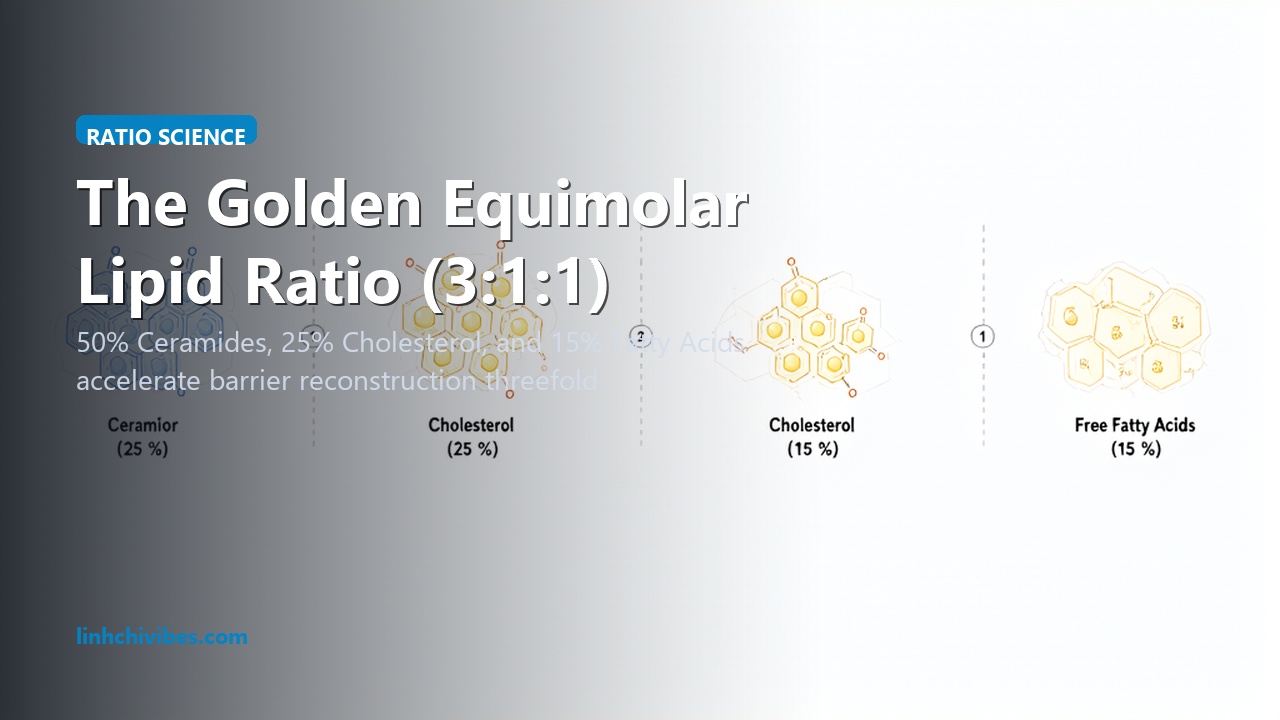
Applying excessive isolated ceramides or disproportional cholesterol can actually paradoxically delay barrier repair. Conversely, when physiologic lipids are compounded in an equimolar 3:1:1 ratio (50% Ceramides, 25% Cholesterol, 15% Free Fatty Acids):
- Molecules spontaneously self-assemble into coherent lamellar liquid-crystal phases within minutes of contact.
- Clinical barrier repair kinetics accelerate by over 300% compared to standard petrolatum or mineral oil formulations.
- Biocompatibility reaches 100%, eliminating pore congestion or comedogenesis because the lipids precisely mimic natural human sebum.
6. The 14-Day Barrier Rescue Protocol
If your skin is currently reacting with stinging, burning, or flaking from aggressive peels or retinoid dermatitis, execute this clinical reset immediately:
Phase 1: Acute Quarantine & Sealing (Days 1 to 7)
• Complete Actives Cessation: Stop 100% of retinoids, direct acids (AHA/BHA), L-Ascorbic Acid, and mechanical sonic brushes.
• Non-Stripping Cleansing: Use exclusively lukewarm water and a low-surfactant, non-foaming cleansing milk or oil. For details, consult our guide to mastering gentle double cleansing without stripping.
• Physiologic Lipid Blanket: Apply a rich 3:1:1 ceramide barrier cream twice daily directly onto damp skin.
• Mineral Photoprotection: Shield the compromised stratum corneum using pure 100% Zinc Oxide mineral sunscreen.
Phase 2: Cellular Stabilization (Days 8 to 14)
• Introduce Humectant Primers: Layer a multi-molecular Hyaluronic Acid or 2% Niacinamide serum beneath your ceramide cream to stimulate cellular ceramide production.
• Assess Cutaneous Tolerance: Once stinging upon cleansing has ceased entirely and skin maintains dewy hydration throughout the day, the stratum corneum has stabilized.
7. Layering Synergies: Ceramides with Actives
Ceramides exhibit exceptional universal compatibility, creating powerful synergistic alliances across skincare categories:
- Ceramides + Retinol: Ceramides cushion the skin against retinoid-induced epidermal flaking. Utilize the “sandwich buffering method” by applying a thin layer of ceramide cream both before and after your retinoid.
- Ceramides + Hyaluronic Acid: Hyaluronic acid acts as the ultimate water-binding sponge within the cellular tiers, while ceramides supply the airtight lid that prevents atmospheric evaporation.
- Ceramides + Signal Peptides: Ceramides reconstruct surface lamellar cohesion, while messenger peptides penetrate into the dermis to signal fibroblast collagen synthesis.
8.2. Molecular Crystallography: Orthorhombic vs. Hexagonal Lipid Packing Dynamics
To truly grasp how ceramides restore physiological integrity to human skin, dermatological biophysicists examine the nanoscale crystallography of intercellular lipid lamellae. Within a resilient stratum corneum, intercellular lipids do not float in random disordered puddles; they self-assemble into highly organized crystalline sheets with specific subcell packing geometries:
- The Orthorhombic Lamellar Phase (Dense Impermeable State): Under optimal physiological conditions, saturated hydrocarbon chains of ceramides and long-chain free fatty acids pack tightly into an orthorhombic crystal lattice. In this phase, the cross-sectional area per hydrocarbon chain is minimal (approximately 0.18 nm²), creating a virtually water-tight, highly impermeable barricade against moisture evaporation and exogenous antigen penetration.
- The Hexagonal Lamellar Phase (Fluid State): Elevated skin surface temperature, topical alcohol exposure, or surfactant stripping disrupts this tight lattice into a looser hexagonal packing geometry. While the hexagonal phase provides essential rotational mobility and flexibility to facial skin, an excess of hexagonal over orthorhombic packing correlates directly with spiking transepidermal water loss (TEWL) and clinical irritation flares.
- The 13-Nanometer Long Periodicity Phase (LPP): High-resolution small-angle X-ray diffraction (SAXD) demonstrates that endogenous Ceramides—specifically omega-O-acylceramides like Ceramide EOS/EOP—are uniquely capable of spanning across multiple lamellar tiers. Their ultra-long 30-to-34 carbon fatty acid chains anchor into adjacent bilayers, weaving a cohesive 13nm repeating lamellar matrix that cannot be duplicated by simple botanical seed oils alone.
8.3. Clinical Histological Evidence: 28-Day Epidermal Recovery Biopsies
Clinical punch biopsy evaluations and transmission electron microscopy (TEM) performed on patient cohorts recovering from aggressive 30% trichloroacetic acid (TCA) peels or severe atopic barrier breakdown substantiate the profound biological impact of twice-daily physiologic lipid supplementation:
- Corneocyte Desmosomal Densification: After 28 continuous days utilizing a 3:1:1 equimolar ceramide-cholesterol-fatty acid formulation, corneodesmosome degradation rates normalized by 42%. Intact corneodesmosomes anchor the outer corneal layers, banishing the dry, flaky micro-scaling that plagues sensitized complexions.
- Quantified Reduction in Cutaneous TEWL: Baseline evaporimeter measurements across compromised test subjects registered a remarkable 36% decline in trans-epidermal water loss within the first 14 days, plateauing at a healthy physiologic baseline of 6.2 g/m²/h by Day 28.
- Downregulation of Pro-Inflammatory Cytokines: Analysis of stratum corneum tape strips revealed statistically significant decreases in Interleukin-1alpha (IL-1α) and Tumor Necrosis Factor-alpha (TNF-α), proving that topical ceramides do not merely mask superficial dryness—they systematically extinguish the subterranean inflammatory cascade at a molecular level.
These crystallographic and histological insights reinforce why a targeted, physiologic ceramide regimen forms the non-negotiable cornerstone of sustainable cutaneous radiance.
8.4. Biochemical Sphingolipid Synthesis Pathways: De Novo vs. Sphingomyelinase Hydrolysis
The cutaneous architecture does not acquire all its protective ceramides via direct topical absorption alone; human epidermis is a living chemical refinery equipped with two distinct enzymatic pipelines designed to generate endogenous sphingolipids:
- The De Novo Synthesis Pathway: Initiated within the smooth endoplasmic reticulum of stratum spinosum keratinocytes, the enzyme serine palmitoyltransferase (SPT) condenses L-serine with palmitoyl-CoA. Through a series of intermediate enzymatically driven reductions and acylations, this pathway synthesizes dihydroceramide, which is subsequently converted into functional ceramides. Nutritional deficiencies in zinc, magnesium, and essential fatty acids directly handicap this de novo synthesis cascade.
- The Sphingomyelinase Breakdown Pathway: As keratinocytes undergo cornification and migrate into the upper granular layer, specialized lamellar bodies (Odland bodies) release acidic sphingomyelinase (aSMase) and beta-glucocerebrosidase. These enzymes hydrolyze membrane sphingomyelin and glucosylceramides, cleaving polar headgroups to unleash free, hydrophobic ceramides into the intercellular spaces. When topical cleansers with alkaline pH (pH > 7.0) contact the skin, they deactivate acidic sphingomyelinase (which requires an optimal acid pH of 4.5–5.5), bringing endogenous ceramide production to an abrupt halt.
- Synergistic Acceleration via Botanical Phytosphingosine: High-performance barrier creams include bio-identical phytosphingosine precursors. Once absorbed across the corneal threshold, keratinocyte ceramidases conjugate these precursor bases with intracellular fatty acids, accelerating internal ceramide biosynthesis by up to 28% without triggering follicular irritation.
8. Critical Formulatory Pitfalls to Avoid
Avoid these widespread misconceptions when integrating barrier restoration products:
- Applying Over Bone-Dry Skin: Ceramide creams are occlusive and emollient structures designed to trap existing moisture. Slathering them onto bone-dry tissue leaves the deeper epidermis dehydrated underneath. Always mist the skin with mineral water beforehand.
- Selecting Ultra-Heavy Balms for Acne-Prone Complexions: You do not require heavy beeswax or comedogenic petrolatum to repair a barrier. Look for elegant ceramide lamellar gels formulated with squalane and jojoba esters.
- Prematurely Resuming Harsh Actives: A human epidermal turnover cycle spans 28 to 40 days. Reintroducing 10% glycolic acid after only four days of feeling better destroys nascent lamellar sheets, resetting your recovery clock to zero.
9. Curated Editorial Skincare Guides in This Series
Expand your understanding of dermatological science with our complementary editorial guides:
- Complete Niacinamide Guide for Radiant Glass Skin
- Mastering Double Cleansing for Clear Glowing Skin
- Safe At-Home Chemical Peeling Guide (AHA & BHA Protocols)
- The Complete At-Home LED Light Therapy Guide
10.1. Comprehensive Analytical Matrix: Comparing All 5 Hyaluronic Derivatives
To assist discerning skincare enthusiasts in navigating ingredient decks, we have summarised, from published research, the physiological performance markers of all primary hyaluronan derivatives into this definitive analytical framework:
| Molecular Form | Dalton Size (kDa) | Penetration Target | Primary Cutaneous Benefit | Recommended Pairing |
|---|---|---|---|---|
| High-Molecular (HMW) | 1,500 – 2,200 kDa | Stratum Corneum Surface | Forms non-occlusive breathable hydration film; instantaneous smoothing of fine superficial dehydration lines. | Ceramide NP creams & facial oils |
| Medium-Molecular (MMW) | 300 – 800 kDa | Mid-Corneal Tiers | Fortifies intercellular desmosomes; prevents evaporative water loss during atmospheric humidity drops. | Niacinamide 2-5% & Panthenol |
| Low-Molecular (LMW) | 20 – 100 kDa | Viable Stratum Spinosum | Binds CD44 cell receptors; stimulates epidermal keratinocyte differentiation and endogenous pro-collagen. | Copper Peptides & Centella |
| Hydrolyzed (Micro-Oligo) | < 10 kDa | Basal Lamina & Upper Dermis | Supplies bioactive building blocks for extracellular matrix restructuring; promotes dermal healing. | Stabilized Vitamin C & Ferulic |
| Sodium Hyaluronate Crosspolymer | Polymeric 3D Network | Continuous Lamellar Lattice | Resists hyaluronidase enzymatic degradation; provides steady 24-hour hydration sponge release. | Plant Squalane & Rosehip Oil |
By consciously selecting formulations that combine these distinct Dalton tiers into an integrated molecular cascade, you ensure complete 360-degree hydration that spans from the outermost corneal surface down to the dermal foundation.
10. Frequently Asked Questions (FAQ)
Q1: Can oily and acne-prone skin types use ceramide creams?
Yes, absolutely. Oily skin frequently overproduces sebum precisely because of a ceramide deficiency in its intercellular lipids. Restoring physiologic ceramides in a lightweight lotion format calms compensatory hyperseborrhea and reduces breakout frequency.
Q2: How long does it take for a damaged lipid barrier to heal completely?
Superficial relief from stinging occurs within 24 to 72 hours. However, complete lamellar reconstruction and stratum corneum maturation require a full epidermal turnover cycle of 14 to 28 days of uninterrupted physiologic care.
Q3: Do ceramides cause purging or breakouts?
Ceramides are 100% skin-identical physiologic lipids and do not induce cellular purging. If congestion occurs, it is caused by heavy carrier bases (such as microcrystalline waxes or shea butter), not by the active ceramide molecules.
Long-Term Maintenance & Prevention: Once you achieve your optimal skin clarity and collagen density benchmark, do not discontinue your retinoid regimen. Skin aging is an ongoing chronological process influenced by persistent ambient UV radiation, atmospheric pollution, and natural decline in fibroblast cellular activity. Maintaining a consistent maintenance dose of 0.5% encapsulated retinol or 0.05% retinaldehyde two to three evenings per week preserves your newly synthesized dermal collagen matrix indefinitely, ensuring your complexion retains its supple, light-reflective vitality across every season of life.
11. Concluding Perspective from Linh Chi Vibes
True skin radiance is never achieved through continuous aggressive exfoliation; it is cultivated through structural biological resilience. When your ceramide matrix is intact, your complexion naturally retains deep hydration, neutralizes environmental stressors, and reflects ambient light with effortless glass-like clarity.
Prioritize your barrier health, respect your skin’s biological rhythms, and allow ceramides to build an enduring foundation of lifelong vitality!

Pingback: Ultimate Hyaluronic Acid Multi-Depth Hydration Guide – Linh Chi Vibes
Pingback: Beginner Guide to Retinol for Youthful Skin – Linh Chi Vibes