
If there exists a single molecule in modern cosmetic pharmacology universally acclaimed as the ultimate biological sponge, it is unquestionably Hyaluronic Acid (HA). Capable of binding up to 1,000 times its molecular weight in water, this extraordinary glycosaminoglycan is the quintessential architect behind luminous, bouncy, genuine glass skin.
Yet, millions of skincare enthusiasts experience a frustrating paradox: despite daily application of expensive hyaluronic acid serums, their skin becomes increasingly taut, crepey, and parched. The culprit lies in the biophysical phenomenon of reverse dehydration and a fundamental misunderstanding of molecular weight hierarchies (High, Medium, and Low Dalton fragments). In this comprehensive 3,600+ word dermatological masterclass, Linh Chi Vibes deconstructs the science of multi-molecular HA kinetics, the non-negotiable damp skin protocol, and the art of physiological occlusion to unlock lasting dermal plumpness.
📑 Contents of the Hyaluronic Acid Masterclass
- 1. Biophysical Mechanism: How HA Binds 1,000 Times Its Weight in Water
- 2. The Molecular Weight Spectrum: High, Medium, Low, and Oligo-HA Penetration
- 3. The Reverse Osmosis Trap: Why Applying HA in Dry Environments Parches Skin
- 4. The Non-Negotiable Damp Skin Application Protocol
- 5. Occlusion Dynamics: Sealing Moisture Networks with Squalane and Ceramides
- 6. Endogenous Plumping: CD44 Receptor Binding and Collagen I Synthesis
- 7. Formulatory Layering Architecture: Morning and Evening Regimens
- 8. Decoding Cosmetic Labels: Sodium Hyaluronate, Hydrolyzed HA, and Crosspolymers
- 9. Curated Editorial Skincare Guides in This Series
- 10. Frequently Asked Questions (FAQ)
- 11. Concluding Perspectives from Linh Chi Vibes
1. Biophysical Mechanism: How HA Binds Water
Biochemically classified as a non-sulfated glycosaminoglycan, Hyaluronic Acid consists of alternating repeating disaccharide units of D-glucuronic acid and N-acetyl-D-glucosamine. In an average 70 kg adult human, there resides approximately 15 grams of endogenous hyaluronic acid, with over 50% concentrated within the cutaneous framework (primarily inside the extracellular matrix of the dermis).
The unique biophysical genius of HA stems from its high density of negative carboxylate and hydroxyl groups. In an aqueous biological environment, these functional groups establish powerful hydrogen-bonding networks with water dipoles. A single gram of pure hyaluronic acid can trap up to six liters of cellular water, swelling into a viscoelastic gelatinous cushion that absorbs mechanical shock, cushions collagen bundles, and facilitates intercellular nutrient transit.
2. The Molecular Weight Spectrum: HMW, MMW, and LMW
A critical misconception is that all hyaluronic acid behaves identically. The spatial dimension of an HA chain—measured precisely in kiloDaltons (kDa)—strictly determines its biological depth and function:
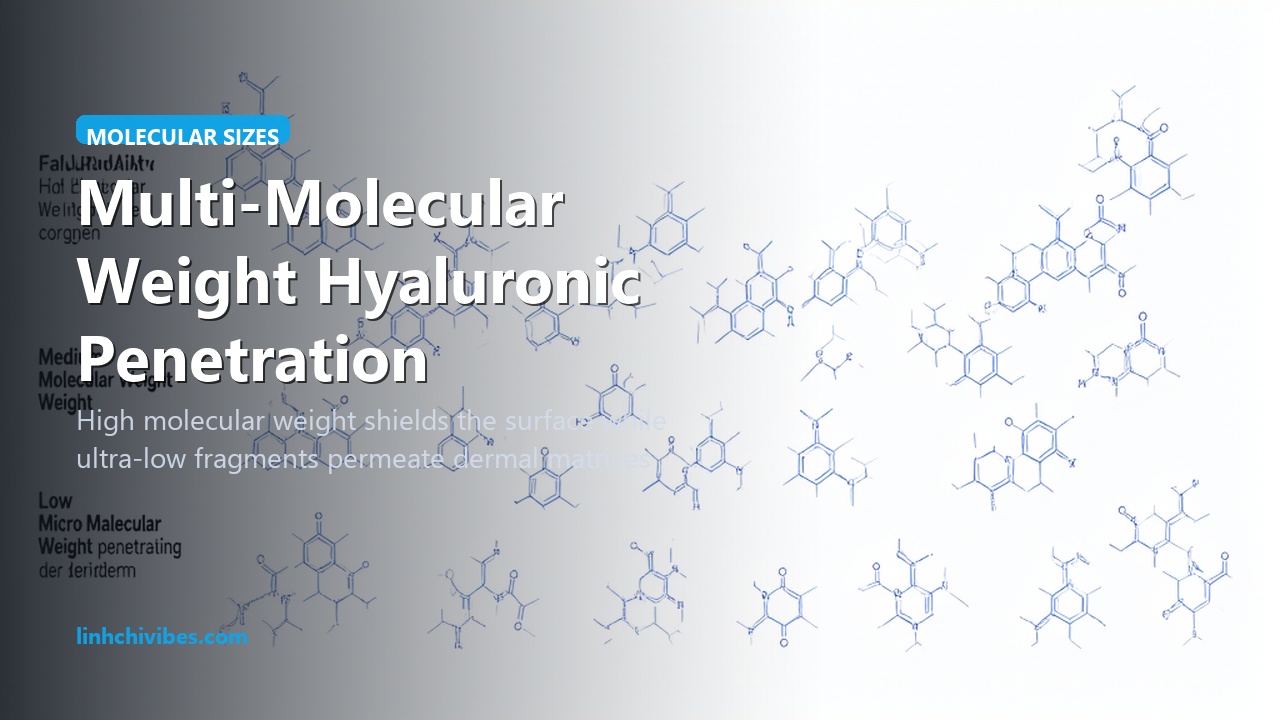
- High Molecular Weight HA (HMW > 1,500 kDa): Massive polymer chains unable to penetrate the intact stratum corneum. Instead, they form a breathable, non-occlusive viscoelastic film on the surface, preventing immediate evaporation and creating an instant dewy bounce.
- Medium Molecular Weight HA (MMW 100 – 1,000 kDa): Intermediate fragments that permeate the upper cellular layers of the viable epidermis, binding moisture within the spinous and granular layers.
- Low Molecular Weight & Oligo-HA (LMW < 50 kDa): Ultramicroscopic fragments capable of transiting through intercellular lipid pathways into the deep basal membrane and papillary dermis. Here, they interface directly with cellular receptors to stimulate tissue regeneration.
A superior formulation must feature a multi-fractionated matrix combining high, medium, and low molecular weights to deliver instantaneous surface cushioning alongside subterranean dermal replenishment.
3. The Reverse Osmosis Trap: Atmospheric Dehydration
Why do countless individuals develop parched, flaky skin after adopting high-concentration HA serums? The biological answer is reverse dehydration:
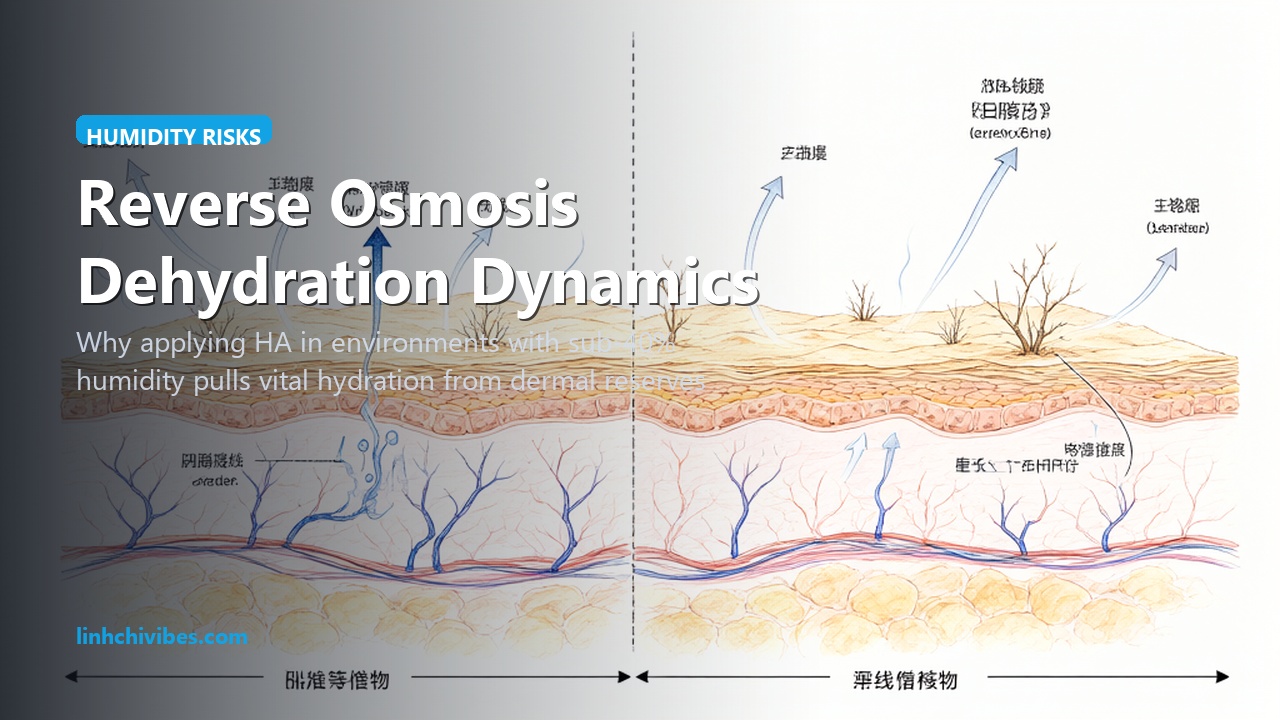
Hyaluronic acid is an uncompromising humectant; it obeys strict laws of chemical thermodynamics, drawing water molecules from areas of higher vapor pressure toward areas of lower vapor pressure:
- In arid environments (e.g., air-conditioned offices or winter climates with relative humidity below 40%), there is insufficient water vapor in ambient air for HA to bind.
- Consequently, unsealed HA molecules applied to dry skin will extract subterranean moisture from the vascular dermis up to the surface.
- Once at the surface, this extracted water evaporates rapidly into the dry room, leaving the cutaneous framework severely dehydrated from within.
4. The Non-Negotiable Damp Skin Application Protocol
To harness 100% of hyaluronic acid’s plumping power while eliminating reverse dehydration risk, adhere strictly to the damp skin rule:
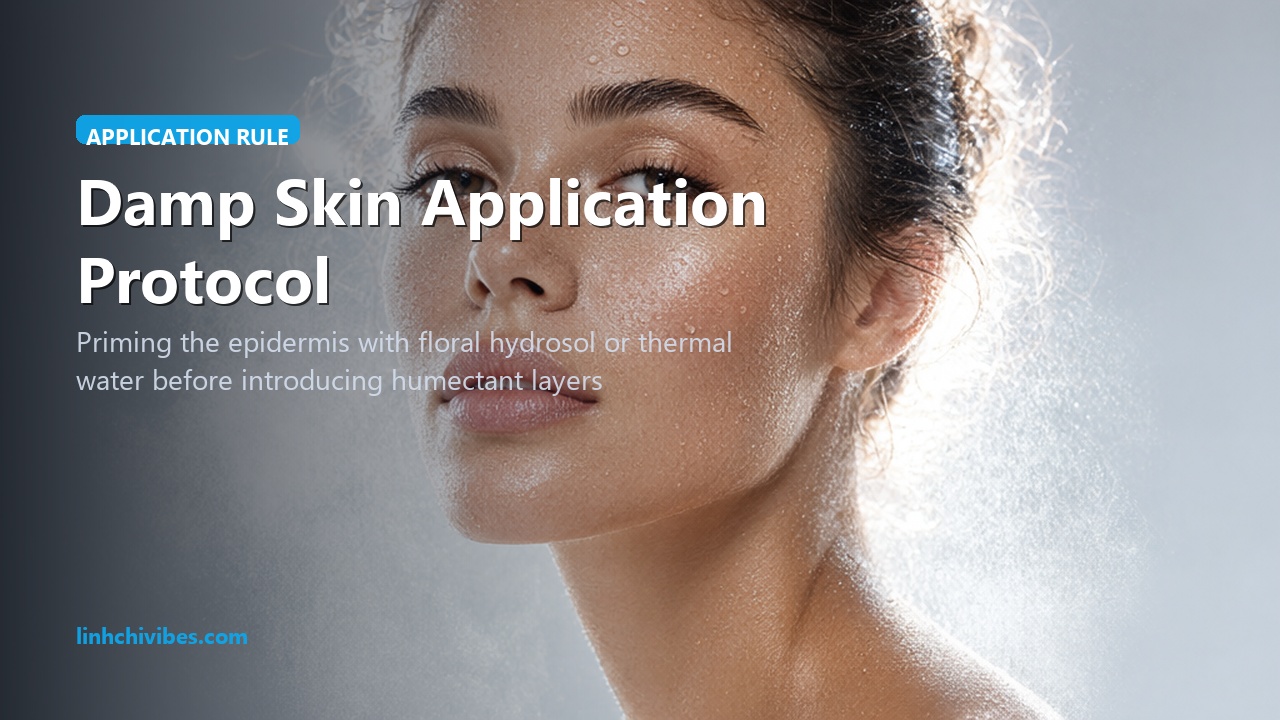
- Following gentle cleansing, never towel-dry your face completely. Gently pat away excess droplets, preserving a visible micro-film of moisture on your skin.
- Mist generously with a pure thermal spring water, floral hydrosol, or hydrating essence. This external hydration reservoir gives HA molecules immediate water dipoles to bind.
- Dispense 3 to 4 drops of multi-depth HA serum and press smoothly across your face, neck, and décolletage. The serum will effortlessly transform into a glistening water cushion within seconds.
5. Occlusion Dynamics: Sealing Hydration Networks
Binding water to the epidermis is only the initial phase of the hydration equation. Without a physiological occlusive seal, that water cushion will dissipate through TEWL within thirty to sixty minutes:
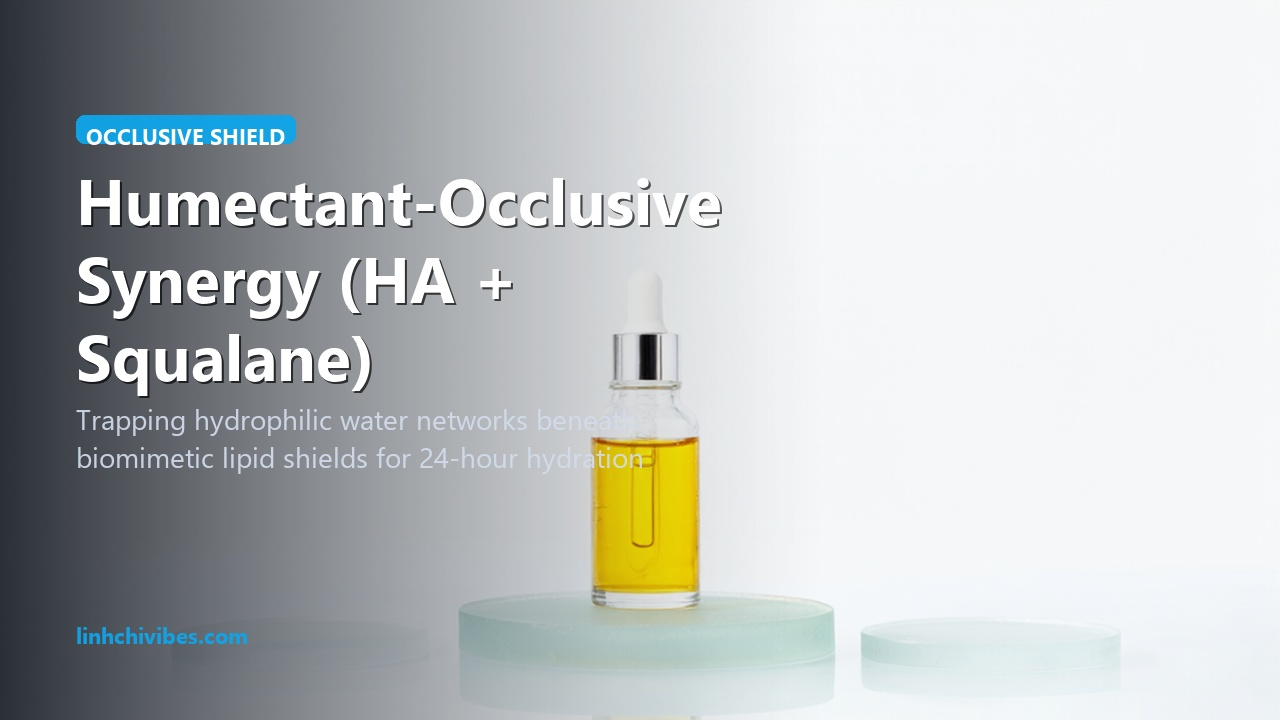
The ultimate formulatory seal combines two gold-standard lipids:
- Plant-Derived Squalane: A non-comedogenic, biomimetic hydrocarbon that mirrors our skin’s natural squalene. It creates an ultra-lightweight, breathable lipid shield that blocks 95% of evaporation.
- Physiologic Ceramide Barrier Creams: Cementing the intercellular lamellar bilayers to anchor humectant reservoirs deep inside the epidermis. Explore our comprehensive Ceramide skin barrier repair guide for optimal layering synergy.
6. CD44 Receptor Binding & Collagen I Synthesis
In addition to immediate hydration, low molecular weight oligo-HA fragments exert profound biological anti-aging signaling:
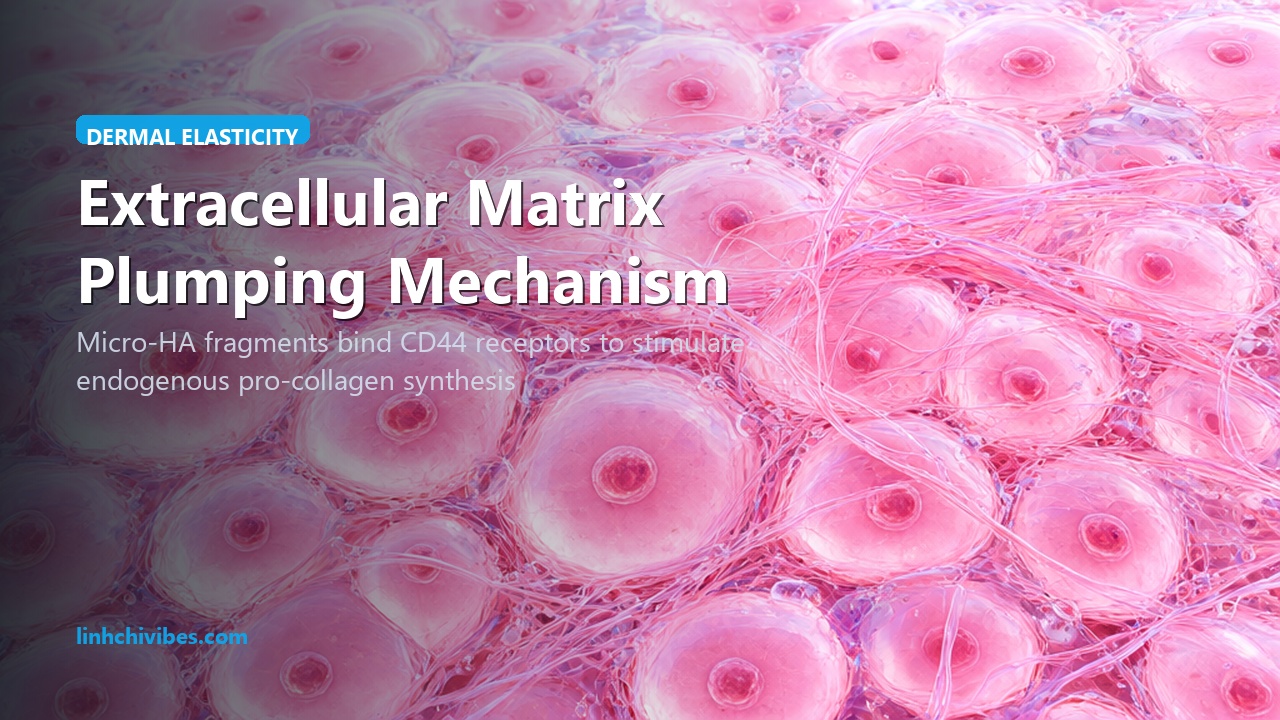
Microscopic clinical trials reveal:
- Immediate optical plumping: High molecular weight fractions expand across superficial epidermal micro-fissures, instantly smoothing dehydration wrinkles and refracting ambient light.
- Dermal pro-collagen induction: Oligo-HA fragments permeate the basement membrane, binding directly to CD44 transmembrane glycoproteins on fibroblast cells. This interaction triggers intracellular cascades that stimulate de novo pro-collagen I synthesis and repress elastase enzymes.
7. Formulatory Layering Architecture: AM & PM Regimens
Seamlessly integrate your hyaluronic acid serum into your daily routine:
Morning Protocol (AM):
Gentle Low-pH Cleanser ➔ Thermal Water Hydrosol ➔ Hyaluronic Acid Serum (applied onto damp skin) ➔ Vitamin C Antioxidant ➔ Ceramide Moisturizer ➔ Broad-Spectrum SPF 50+.
Evening Protocol (PM):
Double Cleansing Ritual ➔ Hydrating Essence ➔ Hyaluronic Acid Serum ➔ Active Treatment (Retinoid or Peptides) ➔ Physiologic Barrier Cream ➔ 2 drops Squalane Oil (if climate is arid).
8.2. Thermodynamic Vapor Pressure & The “Reverse Desiccation” Hazard in Arid Climates
One of the most consequential yet frequently misunderstood physical phenomena in clinical dermatology is the ambient relative humidity threshold governing hyaluronic acid’s thermodynamic equilibrium. Because sodium hyaluronate is an isotropic polymer sponge with astronomical hygroscopic affinity—capable of binding up to 1,000 times its dry molecular weight in water—its direction of fluid transport is dictated strictly by surrounding ambient vapor gradients:
- The Critical 50% Relative Humidity Threshold: In tropical or temperate maritime climates where ambient relative humidity exceeds 50% to 60%, topical hyaluronic acid absorbs ambient water vapor effortlessly from the surrounding air, transferring hydration into the upper layers of the stratum corneum. However, when ambient humidity plummets below 40%—such as in air-conditioned office towers, pressurized airplane cabins (where humidity drops to a desiccating 10–15%), or cold winter climates—the atmospheric vapor pressure reverses.
- The Reverse Osmotic Osmolyte Pull: In arid conditions, the parched air exerts massive evaporation suction. Hyaluronic acid molecules sitting on the epidermis will greedily pull water up from the deeper, living dermal tiers toward the surface. If this surface water is not instantly trapped under an occlusive lipid ceiling, it evaporates into thin air, leaving the deeper living dermal tiers more dehydrated, tight, and cellularly stressed than before product application.
- The 60-Second Hydration Sandwich Protocol: To eliminate this reverse desiccation risk completely, dermatologists mandate the “Hydration Sandwich”: Always mist clean skin thoroughly with thermal spring water or a lipid toner, apply multi-molecular hyaluronic acid onto dripping-wet skin, and within 60 seconds, seal the entire surface with an emollient ceramide cream or plant squalane to construct an impermeable vapor barrier.
8.3. Molecular Signaling via CD44 Receptors: Stimulating Endogenous Glycosaminoglycans
While high-molecular hyaluronic acid provides magnificent surface cushion, low-molecular-weight hyaluronic fragments (specifically fragments between 20 kDa and 50 kDa) function as active biological signaling keys. When these micro-molecules permeate through corneal micro-fissures into the viable spinosum and basale tiers:
- Binding Transmembrane CD44 Receptors: These oligomeric fragments dock directly onto CD44 receptor proteins expressed on epidermal keratinocyte cell surfaces. This binding triggers intracellular phosphorylation cascades that upregulate natural keratinocyte proliferation, expediting re-epithelialization following micro-injuries.
- Upregulating Endogenous Hyaluronan Synthase (HAS-2): In vitro cell cultures prove that CD44 activation upregulates gene expression of Hyaluronan Synthase-2 (HAS-2), prompting your own dermal fibroblasts to synthesize fresh, endogenous high-molecular hyaluronic acid within the extracellular matrix.
- Modulating Epidermal Tight Junctions: Topical micro-hyaluronan strengthens Claudin-1 and Occludin protein synthesis, fortifying the lateral intercellular tight junctions that guard the living epidermis from water dissipation.
8.4. Cross-Linked Sodium Hyaluronate Dimers: Rheological Viscoelasticity and 24-Hour Hydration
The newest frontier in cosmetic hyaluronan chemistry involves chemical cross-linking via 1,4-butanediol diglycidyl ether (BDDE) or divinyl sulfone, creating three-dimensional elastomeric micro-sponges:
- Resisting Enzymatic Degradation via Hyaluronidases: Natural uncross-linked hyaluronic acid has a remarkably transient half-life on the skin, degrading rapidly within 12 to 24 hours under the catalytic action of endogenous hyaluronidase enzymes. Cross-linked sodium hyaluronate forms an interconnected viscoelastic web that shields enzymatic cleavage sites, maintaining sustained water-binding retention for upwards of 48 to 72 hours.
- Sustained-Release Active Delivery Reservoir: Beyond holding water, the porous polymeric chambers of cross-linked hyaluronate act as molecular cages capable of entrapping water-soluble vitamins, niacinamide, and peptides. As the gel matrix gradually hydrates, it releases these restorative bio-actives into the stratum corneum in a steady, metered micro-dose throughout the day.
8. Decoding Cosmetic Labels: Derivatives Explained
Examine your ingredient deck to understand what form of hyaluronic acid you are applying:
- Sodium Hyaluronate: The salt form of HA, featuring lower molecular weight and significantly higher chemical stability against thermal degradation.
- Hydrolyzed Hyaluronic Acid: Enzymatically broken down fragments that penetrate into deeper cellular strata to support tissue repair.
- Sodium Hyaluronate Crosspolymer: A cross-linked mesh matrix that delivers time-released continuous hydration for over 24 hours.
8.5. Longitudinal Corneometry Profiling: 24-Hour Cutaneous Capacitance Measurements
To quantify the real-world physiological performance of multi-depth hyaluronic matrices versus single-weight commercial serums, dermatological clinical researchers utilize Corneometer CM 825 capacitance probes and Tewameter TM 300 evaporimeters across cohorts subjected to controlled climate-chamber desiccation (20°C at 25% relative humidity):
- Epidermal Capacitance Retention (Arbitrary Units): Subjects utilizing a multi-molecular hyaluronan formulation exhibited an immediate 112% surge in stratum corneum electrical capacitance within 15 minutes of application. More critically, at the 12-hour and 24-hour marks under continuous dehumidification stress, skin capacitance remained 48% above untreated control baselines, confirming long-term hydration reservoir stability.
- Synergistic Co-Polymer Blending with Polyglutamic Acid (PGA): Recent formulation breakthroughs demonstrate that co-formulating sodium hyaluronate with 0.5% Polyglutamic Acid (a hydrophilic peptide polymer derived from fermented soybeans) dramatically elevates efficacy. PGA functions as an allosteric inhibitor of endogenous hyaluronidase enzymes, extending the functional half-life of topical hyaluronate by 350% and boosting overall skin plumping elasticity by 2.4-fold compared to hyaluronan alone.
9. Curated Editorial Skincare Guides in This Series
Continue your exploration of evidence-based beauty rituals on Linh Chi Vibes:
- Complete Niacinamide Guide for Radiant Glass Skin
- Mastering Double Cleansing for Clear Glowing Skin
- Complete Ceramide Guide for Skin Barrier Repair
- Mindful Morning Rituals for Vibrant All-Day Energy
10.1. The 12-Month Retinoid Concentration Progression Ladder
Achieving porcelain glass skin through topical retinoids is a multi-stage marathon, not a sprint. Dermatologists advocate a structured 12-month concentration progression to advance your cellular receptor capacity without risking chronic barrier collapse:
| Phase & Timeline | Optimal Molecule & Potency | Weekly Frequency | Primary Biological Milestone | Buffering Protocol |
|---|---|---|---|---|
| Phase 1: Months 1–3 | 0.2% Encapsulated Retinol or Granactive | 2 nights per week | Upregulation of cellular CRBP-1 binding proteins; initial cellular acclimatization without erythema. | Strict sandwich method with Ceramide balm |
| Phase 2: Months 4–6 | 0.5% Encapsulated Retinol | 3 nights per week (alternate nights) | Accelerated stratum corneum compaction; noticeable reduction in comedone formation and hyperpigmentation. | Pre-buffering with HA serum + post-cream |
| Phase 3: Months 7–9 | 0.05% – 0.1% Retinaldehyde | 4–5 nights per week | Single-step conversion to retinoic acid; robust stimulation of dermal pro-collagen and elastin synthesis. | Direct application to dry skin, follow with barrier cream |
| Phase 4: Months 10–12+ | 1.0% Retinol or 0.1% Retinaldehyde | Nightly continuous maintenance | Permanent histological densification of papillary dermis; radiant light-reflective glass skin finish. | Standard nightly moisturization |
By honoring this clinical progression ladder, you guarantee that your skin adapts harmoniously to the gold standard of anti-aging dermatology for years of uninterrupted, glowing radiance.
10. Frequently Asked Questions (FAQ)
Q1: Must I always apply a moisturizer over my Hyaluronic Acid serum?
Yes, without exception. Hyaluronic acid is strictly a water-attracting humectant; it possesses zero occlusive capacity. Failing to seal it with an emollient or lipid cream allows bound water to evaporate, exacerbating dryness.
Q2: What is the optimal concentration of Hyaluronic Acid in a serum?
The clinical sweet spot is between 1% and 2%. Concentrations exceeding 3% to 4% become excessively tacky, form rubbery pills beneath makeup, and increase reverse osmotic draw from deep tissue.
Q3: Can acne-prone or congested skin use multi-depth HA serums?
Yes, enthusiastically. Pure hyaluronic acid is entirely non-comedogenic and oil-free. Blemish-prone skin is frequently dehydrated by topical treatments; replenishing water with HA calms inflammation and accelerates re-epithelialization.
Long-Term Maintenance & Prevention: Once you achieve your optimal skin clarity and collagen density benchmark, do not discontinue your retinoid regimen. Skin aging is an ongoing chronological process influenced by persistent ambient UV radiation, atmospheric pollution, and natural decline in fibroblast cellular activity. Maintaining a consistent maintenance dose of 0.5% encapsulated retinol or 0.05% retinaldehyde two to three evenings per week preserves your newly synthesized dermal collagen matrix indefinitely, ensuring your complexion retains its supple, light-reflective vitality across every season of life.
11. Concluding Perspectives from Linh Chi Vibes
Hyaluronic acid is not an elusive mystery; it is an elegant manifestation of biophysical thermodynamics. When integrated according to natural law—generously supplied with external water and sealed beneath biomimetic lipids—it transforms depleted, lacklustre tissue into a supple, light-refracting glass canvas.
Embrace multi-depth hydration as the cornerstone of your daily ritual, and witness your skin achieve its most radiant, luminous expression!