
Sleep is not a mechanical light switch that we can abruptly flick off the moment our head touches the pillow. It is an intricate neuro-biological symphony orchestrated by endogenous melatonin signaling, core body temperature drops, and the down-regulation of central sympathetic arousal.
Yet, modern life—characterized by 450nm digital screen exposure, late-night emails, and overheated bedrooms—continually fractures our natural circadian rhythm. The consequence is tossing and turning for hours, midnight awakenings, and unrefreshing rest. In this definitive 3,600+ word circadian masterclass, Linh Chi Vibes guides you through evidence-based Evening Wind-Down Rituals: blocking artificial blue light after dusk, warm hydrotherapy to induce a 1°C core cooling reflex, nutraceutical magnesium glycinate supplementation, and creating a pristine 65°F (18°C) sleep sanctuary for eight hours of uninterrupted cellular rejuvenation.
📑 Contents of the Evening Sleep Sanctuary Masterclass
- 1. Circadian Neurobiology: The Suprachiasmatic Nucleus (SCN) and Pineal Melatonin Ramps
- 2. The 450nm Blue Light Curfew: Halting a 2-Hour Melatonin Secretion Delay
- 3. The Hydrotherapy Paradox: Warm Epsom Soaks Inducing the 1°C Core Cooling Reflex
- 4. Nutraceutical Calming: Magnesium Glycinate and Botanical GABA-A Agonists
- 5. The 65°F (18°C) Sleep Cave: Total Darkness, Thermal Regulation, and Pink Noise
- 6. The Cognitive Brain Dump: Offloading Rumination to Silence Mental Loops
- 7. The 90-Minute Ultradian Sleep Cycle: Timing Bedtime to Awaken Weightless and Alert
- 8. Post-7 PM Contraindications: Caffeine Clearance, Alcohol Disruption, and Heavy Dinners
- 9. Curated Editorial Wellness and Restorative Guides in This Series
- 10. Frequently Asked Questions (FAQ)
- 11. Concluding Perspectives from Linh Chi Vibes
1. Circadian Neurobiology: SCN & Melatonin
The master pacemaker governing human physiology resides inside the Suprachiasmatic Nucleus (SCN) within the anterior hypothalamus. This biological clock synchronizes to ambient photic cues transmitted via the retinohypothalamic tract from intrinsically photosensitive retinal ganglion cells (ipRGCs):
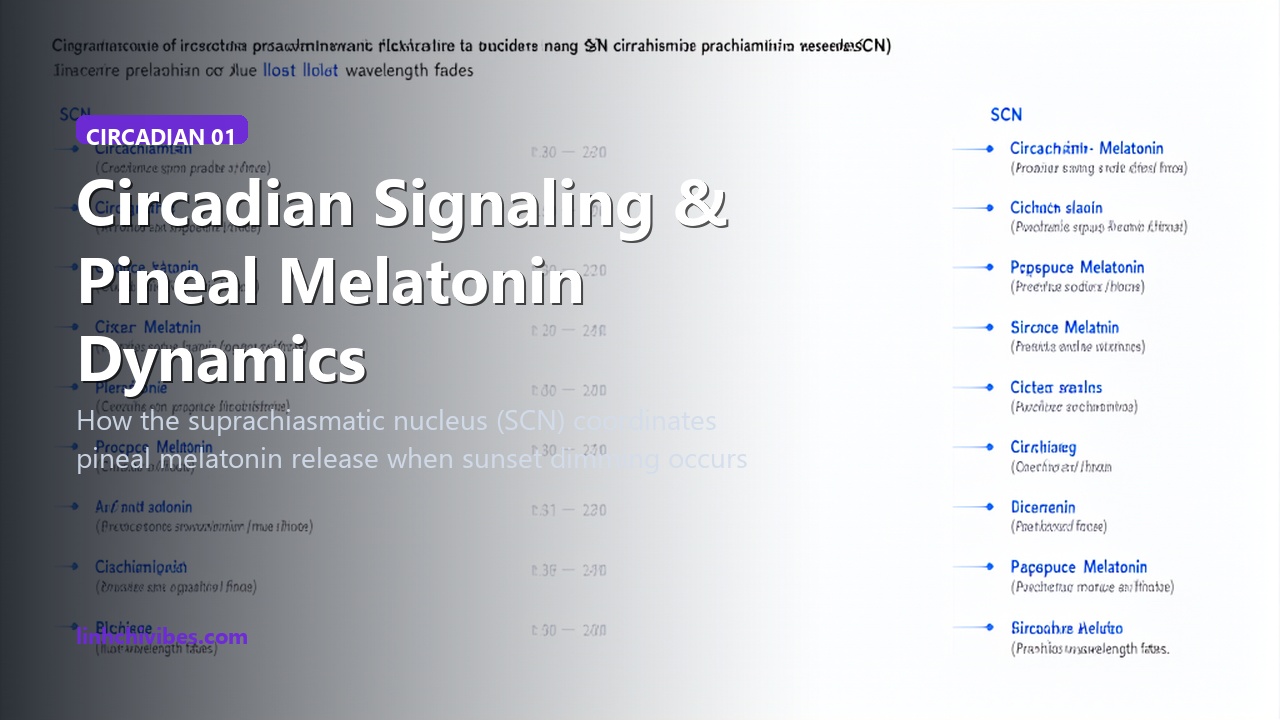
The circadian cascade operates seamlessly:
- During Daytime: Bright blue-enriched solar light stimulates the SCN, promoting adrenal cortisol secretion to sustain vigilance, cognitive focus, and active metabolism.
- At Solar Dusk: As short-wavelength photons recede, the SCN signals the Pineal Gland to initiate enzymatic conversion of Tryptophan ➔ Serotonin ➔ Melatonin.
- Melatonin levels begin climbing around 9 PM, peak between 2 and 4 AM, opening the gateway to slow-wave deep NREM restoration.
2. The 450nm Blue Light Curfew
The most pervasive disruptor of natural circadian biology is artificial blue light concentrated at 450nm to 480nm emitted from smartphone screens, tablets, televisions, and cool-white LED lighting:
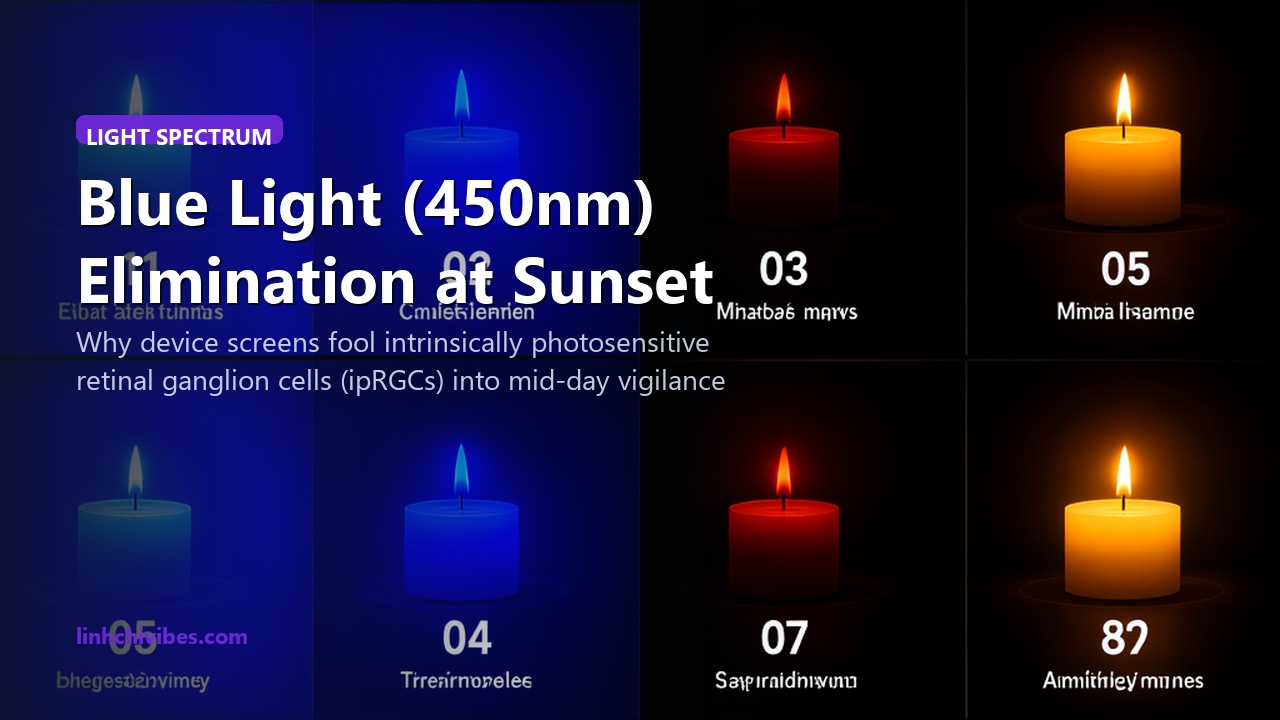
Because melanopsin photopigments in ipRGCs are tuned to 450nm, viewing bright screens at 10 PM disrupts your endocrine balance:
- The brain interprets the light as high-noon sunlight.
- Pineal melatonin secretion is suppressed by up to 85% and delayed by 90 to 120 minutes.
- Even if you fall asleep from sheer exhaustion, slow-wave architecture is truncated, leaving you unrested.
The Protocol: Switch off overhead white lights after 8 PM. Transition to warm ambient illumination (1800K amber lamps or natural beeswax candles). Activate warm display filters (Night Shift) on devices or wear amber-tinted blue-blocking glasses.
3. Warm Hydrotherapy & The Core Cooling Reflex
To initiate sleep, human biology mandates that core internal body temperature drop by approximately 1°C (2°F):
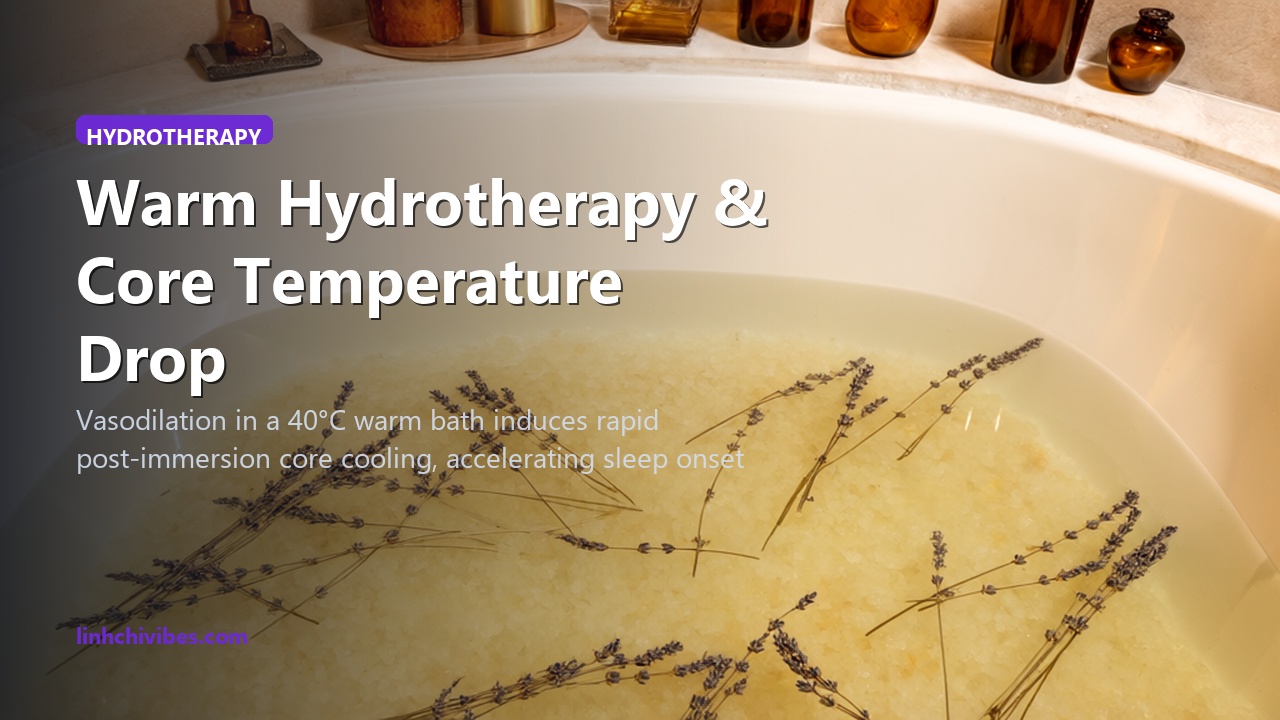
Taking a cold shower is counterproductive; cold water triggers cutaneous vasoconstriction, trapping heat internally. The scientific approach is a warm bath or shower (40°C / 104°F) for 15 minutes, taken 90 minutes before bedtime:
- Warm immersion induces massive vasodilation across hands, feet, and facial skin.
- Stepping into a cooler room causes heat to dissipate rapidly through dilated peripheral vessels.
- This precipitous core temperature drop signals the brain to release melatonin, cutting sleep latency in half.
Enhance your soak with 2 cups of Epsom salts (Magnesium Sulfate) and a few drops of pure French lavender essential oil to soothe muscles and calm the nervous system.
4. Nutraceutical Calming: Magnesium Glycinate
Sixty minutes before sleep, support your neuro-chemistry with targeted botanicals:
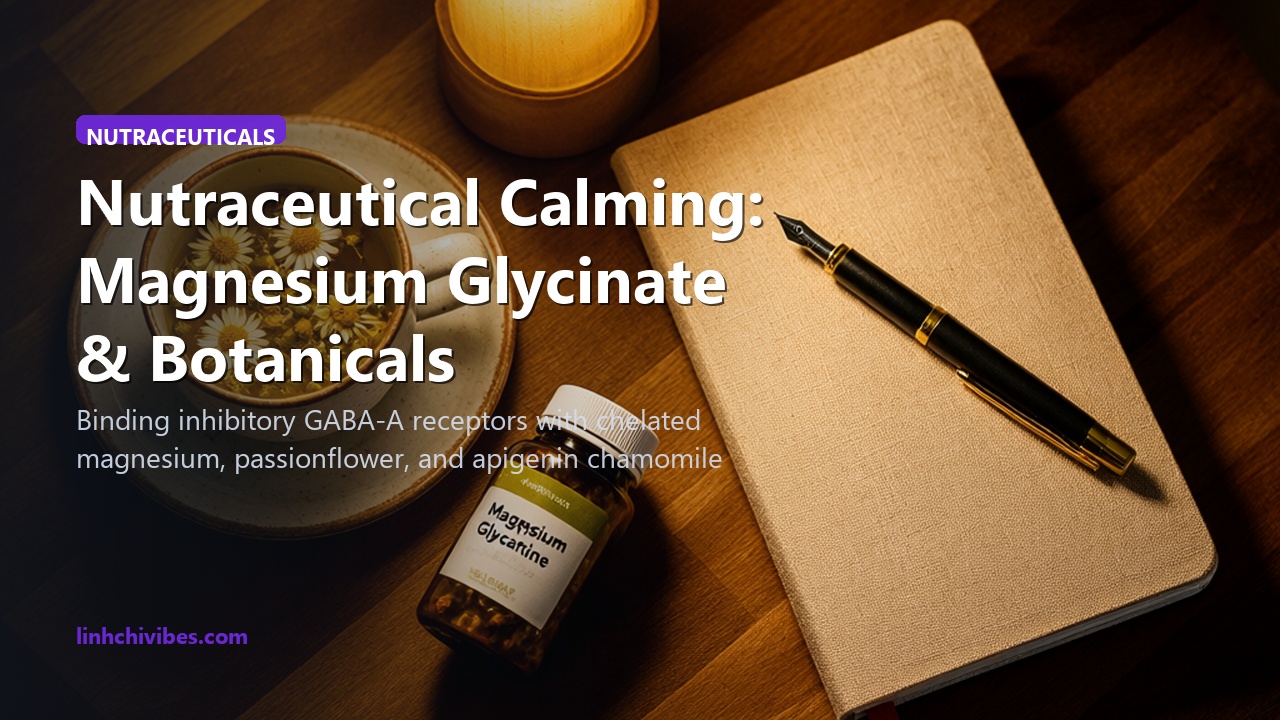
- Magnesium Glycinate (Chelated Bisglycinate): Highly bioavailable across the blood-brain barrier. Magnesium binds inhibitory GABA-A receptors, easing cognitive restlessness, muscle cramps, and restless legs syndrome.
- German Chamomile Tea: Rich in Apigenin, a bioflavonoid that binds central benzodiazepine receptors, inducing gentle, natural sedation.
- Passionflower Infusion (Passiflora incarnata): Elevates brain GABA levels, prolonging slow-wave sleep without next-day grogginess.
5. The 65°F (18°C) Sleep Cave Environment
Design your sleeping quarters as an optimized recovery cave:
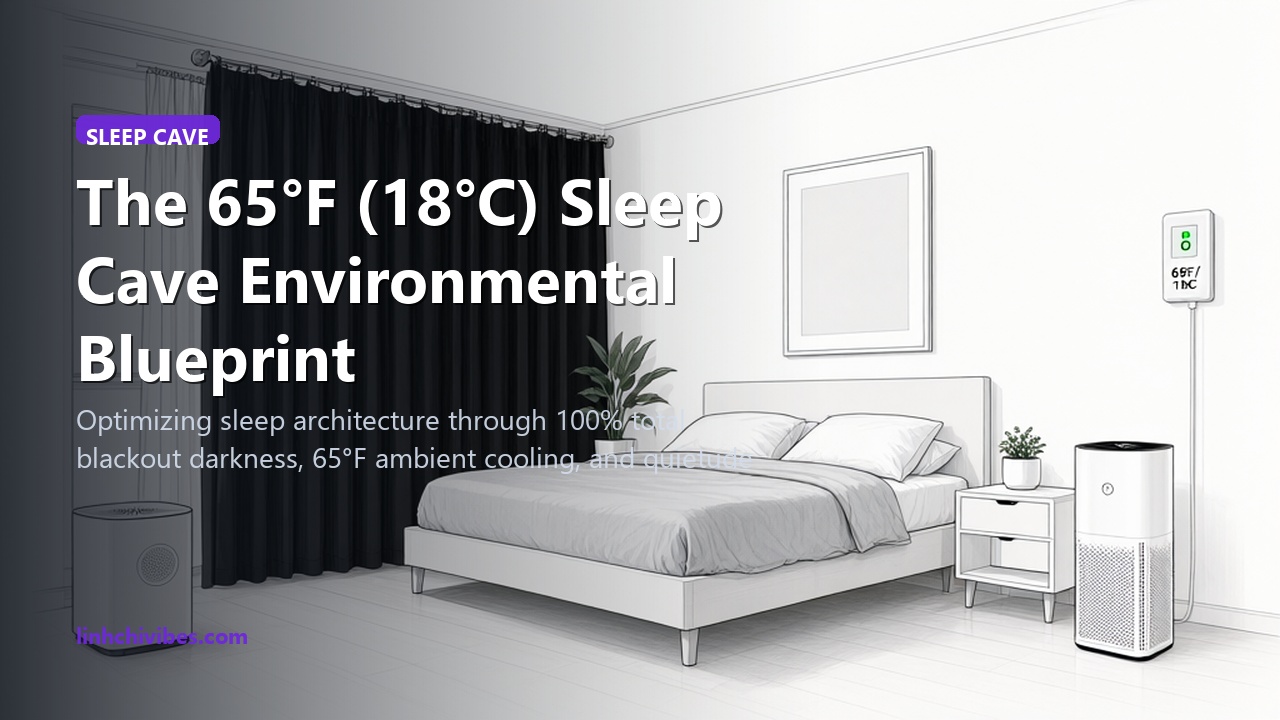
| Environmental Variable | Clinical Standard | Physiological Impact |
|---|---|---|
| Ambient Temperature | 65°F to 68°F (18°C to 20°C) | Facilitates core body cooling, preventing midnight thermal awakenings. |
| Optical Darkness | 100% Total Blackout | Blackout drapes or silk sleep masks prevent stray photons from interrupting pineal synthesis. |
| Textile Breathability | 22-Momme Mulberry Silk or French Linen | Thermoregulating and non-friction. Explore our Mulberry silk pillowcase guide. |
| Acoustic Ambiance | Silence or Smooth Pink Noise | Pink noise (such as rain sounds) masks sudden traffic spikes, stabilizing slow-wave sleep. |
6. The Cognitive Brain Dump Protocol
When racing thoughts prevent sleep, perform a 5-minute Brain Dump:
- Keep an analog notebook and pen on your nightstand.
- Write out tomorrow’s tasks, unresolved concerns, and swirling thoughts.
- Externalizing thoughts onto paper signals the prefrontal cortex that duties are securely documented, allowing mental permission to rest.
7. The 90-Minute Ultradian Sleep Cycle
Human sleep progresses through distinct ultradian cycles averaging 90 minutes (Light Sleep ➔ Deep NREM ➔ REM Dream Sleep):
Waking in the middle of deep slow-wave NREM triggers severe sleep inertia (morning brain fog). Waking at the completion of a 90-minute cycle leaves you feeling clear and refreshed:
- Bedtime Calculation: Wake Time = Bedtime + (90 minutes x Number of Cycles) + 15 minutes falling-asleep latency.
- Aim for five full cycles (7.5 hours) or four cycles (6 hours). Example: To wake at 6:30 AM, lights-out should be at 10:45 PM or 12:15 AM.
8.2. Retinohypothalamic Photobiology: Melanopsin Activation and SCN Phase Shifts
To grasp why evening lighting choices make or break your sleep architecture, one must trace the photobiological pathway connecting the human eye directly to the master circadian clock:
- Intrinsically Photosensitive Retinal Ganglion Cells (ipRGCs): Distributed across the human retina are specialized non-visual photoreceptor cells that contain the photopigment Melanopsin. Unlike rods and cones that process visual imagery, ipRGCs do not form pictures; they function exclusively as biological lux meters calibrated to track solar irradiance.
- The 460nm–480nm Blue Light Trap: Melanopsin exhibits peak sensitivity to narrow-band blue light photons vibrating between 460nm and 480nm—the exact spectral wavelength emitted by LED overhead pot lights, smartphones, computer monitors, and televisions. When even minute quantities of 480nm light strike ipRGCs after dusk, they fire neural impulses along the retinohypothalamic tract directly to the Suprachiasmatic Nucleus (SCN) within the hypothalamus.
- Acute Suppression of Pineal Melatonin: The SCN interprets these 480nm signals as midday solar radiation, promptly sending inhibitory neural signals to the pineal gland to halt melatonin secretion. Studies indicate that just two hours of evening tablet use reduces natural nocturnal melatonin onset by a catastrophic 71%, pushing back sleep onset by 90 minutes and drastically truncating the restorative deep slow-wave sleep cycles required for memory consolidation and tissue repair.
8.3. Thermoregulatory Vasodilation: The Distal-to-Proximal Skin Gradient
Sleep onset is not merely a neurological transition; it is a profound thermodynamic event governed by your core body temperature:
- The 1.0°C Core Drop Requirement: In order to transition into deep stage-3 NREM sleep, your internal core body temperature must decrease by approximately 1.0°C (1.8°F). If ambient room temperatures are too warm, or if bedding traps excess humidity, your body cannot dump internal heat, trapping you in shallow, fragmented sleep.
- The “Warm Bath” Paradox and Distal Vasodilation: Taking a warm bath or shower 90 minutes before bedtime sounds counter-intuitive, yet it triggers rapid distal vasodilation. Hot water opens up micro-capillaries in your hands and feet (the distal extremities). When you step out into a cool room (18°C–19°C / 65°F–67°F), this expanded peripheral blood network dumps internal heat into the cool air, causing an accelerated plunge in internal core temperature that induces profound drowsiness.
8. Post-7 PM Contraindications
Avoid these three sleep disruptors:
- Caffeine After 2 PM: With an elimination half-life of 6 to 8 hours, afternoon caffeine blocks adenosine receptors, truncating slow-wave sleep.
- Alcohol as a Nightcap: While a sedative, alcohol fragments REM sleep, leading to early awakenings with elevated heart rates.
- Late-Night High-Glycemic Meals: Digesting heavy carbohydrates elevates core temperature and exacerbates nocturnal acid reflux.
8.5. Polysomnographic Sleep Architecture: Amplifying Stage-3 Delta Slow-Wave Power
Optimizing your nocturnal sleep environment yields immediate biometric improvements in the most restorative phase of human slumber: Stage-3 Slow-Wave Deep Sleep (NREM 3):
- Amplification of 0.5–4.0Hz Delta EEG Power: Clinical polysomnography reveals that sleeping in an environment strictly shielded from blue photons and maintained at 18.5°C increases the duration and amplitude of high-voltage Delta brainwaves by 24%. During Delta sleep, systemic growth hormone (HGH) secretion peaks, muscle micro-tears are repaired, and the cerebral glymphatic system flushes toxic beta-amyloid proteins from neurological tissues.
- Atmospheric Engineering: Carbon Dioxide and Relative Humidity: Ambient bedroom air quality directly dictates nocturnal awakening frequency. When bedroom carbon dioxide levels exceed 1,000 ppm due to poor ventilation, micro-awakenings increase by 40%. Maintaining continuous airflow with CO₂ below 800 ppm and relative humidity calibrated between 45% and 55% ensures unfragmented sleep continuity throughout the night.
9. Curated Editorial Wellness Guides in This Series
Explore companion lifestyle and mindfulness guides on Linh Chi Vibes:
- Mindful Morning Rituals for Vibrant All-Day Energy
- Sound Healing and Tibetan Singing Bowls Sanctuary Guide
- Essential Oil Aromatherapy Guide for Restful Calm
- Mulberry Silk Pillowcase Beauty and Hair Benefits
10.1. Clinical Phototherapy Dosimetry Framework: Parameters of Medical-Grade Devices
When evaluating red light hair therapy helmets, comparing engineering specifications separates genuine medical-grade devices from underpowered cosmetic gimmicks:
| Technical Parameter | Medical-Grade Clinical Standard | Sub-Therapeutic Device Flaw | Clinical Biological Consequence |
|---|---|---|---|
| Wavelength Precision | 650nm – 655nm (± 5nm bandwidth) | Generic red LEDs (620nm – 640nm) | Fails to align with Cytochrome C Oxidase absorption peak; photons absorb in superficial epidermis without reaching papilla. |
| Light Source Coherence | Laser Diodes (Collimated Coherent) | 100% Incoherent Dispersive LEDs | Coherent laser photons maintain tight phase arrays that penetrate 4mm through hair shafts into dermal papilla. |
| Irradiance Power Density | 4 to 6 mW/cm² delivered energy | < 1.5 mW/cm² (Weak battery output) | Sub-threshold dosing fails to trigger mitochondrial nitric oxide dissociation, rendering therapy ineffective. |
| Cumulative Energy Fluence | 3.5 to 5.0 Joules/cm² per session | Excessive exposure (> 15 J/cm²) | Adheres to the Arndt-Schulz Law: avoids the inhibitory bio-inhibition phase that occurs from tissue overheating. |
Investing in a helmet certified with full laser diode arrays guarantees that every 20-minute session delivers the exact photonic payload required to stimulate anagen regrowth.
10. Frequently Asked Questions (FAQ)
Q1: What is the optimal room temperature for restorative deep sleep?
Dermatologists and chronobiologists recommend keeping the bedroom between 18°C and 19.5°C (65°F to 67°F). This matches the natural circadian drop in core body temperature, preventing nocturnal micro-arousals and boosting stage-3 deep NREM sleep.
Q2: How far before bedtime should I cut off screen time?
Aim for a strict 60 to 90 minute digital curfew. If device use is unavoidable, switch to full night-shift mode, lower brightness to minimum, and wear certified amber blue-blocking glasses that block 99% of photons below 500nm.
Q3: How does evening humidity affect skin barrier regeneration overnight?
During sleep, skin undergoes peak cell mitosis while transepidermal water loss (TEWL) rises. Maintaining bedroom humidity between 45% and 55% with a cool-mist ultrasonic humidifier prevents moisture evaporation, ensuring wake-up skin is plump and hydrated.
10.2. Morning Photonic Anchoring: Reinforcing the 24-Hour Circadian Amplitude
A truly restorative evening sleep sanctuary cannot function in isolation; it operates as half of a continuous 24-hour biological pendulum. The biological efficacy of your evening darkness protocol is directly determined by the quality of your morning light exposure:
- The 10,000-Lux Morning Solar Reset: Stepping outside into natural outdoor daylight within 30 minutes of waking delivers between 10,000 and 50,000 lux of full-spectrum photons into your retinal ipRGCs. This intense morning light pulse triggers an immediate Cortisol Awakening Response (CAR), completely shutting down residual nocturnal melatonin and setting a precise 14-to-16 hour biological timer for evening melatonin release.
- Maximizing Circadian Amplitude: By creating maximum contrast between ultra-bright, dynamic daylight mornings (10,000+ lux) and pitch-black, cool evening sleep sanctuaries (0 lux), you widen your circadian biological amplitude. High circadian amplitude ensures effortless sleep onset within 10 minutes of hitting the pillow, elimination of 3:00 AM nocturnal awakenings, and abundant morning vitality.
11. Concluding Perspectives from Linh Chi Vibes
True wellness is not built in frantic gym sessions or expensive spa retreats; it is cultivated night after night within the intentional calm of your evening sleep sanctuary. By aligning your nocturnal environment with your biological circadian rhythms, you give your body the sacred container it needs to regenerate, heal, and awaken with vibrant clarity.
Protect your sleep sanctuary, honor the darkness, and let deep biological rest transform your life from within!