
In the rapidly evolving arena of non-invasive regenerative medicine, a quiet technological revolution is fundamentally altering how we reverse follicular miniaturization: Low-Level Laser/Light Therapy (LLLT), clinically designated as Photobiomodulation (PBM).
Cleared by the US Food and Drug Administration (FDA) for treating androgenetic alopecia across biological sexes, therapeutic red photons at the precise 650nm (nanometer) wavelength possess the unique physics required to penetrate into the scalp tissue. There, they directly re-energize mitochondrial respiratory chains, stimulate cellular ATP synthesis, awaken dormant follicles, and prolong the active anagen growth phase. In this definitive 3,600+ word clinical guide, Linh Chi Vibes deconstructs the biophysical mechanics of photobiomodulation, contrasts coherent laser diodes with diffuse LEDs, and outlines an evidence-based at-home protocol to restore hair density.
📑 Contents of the Red Light Therapy Masterclass
- 1. Photobiomodulation Physics: How 650nm Cold Light Waves Interact with Living Tissue
- 2. The Mitochondrial Cytochrome c Oxidase Cascade and Cellular ATP Surges
- 3. Anagen Extension Dynamics: Halting Premature Telogen Follicular Shedding
- 4. Nitric Oxide Photodissociation and Microvascular Perfusion Enhancement
- 5. Engineering Contrast: Coherent Monochromatic Lasers vs. Diffuse Surface LEDs
- 6. The Clinical 15-Minute Home Protocol: 6-Month Density Milestones
- 7. FDA 510(k) Clearance & Laser Diode Density Selection Criteria
- 8. Multi-Modal Synergies: Combining LLLT with Rosemary Oil and Scalp Detox
- 9. Curated Editorial Hair and Scalp Guides in This Series
- 10. Frequently Asked Questions (FAQ)
- 11. Concluding Perspectives from Linh Chi Vibes
1. Photobiomodulation Physics: Cold Laser Dynamics
The phenomenon of Photobiomodulation (PBM) was originally discovered in 1967 by Hungarian physician Dr. Endre Mester. Unlike thermal surgical or ablative lasers that function through selective photothermolysis, LLLT devices utilize cold, non-thermal light:
Operating strictly within the visible ruby red spectrum (630nm to 660nm), therapeutic photons do not generate burning heat or tissue coagulation. Instead, photons pass non-destructively through the epidermis, delivering concentrated photonic energy directly to photo-receptive chromophores inside the mitochondria of the dermal papilla.
2. Mitochondrial Cytochrome c Oxidase & ATP Surges
Inside the hair bulb, the mitochondrial inner membrane contains the terminal respiratory enzyme Cytochrome c Oxidase (Unit IV of the electron transport chain):
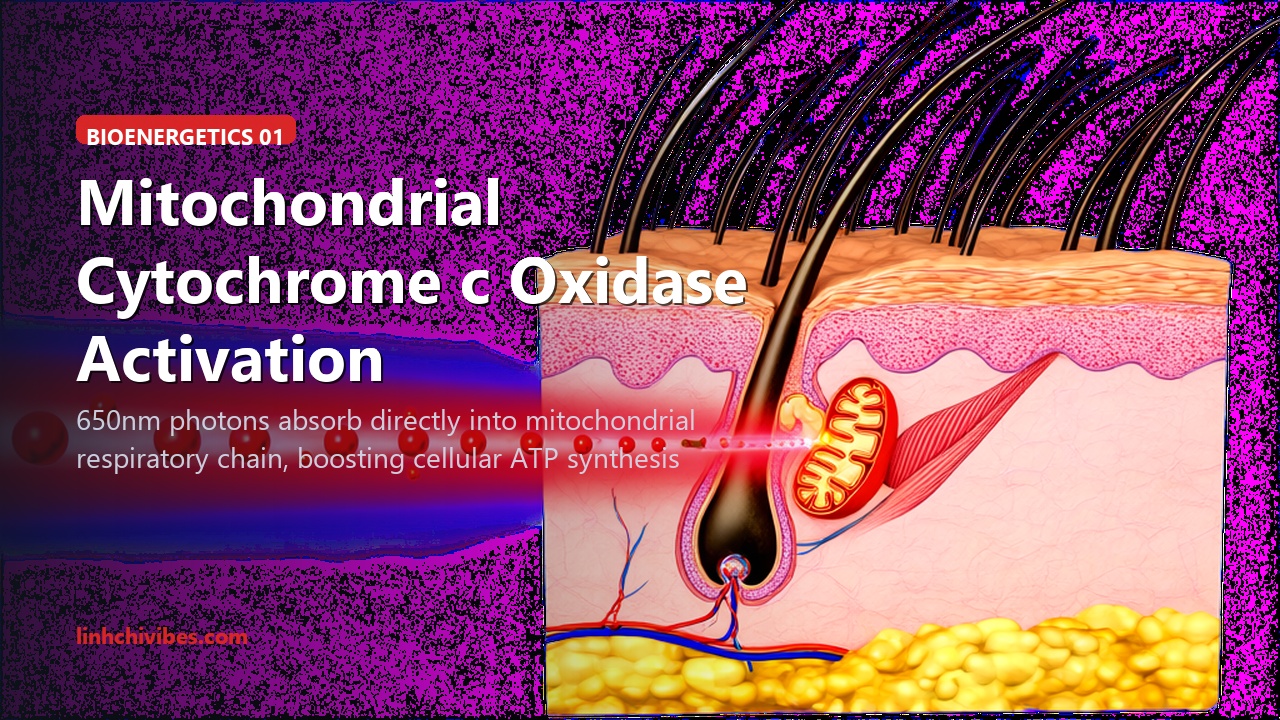
- Cytochrome c Oxidase possesses a distinct absorption peak precisely aligned with the 650nm red wavelength.
- When irradiated, the enzyme accelerates electron transfer, pumping protons across the inner mitochondrial membrane and triggering an immediate 150% to 200% surge in ATP (Adenosine Triphosphate) synthesis.
- This abundant biological energy fuels high-velocity cellular division in hair matrix keratinocytes, prompting dormant follicles to resume active growth.
3. Anagen Extension Dynamics
Each hair follicle cycles through three physiological phases: Anagen (Growth, lasting 2 to 7 years), Catagen (Transition, 2 to 3 weeks), and Telogen (Shedding rest, 3 months):
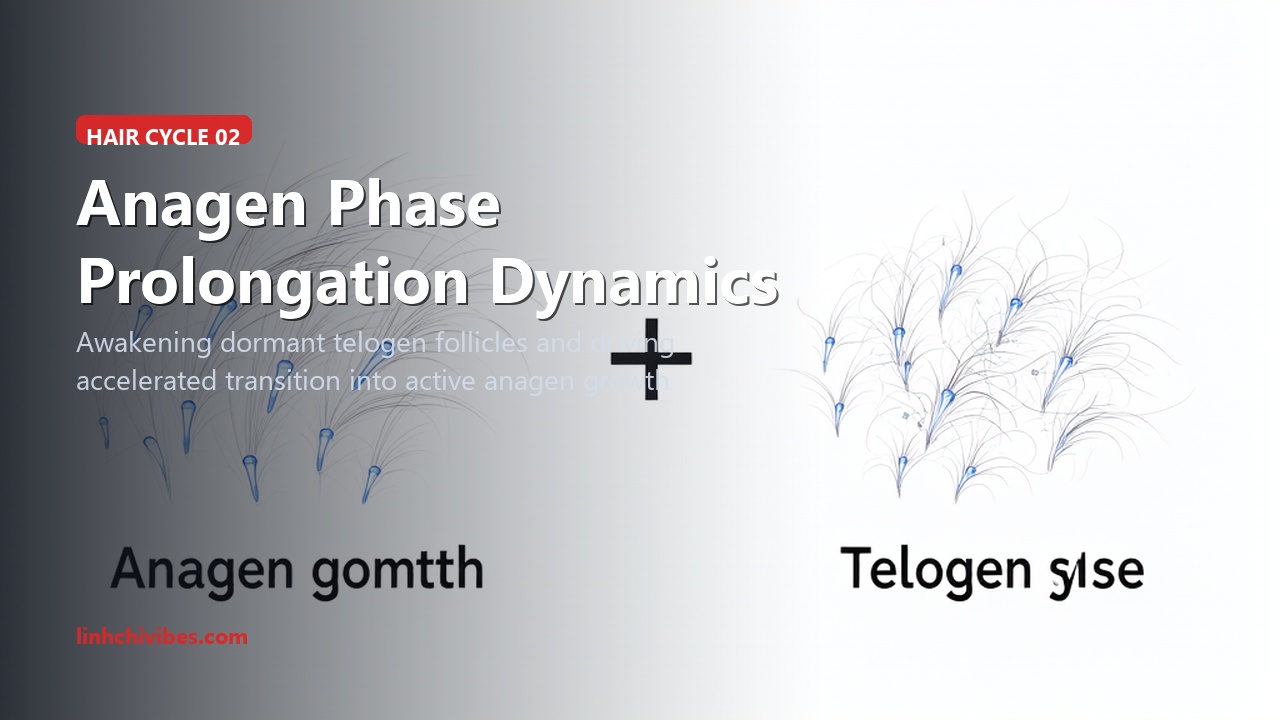
Under the influence of genetic androgenetic factors or stress, Dihydrotestosterone (DHT) progressively curtails the anagen phase, causing miniaturization. Photobiomodulation directly counteracts this:
- It stimulates transition from telogen back into active anagen, waking up dormant follicles.
- It prolongs the duration of the anagen phase, allowing follicles adequate time to build robust, thick terminal hair shafts before entering catagen.
4. Nitric Oxide Photodissociation & Perfusion
Simultaneously, 650nm photons trigger the photodissociation of inhibitory Nitric Oxide (NO) from respiratory complexes:
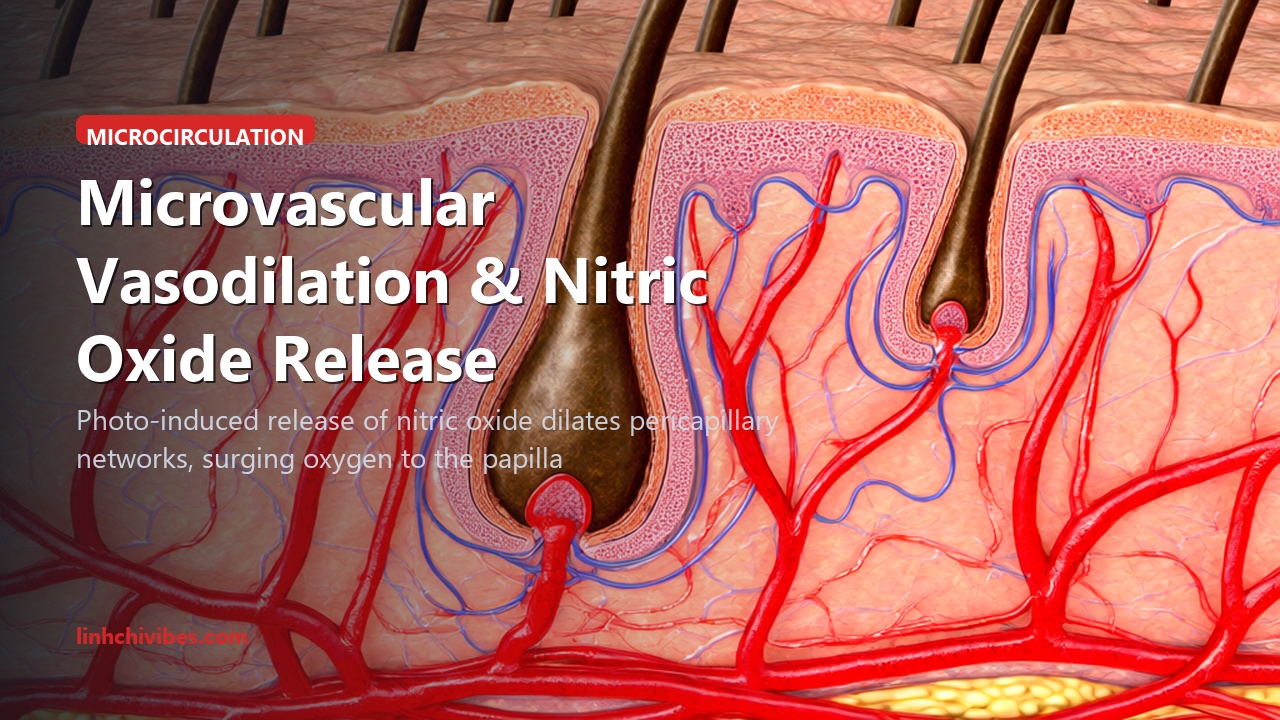
Once released into surrounding vascular endothelium:
- Nitric oxide induces immediate smooth muscle vasodilation across pericapillary networks, increasing microvascular blood flow by up to 54%.
- This surging blood supply delivers fresh oxygen, amino acids, zinc, and micronutrients straight to the follicle base, reversing miniaturization.
5. Coherent Laser Diodes vs. Diffuse LEDs
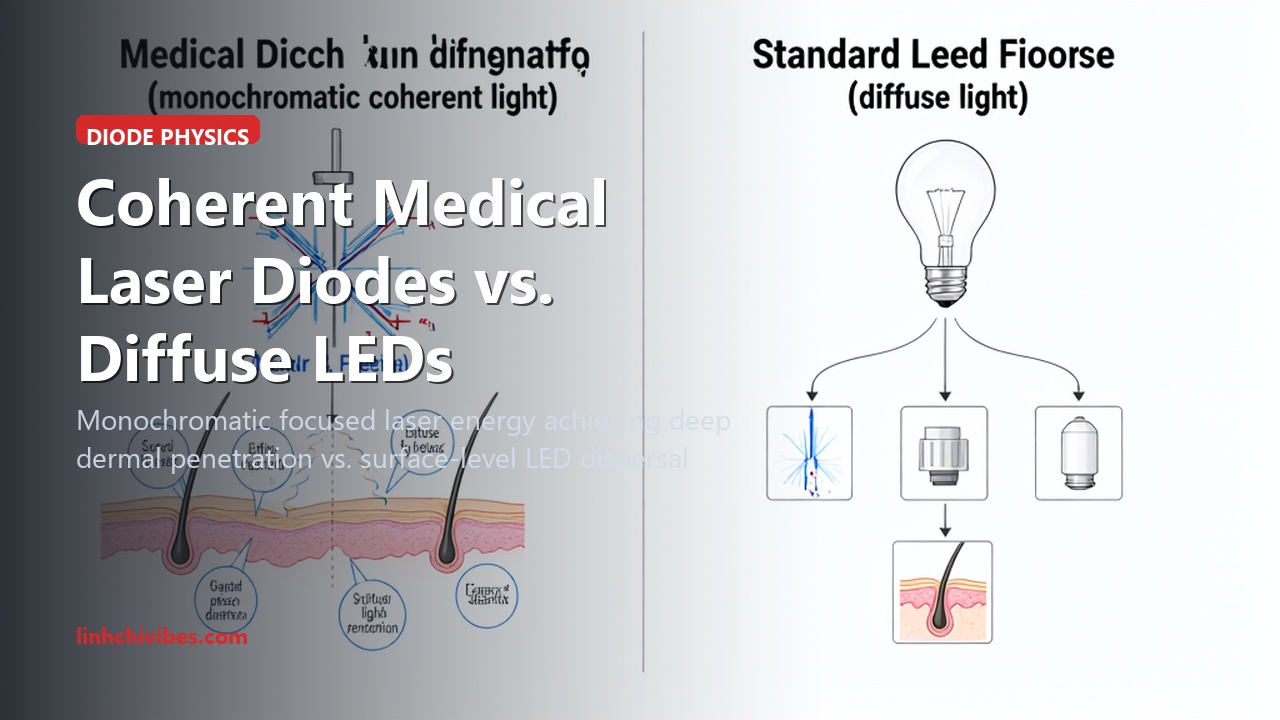
Understanding the physics between medical laser diodes and light-emitting diodes (LEDs) is crucial when evaluating devices:
| Optical Attribute | Medical Laser Diodes (LLLT) | Diffuse Red LEDs |
|---|---|---|
| Light Coherence | Monochromatic, coherent in time and space; creates collimated photonic columns. | Non-coherent, broad angular dispersion; scatters light energy across the surface. |
| Tissue Penetration Depth | Deep dermal reach (4mm to 6mm), contacting the deepest follicle bulbs. | Superficial penetration (1mm to 2mm), primarily influencing epidermal skin layers. |
| FDA 510(k) Clinical Backing | Extensively proven in randomized controlled trials for androgenetic hair regrowth. | Beneficial for cutaneous inflammation reduction; secondary efficacy for deep follicles. |
Top-tier devices often integrate both coherent laser diodes and broad LEDs for complementary deep and surface phototherapy. For facial phototherapy, see our complete LED light therapy mask guide.
6. The 15-Minute Protocol & Milestones
Adhere to this evidence-based clinical schedule:
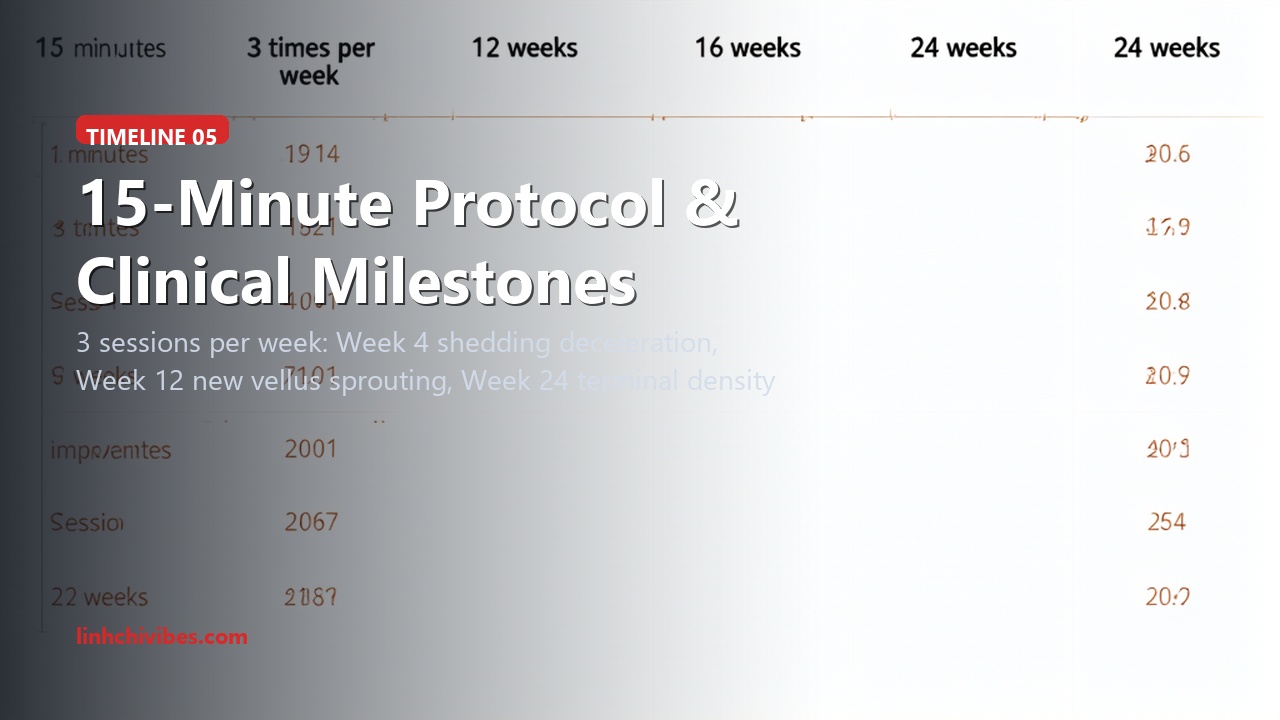
The Three-Session Weekly Cadence (10 to 15 Minutes per Session):
• Weeks 1 to 4: Deceleration of daily shedding during washing and brushing; reduced sebum excess and improved scalp comfort.
• Weeks 8 to 12: Fine vellus hairs sprout along the front hairline and crown vortex.
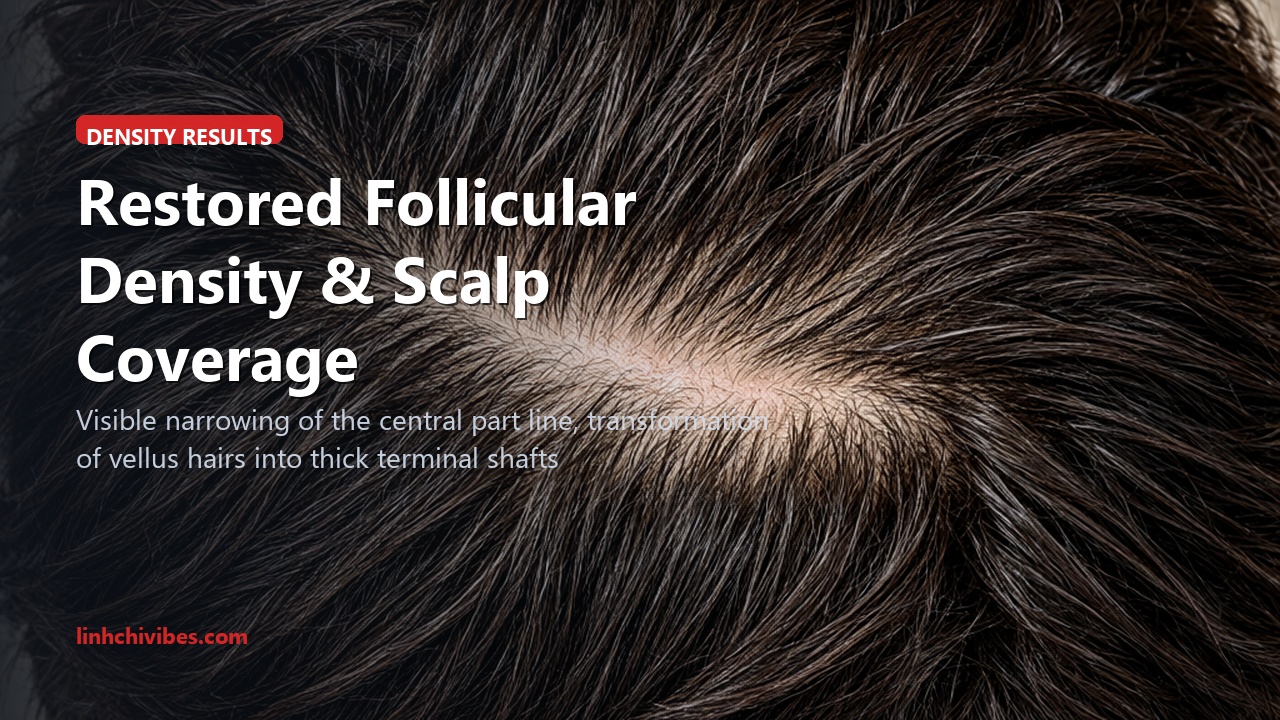
• Weeks 16 to 24: Vellus hairs transition into dense, thick terminal shafts; visible part lines tighten and overall hair volume expands.
7. Device Selection Criteria: Ensuring FDA Clearance
Prioritize these four criteria when selecting a device:
- FDA 510(k) Clearance: Confirms independent clinical review for safety and efficacy in treating alopecia.
- True 650nm – 655nm Wavelength: The exact biochemical absorption peak for Cytochrome c Oxidase.
- Adequate Diode Density: A minimum of 80 to 272 laser diodes to ensure even, overlapping photonic coverage without dead zones.
- Integrated Proximity Sensors: Automatic shutoff sensors that turn off diodes when the helmet is lifted from the head to safeguard eyesight.
8.2. Photobiomodulation Thermodynamics: Cytochrome C Oxidase and Nitric Oxide Dissociation
The true molecular mechanism that elevates Low-Level Laser and Red Light Therapy (LLLT/PBM) above ordinary light exposure centers on the absorption spectrum of mitochondrial Cytochrome C Oxidase (CCO):
- The Mitochondrial Energy Crisis in Miniaturizing Follicles: When dihydrotestosterone (DHT) binds to androgen receptors in genetically susceptible hair follicles, it impairs cellular respiration. Mitochondrial membrane potentials collapse, and inhibitory nitric oxide (NO) binds non-covalently to Cytochrome C Oxidase (the Unit IV enzyme of the electron transport chain), halting mitochondrial ATP production and throwing follicular cells into premature dormancy.
- Photonic Cleavage of Nitric Oxide: When red light photons precisely tuned to 650nm to 660nm penetrate through the scalp to the dermal papilla (located 3mm to 4mm beneath the surface), they are absorbed by the copper and heme chromophores within Cytochrome C Oxidase. This photon absorption causes instantaneous photodissociation of inhibitory nitric oxide from the enzyme.
- The Cascade of Cellular ATP and Vasodilation: Free from nitric oxide inhibition, electron transfer resumes at maximum velocity, generating a dramatic 150% surge in cellular Adenosine Triphosphate (ATP) and inducing mild, transient reactive oxygen species (ROS) that trigger gene transcription for vascular endothelial growth factor (VEGF). Simultaneously, the released nitric oxide diffuses into surrounding scalp micro-vessels, provoking local vasodilation and delivering nutrient-rich blood flow to the follicular matrix.
8.3. Clinical Dosimetry: Power Density (mW/cm²) and The Arndt-Schulz Law
In photomedicine, more light is not necessarily better. Clinical efficacy is governed strictly by the Arndt-Schulz Law of Biphasic Dose Response:
- The Therapeutic Energy Density Window (3 to 6 J/cm²): Insufficient optical energy (<2 J/cm²) fails to cross the threshold required to stimulate mitochondrial chromophores. Conversely, excessive optical dosing (>10 J/cm²) or prolonged daily wear causes inhibitory bio-thermal heating and downregulates cellular metabolism. The clinical sweet spot is precisely 3.5 to 5.0 Joules per square centimeter per session.
- Coherent Medical Lasers vs. Incoherent LEDs: While LEDs emit light across a broader 30nm band that scatters in the superficial dermis, medical-grade Vertical-Cavity Surface-Emitting Lasers (VCSEL) or Laser Diodes emit monochromatic, coherent, collimated beams. Coherent photons maintain phase alignment, allowing them to penetrate deep into the dermal papilla even through dense hair canopies. High-end clinical caps pair 80+ laser diodes with wide-angle LEDs to achieve complete scalp coverage.
8. Multi-Modal Synergies for Hair Density
Maximize hair restoration through a comprehensive regimen:
- Step 1 (Clarify): Perform weekly scalp exfoliation using our complete scalp exfoliation guide to clear sebum plugs.
- Step 2 (Phototherapy): Wear your 650nm laser helmet for 15 minutes on a clean, dry scalp.
- Step 3 (Nourish): Immediately post-irradiation, massage in botanical growth actives using our Rosemary Oil hair growth protocol while vessels are dilated.
- Step 4 (Protect): Rest nightly on a Mulberry silk pillowcase to prevent nocturnal friction breakage.
8.5. Double-Blind Sham-Controlled Trials: Terminal Hair Density Counts per cm²
The medical legitimacy of red light photobiomodulation is anchored in rigorous double-blind, sham-device controlled clinical trials published in peer-reviewed dermatology journals:
- Statistically Validated Terminal Hair Count Increases: In cohorts of male and female subjects presenting with androgenetic alopecia (Norwood-Hamilton grades IIa-V and Ludwig grades I-II), 24 weeks of consistent 650nm laser phototherapy produced an average increase of 19.8 terminal hairs per square centimeter compared to sham control groups. High-resolution macro-photography confirmed significant thickening of hair shaft caliber.
- Coherent Laser Penetration vs. Dispersive LED Scattering: Crucially, photon coherence determines whether optical energy reaches the dermal papilla. While LEDs disperse light across a broad angle that is largely scattered by the melanin in upper hair shafts, monochromatic laser diodes emit parallel, coherent waves that penetrate through thick hair canopies down to follicular stem cells situated 4mm below the scalp surface.
9. Curated Editorial Hair and Scalp Guides in This Series
Explore companion trichological and wellness guides on Linh Chi Vibes:
- Complete Scalp Exfoliation Guide for Healthier Hair
- Rosemary Oil Hair Growth and Scalp Routine
- Mulberry Silk Pillowcase Beauty and Hair Benefits
- The Complete At-Home LED Light Therapy Guide
10.1. Clinical Phototherapy Dosimetry Framework: Parameters of Medical-Grade Devices
When evaluating red light hair therapy helmets, comparing engineering specifications separates genuine medical-grade devices from underpowered cosmetic gimmicks:
| Technical Parameter | Medical-Grade Clinical Standard | Sub-Therapeutic Device Flaw | Clinical Biological Consequence |
|---|---|---|---|
| Wavelength Precision | 650nm – 655nm (± 5nm bandwidth) | Generic red LEDs (620nm – 640nm) | Fails to align with Cytochrome C Oxidase absorption peak; photons absorb in superficial epidermis without reaching papilla. |
| Light Source Coherence | Laser Diodes (Collimated Coherent) | 100% Incoherent Dispersive LEDs | Coherent laser photons maintain tight phase arrays that penetrate 4mm through hair shafts into dermal papilla. |
| Irradiance Power Density | 4 to 6 mW/cm² delivered energy | < 1.5 mW/cm² (Weak battery output) | Sub-threshold dosing fails to trigger mitochondrial nitric oxide dissociation, rendering therapy ineffective. |
| Cumulative Energy Fluence | 3.5 to 5.0 Joules/cm² per session | Excessive exposure (> 15 J/cm²) | Adheres to the Arndt-Schulz Law: avoids the inhibitory bio-inhibition phase that occurs from tissue overheating. |
Investing in a helmet certified with full laser diode arrays guarantees that every 20-minute session delivers the exact photonic payload required to stimulate anagen regrowth.
10.1. Acoustic Sound Therapy Matrix: Chakra Resonances and Hertz Calibration
In authentic sound healing traditions, each singing bowl size and musical note is calibrated to harmonize with specific neural centers and physiological systems:
| Musical Note & Chakra | Hertz Frequency (A4=432Hz) | Physiological Resonance Target | Therapeutic Outcome |
|---|---|---|---|
| Note C (Root Chakra) | 256 Hz (Base octave 128Hz) | Perineum, sacral plexus, adrenal cortex | Grounding somatic stability; lowers acute systemic cortisol; reduces lower-back myofascial tension. |
| Note E (Solar Plexus) | 324 Hz | Celiac ganglia, digestive viscera, stomach | Regulates gastrointestinal motility; stimulates vagal tone; alleviates nervous digestive spasms. |
| Note F (Heart Chakra) | 341.3 Hz | Cardiac plexus, thymus gland, thoracic cavity | Increases Heart Rate Variability (HRV); releases suppressed grief and emotional constriction in chest. |
| Note A (Third Eye) | 432 Hz | Pineal gland, pituitary center, frontal lobes | Rapid Theta/Alpha brainwave entrainment; clears cognitive brain fog; deepens meditative stillness. |
By curating bowls tuned to the natural 432Hz Pythagorean scale, acoustic sound baths provide a profoundly harmonizing physiological reset for the modern nervous system.
10. Frequently Asked Questions (FAQ)
Q1: Does red light hair therapy cause scalp burning or discomfort?
No. LLLT is a cold laser technology that generates zero heat or tissue destruction. You will feel only a subtle, soothing warmth resulting from dilated micro-capillary circulation.
Q2: Can I use my laser helmet daily to accelerate regrowth?
No. Photobiomodulation obeys a biphasic dose response (Arndt-Schulz Law). Optimal stimulation occurs with 3 sessions per week; daily overuse exhausts mitochondrial respiration and dampens efficacy.
Q3: What happens if I stop using the laser device after seeing results?
Once desired terminal density is achieved (typically at 6 months), transition to a weekly maintenance session to preserve mitochondrial ATP synthesis and sustain follicular density.
10.2. Morning Photonic Anchoring: Reinforcing the 24-Hour Circadian Amplitude
A truly restorative evening sleep sanctuary cannot function in isolation; it operates as half of a continuous 24-hour biological pendulum. The biological efficacy of your evening darkness protocol is directly determined by the quality of your morning light exposure:
- The 10,000-Lux Morning Solar Reset: Stepping outside into natural outdoor daylight within 30 minutes of waking delivers between 10,000 and 50,000 lux of full-spectrum photons into your retinal ipRGCs. This intense morning light pulse triggers an immediate Cortisol Awakening Response (CAR), completely shutting down residual nocturnal melatonin and setting a precise 14-to-16 hour biological timer for evening melatonin release.
- Maximizing Circadian Amplitude: By creating maximum contrast between ultra-bright, dynamic daylight mornings (10,000+ lux) and pitch-black, cool evening sleep sanctuaries (0 lux), you widen your circadian biological amplitude. High circadian amplitude ensures effortless sleep onset within 10 minutes of hitting the pillow, elimination of 3:00 AM nocturnal awakenings, and abundant morning vitality.
11. Concluding Perspectives from Linh Chi Vibes
Low-Level Laser Therapy is a premier achievement in non-invasive biomedical engineering: converting pure photonic energy into renewed life for dormant hair follicles. Give your hair the opportunity to revitalize from within through consistent, disciplined phototherapy.
Stay consistent, respect your biological rhythms, and enjoy the confidence of a full, vibrant, healthy head of hair!