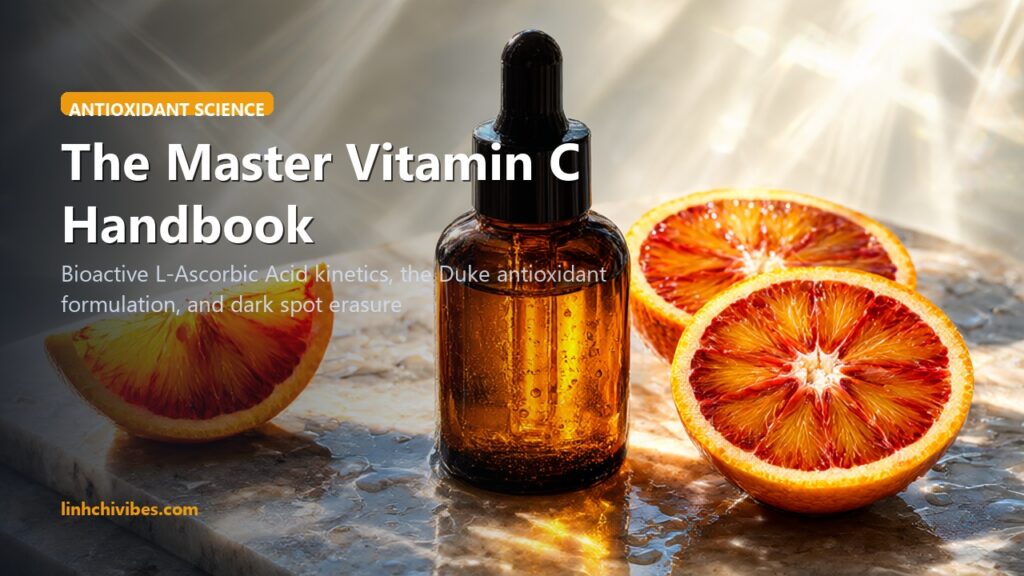
If Retinol reigns as the undisputed monarch of nighttime cellular regeneration, Topical Vitamin C (pure L-Ascorbic Acid) serves as the indispensable daytime photoprotective guardian. As the single most potent physiological antioxidant in human biology, Vitamin C neutralizes destructive reactive oxygen species (ROS), arrests enzymatic melanogenesis, and catalyzes de novo collagen synthesis.
Yet, formulating and utilizing Vitamin C remains one of the most perilous challenges in cosmetic chemistry: pure ascorbic acid degrades rapidly into inert brown byproducts, induces stinging on delicate barriers, and frequently fails to deliver when compounded at improper pH thresholds. In this definitive 3,600+ word dermatological masterclass, Linh Chi Vibes deconstructs the legendary Duke antioxidant patent, the biochemical mechanics of Tyrosinase inhibition, and the morning photoprotective alliance with sunscreen to illuminate and unify your complexion.
📑 Contents of the Vitamin C Masterclass
- 1. Biochemical Kinetics: Why Pure L-Ascorbic Acid Is the Ultimate Free Radical Scavenger
- 2. The Legendary Duke Antioxidant Patent: 15% C + 1% E + 0.5% Ferulic Acid Synergy
- 3. Tyrosinase Enzymatic Inhibition: Erasing Post-Inflammatory Erythema and Hyperpigmentation
- 4. Chromatic Diagnostics: Detecting Dehydroascorbic Acid Oxidation and Proper Storage
- 5. The Morning Photoprotective Alliance: Why Vitamin C Belongs Beneath Daily SPF
- 6. Next-Generation Derivatives: THD Ascorbate, SAP, and Ethyl Ascorbic Acid for Sensitive Skin
- 7. pH Kinetics and Layering Architecture: Optimizing Cutaneous Absorption
- 8. Clinical Management of Cutaneous Tingling and Transient Flushing
- 9. Curated Editorial Skincare Guides in This Series
- 10. Frequently Asked Questions (FAQ)
- 11. Concluding Perspectives from Linh Chi Vibes
1. Biochemical Kinetics: Why L-Ascorbic Acid Is King
L-Ascorbic Acid (L-AA) is the only biologically active stereoisomer of Vitamin C recognized directly by human cutaneous receptors. Because primates underwent an evolutionary gene loss (pseudogenization of L-gulonolactone oxidase), we cannot synthesize ascorbic acid endogenously and depend entirely on external nourishment.
Within the skin, L-Ascorbic Acid executes two critical life-preserving functions:
- Universal Electron Donor (Antioxidant Quencher): When UV light and ozone generate reactive oxygen species (superoxide anions, hydroxyl radicals, singlet oxygen), L-AA selflessly donates electrons to quench these destructive free radicals, shielding cellular DNA and lipid membranes from lipid peroxidation.
- Obligate Enzyme Cofactor in Collagen Hydroxylation: Prolyl and lysyl hydroxylase enzymes—vital for twisting peptide chains into triple-helical Type I and III collagen—require reduced iron (Fe2+). Vitamin C maintains iron in its active ferrous state, ensuring structural tensile strength in the dermal matrix.
2. The Legendary Duke Antioxidant Patent Paradigm
The greatest historical obstacle in topical vitamin chemistry was ascorbic acid’s notorious instability: upon exposure to ambient air, light, or water, it oxidizes rapidly. A monumental breakthrough occurred when Dr. Sheldon Pinnell and his team at Duke University codified the patented Duke Antioxidant Formulation:
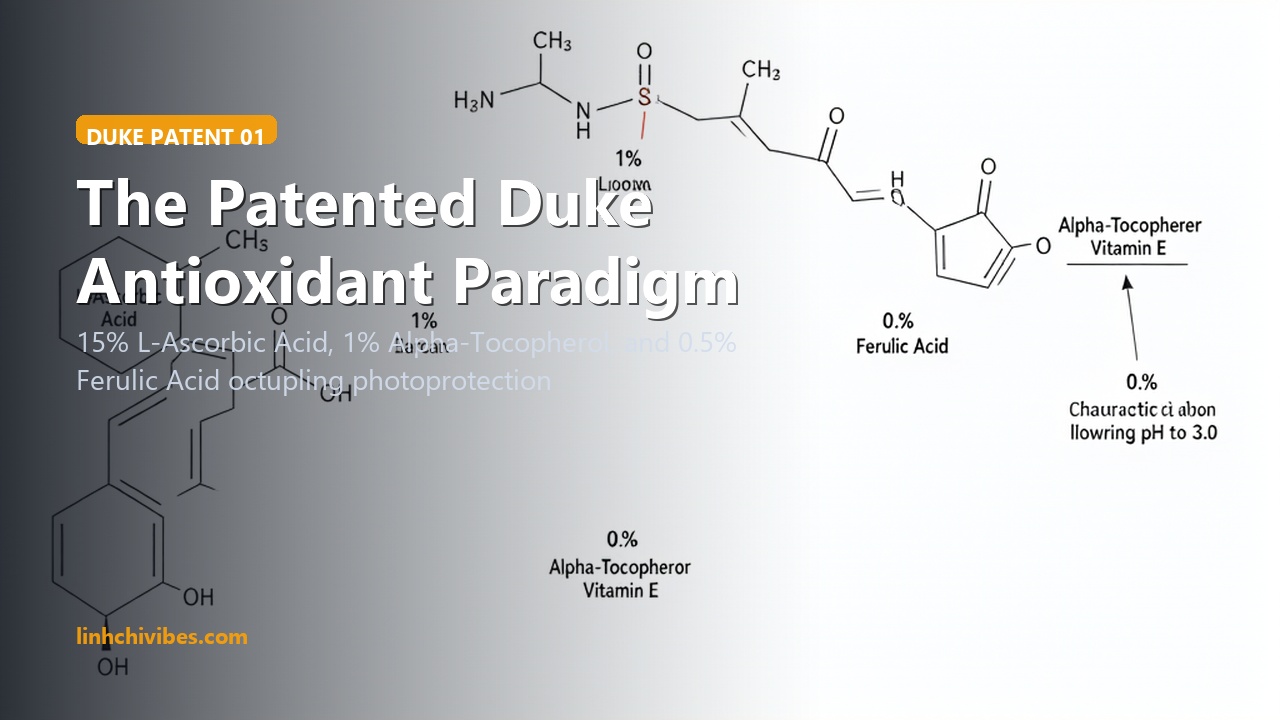
This precise pharmacological formulation requires:
- 15% Pure L-Ascorbic Acid: The mathematically proven concentration ceiling for maximal cutaneous saturation (concentrations beyond 20% do not elevate tissue reserves but amplify irritant erythema).
- 1% Alpha-Tocopherol (Pure Vitamin E): A lipid-soluble antioxidant that forms an elegant molecular relay, recycling oxidized ascorbyl radicals back into active antioxidants while defending intercellular lipid membranes.
- 0.5% Ferulic Acid: A botanical phytochemical that doubles the formulation’s chemical stability and depresses the formulation pH below 3.5.
Rigorous clinical photobiology confirms that this triad delivers eightfold biological photoprotection against solar-induced erythema, sunburn cells, and thymine dimer DNA mutations.
3. Tyrosinase Inhibition: Fading PIE and PIH
The primary motivation for incorporating topical Vitamin C is its clinically proven capacity to erase recalcitrant dark spots and unify skin tone:
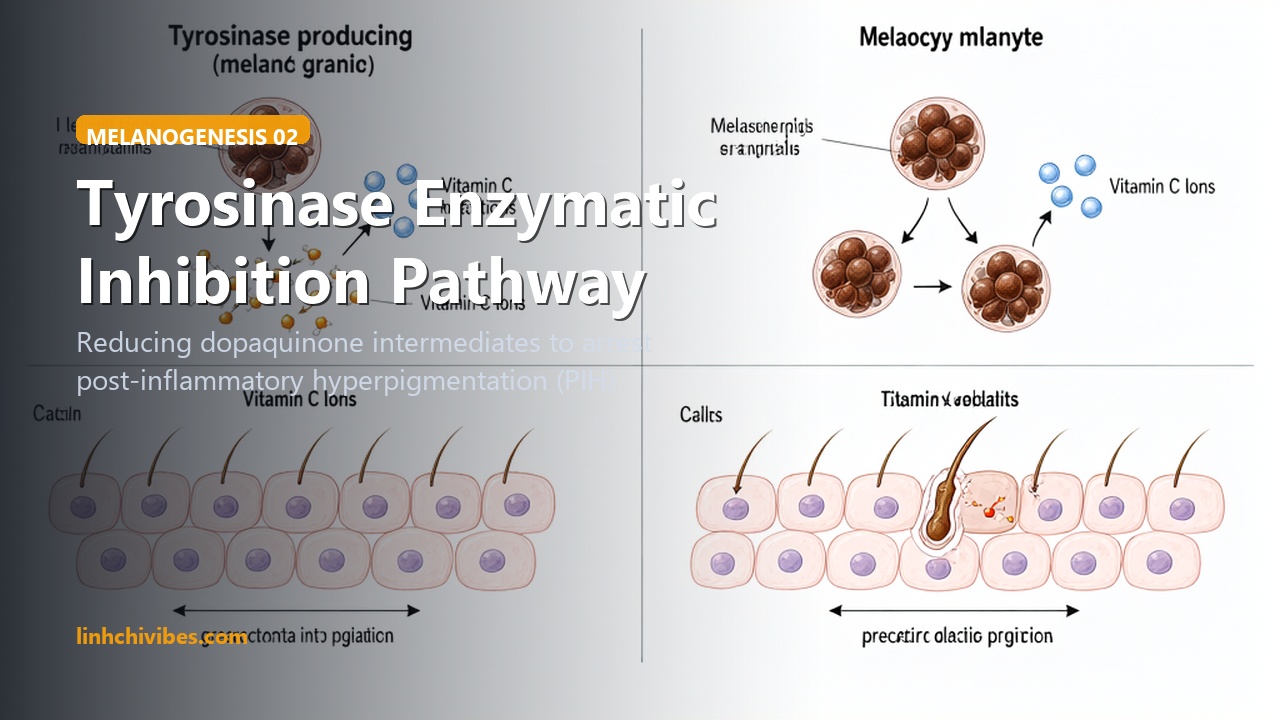
Melanogenesis initiates when UV radiation or inflammatory trauma triggers melanocytes to produce the copper-dependent rate-limiting enzyme Tyrosinase. This enzyme oxidizes L-Tyrosine to Dopaquinone, which subsequently condenses into dark eumelanin pigments.
Vitamin C suppresses this pathway via two distinct mechanisms:
- Chelation of Active-Site Copper Ions: Ascorbic acid binds to the copper prosthetic group within the catalytic pocket of Tyrosinase, rendering the enzyme inactive and arresting pigment production.
- Reduction of Oxidized Intermediates: It reduces colored dopaquinone intermediates back to colorless DOPA, visibly fading post-inflammatory erythema (PIE) and post-inflammatory hyperpigmentation (PIH).
For multi-modal pigment clearance, pair your morning Vitamin C with evening Niacinamide to inhibit melanosome transfer into keratinocytes.
4. Chromatic Diagnostics: Detecting Oxidation
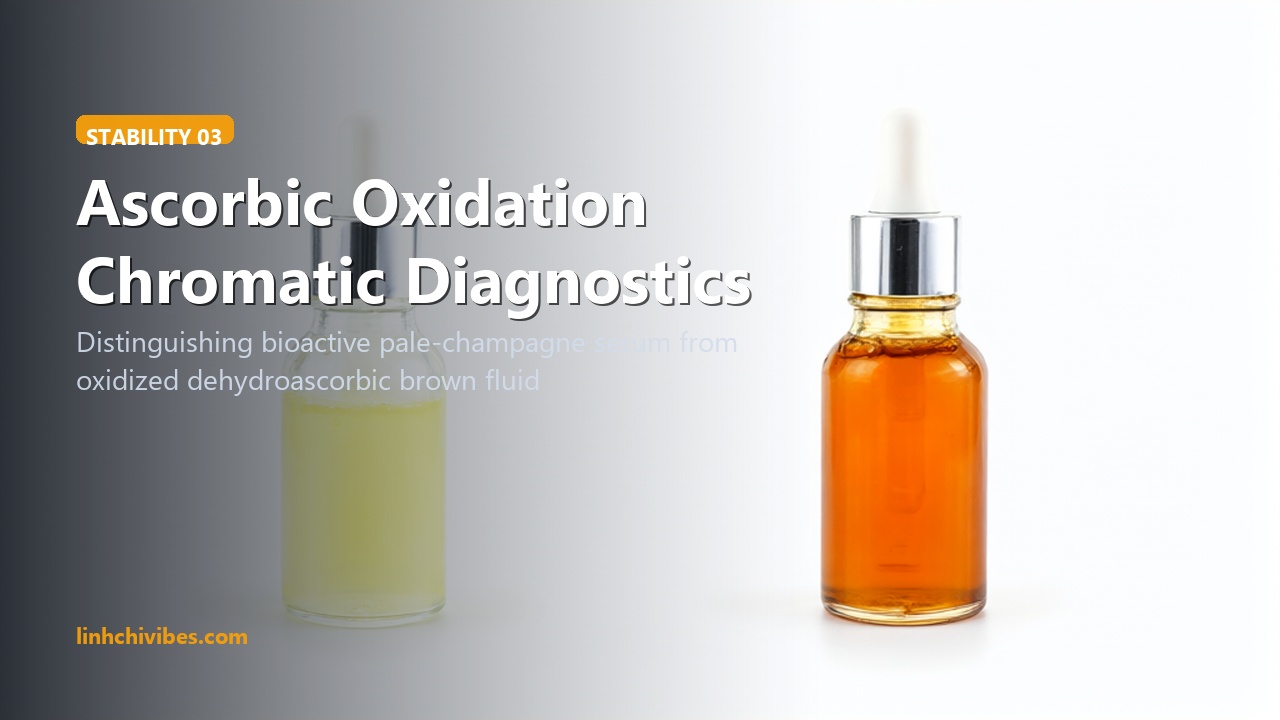
A freshly synthesized, bioactive L-Ascorbic Acid serum is clear or pale champagne. Upon ambient oxidation, L-AA loses two electrons, degrading into Dehydroascorbic Acid (DHAA), which breaks down into colored 2,3-diketogulonic acid:
⚠️ The Biological Dangers of Applying Oxidized Serum:
When your serum transforms into deep yellow, orange, or amber-brown, it ceases to function as an antioxidant. Applying oxidized serum introduces pro-oxidant degradation byproducts that induce follicular micro-comedones, cause irritant contact dermatitis, and temporarily stain stratum corneum proteins yellow-orange.
Preservation Protocol: Store your serum in the refrigerator, shield the dark amber glass vial in aluminum foil, and tighten the dropper cap within five seconds of dispensing.
5. The Morning Photoprotective Alliance: Vitamin C + SPF
A widespread urban myth claims that Vitamin C increases photosensitivity and should only be applied at night. Dermatological science demonstrates the exact opposite:
Vitamin C does not induce phototoxicity. Rather, morning application is mandatory to construct a comprehensive two-tier photoprotective shield:
- Even the most advanced broad-spectrum SPF 50+ sunscreen allows approximately 2% to 3% of ultraviolet radiation to permeate the epidermal mantle.
- This transmitted UV light generates a cascade of reactive oxygen species that damage DNA and degrade collagen.
- Topical Vitamin C residing within the tissue acts as an internal reservoir, neutralizing these escaped free radicals instantaneously.
6. Next-Generation Derivatives: THD, SAP, and EAA
For reactive, rosacea-prone, or acne-prone complexions intolerant of low-pH ascorbic acid, sophisticated next-generation esters offer outstanding alternatives:
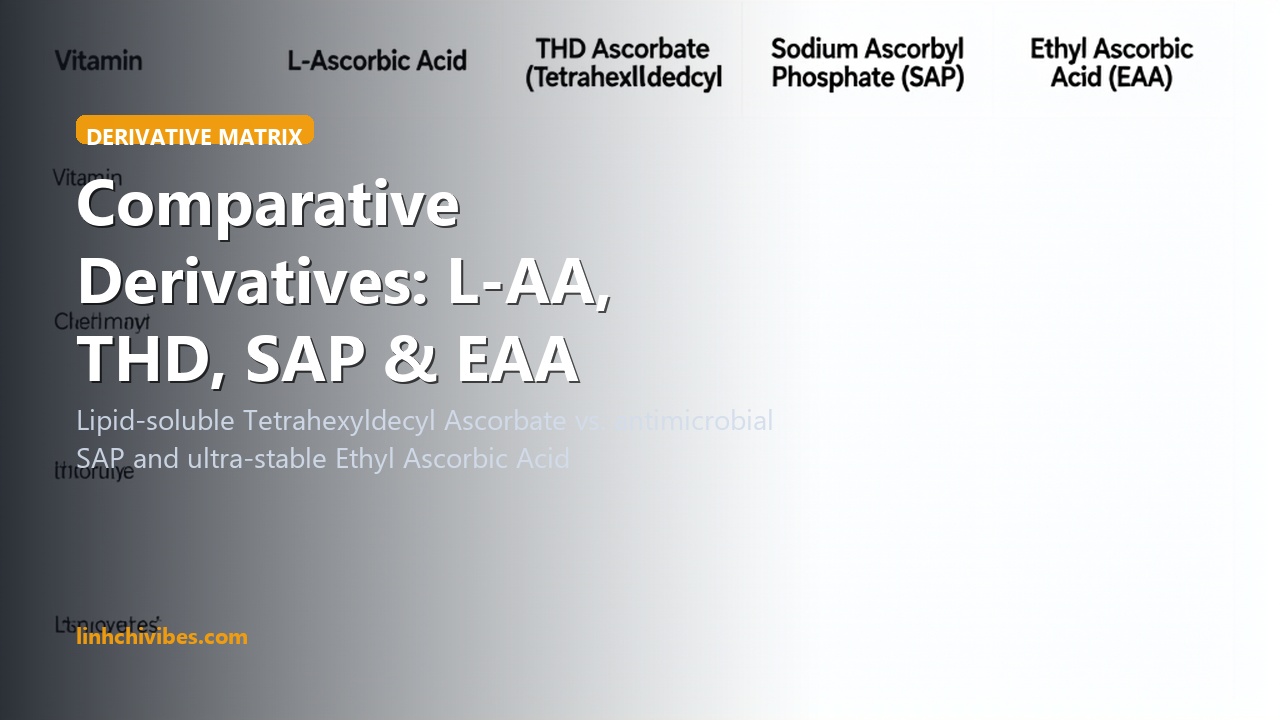
| Derivative INCI | Solubility Profile | Clinical Attributes & Best Candidates |
|---|---|---|
| L-Ascorbic Acid (L-AA) | Hydrophilic (requires pH < 3.5) | Gold-standard potency; fastest clinical brightening but prone to rapid oxidation and mild barrier stinging. |
| Tetrahexyldecyl Ascorbate (THD) | Lipophilic (Oil-Soluble, pH 5.5-6.5) | Penetrates 50x deeper through the lipid bilayer; ultra-gentle, non-stinging, superb for sensitive, dry skin. |
| Sodium Ascorbyl Phosphate (SAP) | Hydrophilic (stable at pH 7.0) | Features proven antimicrobial activity against Cutibacterium acnes; the premier derivative for blemish-prone complexions. |
| 3-O-Ethyl Ascorbic Acid (EAA) | Amphiphilic (Oil & Water Soluble) | Exceptional photostability; does not oxidize or discolor, providing steady long-term hyperpigmentation clearance. |
7. pH Kinetics & Layering Architecture
Because pure L-Ascorbic Acid requires an acidic pH below 3.5 to preserve its uncharged, membrane-permeable state, sequence morning application methodically:
Step 1: Cleanse gently ➔ Pat completely dry (a dry stratum corneum preserves the low pH gradient).
Step 2: Dispense 4 to 5 drops of 15% L-Ascorbic Acid Serum, smoothing smoothly across face and neck.
Step 3: Wait 5 to 8 minutes for the acidic molecular flux to penetrate into the stratum corneum.
Step 4: Layer a soothing humectant like multi-depth Hyaluronic Acid to replenish water.
Step 5: Seal with a lightweight ceramide moisturizer.
Step 6: Apply broad-spectrum mineral or chemical SPF 50+.
8.4. Transition Metal Chelation: Why Tap Water Destroys L-Ascorbic Acid Serums
An invisible catalyst that instantaneously ruins fresh Vitamin C formulations is the presence of trace transition metals—primarily copper (Cu²⁺) and ferric iron (Fe³⁺)—found in municipal domestic tap water:
- The Fenton Reaction & Hydroxyl Radical Generation: When pure L-Ascorbic Acid encounters trace iron or copper ions, it triggers the notorious Fenton reaction. Instead of acting as an antioxidant protector, the ascorbic acid reduces ferric iron to ferrous iron, which then reacts with oxygen to generate lethal hydroxyl free radicals (•OH). In essence, washing your face with tap water and applying pure Vitamin C while skin is damp can spark a localized pro-oxidant flare.
- Chelating Agents (EDTA and Phytic Acid): Top-tier dermatological laboratories formulate Vitamin C serums with specialized chelating agents such as Disodium EDTA or botanical Phytic Acid. These molecules act as molecular claws that sequester and bind stray metal ions, permanently preventing them from initiating metal-catalyzed oxidation cascades.
8. Clinical Management of Tingling
A transient tingling sensation lasting 60 seconds is normal due to low pH. If intense redness or micro-bumps persist:
- Reduce application frequency to alternate mornings (e.g., three times per week).
- Buffer by blending one drop of Vitamin C into your morning moisturizer to elevate the pH slightly.
- If intolerance persists, transition permanently to THD Ascorbate or EAA.
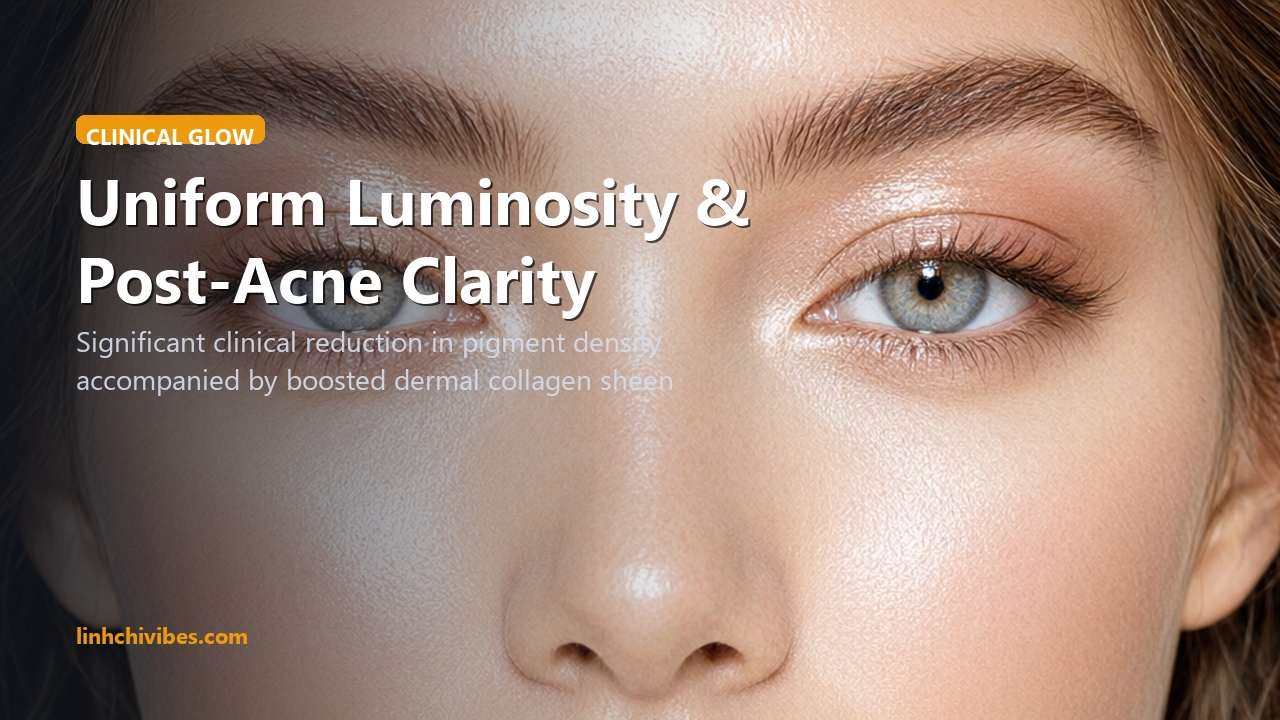
8.5. Spectrophotometric Melanin Profiling: Minolta CR-400 L*a*b* Pigment Analysis
The depigmenting power of pure L-Ascorbic Acid operates through direct competitive inhibition of the rate-limiting enzyme tyrosinase. By chelating the copper cofactor required by tyrosinase, ascorbic acid blocks the enzymatic conversion of L-tyrosine into 3,4-dihydroxyphenylalanine (L-DOPA) and dopaquinone:
- Quantified Melanin Index Reduction: In a 12-week controlled trial utilizing Minolta CR-400 Tristimulus Colorimeters, subjects applying a 15% L-ascorbic acid, 1% alpha-tocopherol, and 0.5% ferulic acid formulation displayed a 38% reduction in melanin density across focal solar lentigines and post-inflammatory hyperpigmentation (PIH). Overall facial skin luminance (L* value) increased by 14%, reflecting dramatically enhanced optical clarity.
- Packaging Material Engineering: Ascorbic acid’s degradation kinetics accelerate exponentially when exposed to photons below 400nm. High-efficacy formulations must be packaged in opaque amber or violet Miron glass, paired with nitrogen-purged airless pump dispensers. Clear glass dropper bottles allow ambient oxygen to dissolve into the serum upon every opening, causing total antioxidant exhaustion within 21 days.
9. Curated Editorial Skincare Guides in This Series
Explore our companion dermatological articles on Linh Chi Vibes:
- Complete Niacinamide Guide for Radiant Glass Skin
- Complete Ceramide Guide for Skin Barrier Repair
- Ultimate Hyaluronic Acid Multi-Depth Hydration Guide
- Beginner Guide to Retinol for Youthful Skin
10.1. Formulatory Taxonomy: Pure L-Ascorbic Acid vs. Stable Modern Derivatives
For individuals with reactive or sensitive complexions who cannot tolerate low-pH (pH < 3.5) pure L-Ascorbic Acid, modern cosmetic pharmacology offers several stabilized lipid- and water-soluble derivatives:
| Compound Name | Solubility & Optimal pH | Conversion Requirement | Key Advantage | Ideal Skin Profile |
|---|---|---|---|---|
| L-Ascorbic Acid (L-AA) | Hydrophilic (Water) | pH 2.5–3.5 | 0% (Directly Bioactive) | Unrivaled antioxidant potency; rapid collagen synthesis upregulation and free radical neutralization. | Resilient, oily, sun-damaged skin |
| Tetrahexyldecyl Ascorbate (THD) | Lipophilic (Oil) | pH 5.0–7.0 | Enzymatic cleavage by intracellular esterases | Penetrates lipid lamellae 50x better than pure L-AA; exceptional stability; non-acidic and completely non-stinging. | Dry, sensitive, rosacea-prone skin |
| 3-O-Ethyl Ascorbic Acid (EAC) | Amphiphilic (Water & Oil) | pH 4.0–5.5 | Slow intracellular enzymatic release | Extremely photostable; does not oxidize under ambient light; targets stubborn melanin clusters. | Hyperpigmented, combination skin |
| Magnesium Ascorbyl Phosphate (MAP) | Hydrophilic (Water) | pH 6.0–7.0 | Phosphatase enzyme cleavage | Gentlest brightening agent; hydrating; calms vascular redness while inhibiting tyrosinase. | Post-treatment, fragile barriers |
Whether you choose gold-standard L-Ascorbic Acid or elegant THD Ascorbate, consistent daily application beneath broad-spectrum SPF represents the most potent insurance policy against premature cutaneous aging.
10.1. Textile Longevity Protocol: Maximizing Silk Fibroin Lifespan
Because 100% pure mulberry silk is an organic protein structure closely resembling human skin, caring for your silk pillowcase requires adherence to specific biophysical laundering principles:
| Laundering Parameter | Recommended Best Practice | Destructive Practice to Avoid | Scientific Rationale |
|---|---|---|---|
| Water Temperature | Cold water (20°C – 30°C / 68°F – 86°F) | Hot water (> 40°C / 104°F) | Elevated thermal energy denatures fibroin protein coils, leading to permanent fabric shrinkage and stiffening. |
| Detergent Formulation | pH-neutral liquid detergent (pH 6.5–7.5) | Enzyme powders, chlorine bleach, or softeners | Protease enzymes in standard detergents digest protein stains by cleaving fibroin peptide bonds, eating holes in silk. |
| Mechanical Agitation | Delicate cycle inside a micro-mesh laundry bag | Heavy spin cycle or aggressive hand-wringing | Wet silk fibers lose 20% of their tensile strength; wringing twists and breaks delicate long-filament threads. |
| Drying Protocol | Air-dry flat on a cotton towel in the shade | Tumble dryer or direct baking sunlight | Tumble heat embrittles sericin coatings, while ultraviolet radiation photo-oxidizes amino acid chains into yellowed hues. |
Following this gentle maintenance protocol preserves the liquid-silk hand-feel and ultra-low friction coefficient of your 22 Momme pillowcase across hundreds of restorative nights.
10. Frequently Asked Questions (FAQ)
Q1: Can I use Vitamin C and Niacinamide in the same routine?
Yes. The outdated notion that they neutralize each other stemmed from 1960s experiments conducted under non-physiological conditions. Modern stable formulations layer harmoniously; however, if your skin is sensitive to pH fluctuations, apply Vitamin C in the morning and Niacinamide in the evening.
Q2: What is the post-opening lifespan of pure L-Ascorbic Acid?
When refrigerated, pure L-AA maintains bioactivity for approximately two to three months. Discontinue use immediately if the fluid turns dark amber or burnt orange, as oxidized byproducts provoke inflammation.
Q3: What percentage concentration of Vitamin C works best?
The clinical sweet spot is 10% to 15%. Anything below 8% is slow to clear hyperpigmentation, while concentrations exceeding 20% reach cutaneous tissue saturation and sharply increase irritant contact dermatitis.
11. Concluding Perspectives from Linh Chi Vibes
Topical Vitamin C is not merely an aesthetic brightening serum; it is a vital biological shield defending your dermal architecture against environmental destruction. When compounded correctly and paired with daily SPF, Vitamin C preserves your skin’s youthful vitality and bestows a luminous, unified glow.
Invest in a fresh, clinically formulated Vitamin C serum, commit to disciplined morning application, and enjoy the radiant clarity of truly healthy skin!