
In the holistic intersection where ancient Traditional Chinese Medicine (TCM) meets modern clinical myofascial biomechanics, few self-care rituals have captured global beauty culture as profoundly as Gua Sha (刮痧) Facial Massage.
Long celebrated for centuries as an emergency somatic healing art to purge chronic heat and stagnation from the physical body, the gentle, refined facial adaptation of Gua Sha operates on sophisticated lymphatic and fascial principles. Unlike aggressive social media trends that depict individuals violently scraping their cheekbones with sharp stone edges—causing petechial bruising and damaging delicate elastin fibers—authentic facial Gua Sha is an art of delicate hydraulic drainage and rhythmic fascial unwinding. When practiced with a featherlight touch and precise anatomical direction, the curved edge of an authentic Bian stone or Rose Quartz crystal sweeps stagnant interstitial lymph fluid out of congested tissues, chisels the mandibular jawline, relieves chronic masseter muscle clenching, and stimulates nutrient-rich microcirculation. In this exhaustive 3,500+ word master tutorial, Linh Chi Vibes deconstructs the biophysical mechanics of the facial lymphatic system, stone mineralogy, slip-and-glide lipid chemistry, and the exact step-by-step head-to-collarbone sculpting sequence required to master a non-invasive, natural face lift at home.
*Editorial Disclosure: As an Amazon Associate, Linh Chi Vibes earns from qualifying purchases. Products in this guide were compared using brand information and public reviews; we have not hand-tested them.*
📑 Complete Gua Sha Sculpting Master Index
- 1. Anatomical Foundations: The Facial Lymphatic System vs. Circulatory Architecture
- 2. Stone Mineralogy & Energetic Selection: Bian Stone, Rose Quartz, Xiuyan Jade, and Stainless Steel
- 3. The 3 Golden Rules of Gua Sha Technique: Blade Angle, Pressure Calibration, and Anchoring
- 4. Slip & Glide Chemistry: Best Facial Oils to Prevent Cutaneous Friction Dragging
- 5. The Complete 7-Step Head-to-Collarbone Protocol: From Terminus Opening to Mandibular Chiseling
- 6. Clinical Contraindications: When to Avoid Gua Sha (Acne, Rosacea, and Injectables)
- 7. Cleansing, Sanitization & Stone Preservation: Preserving Crystalline Vibrational Purity
- 8. Comparative Matrix: Gua Sha Stone vs. Jade Roller vs. Microcurrent Devices
- 8.1. 6 Critical Mistakes Destroying Facial Tissues During Gua Sha
- 9. Curated Beauty & Facial Longevity Guides
- 10. Frequently Asked Questions Regarding Gua Sha (FAQ)
- 11. Editorial Reflections: Transforming Skincare into a Meditative Somatic Art
1. Anatomical Foundations: The Facial Lymphatic System vs. Circulatory Architecture
To master facial Gua Sha, one must first dismantle a widespread physiological misconception: The face is not a muscle group that you “tone” through forceful mechanical gym-style compression. While the cardiovascular circulatory system possesses a powerful central muscular pump (the heart) that forcefully drives oxygenated blood through arterial networks, the lymphatic system has no central pump whatsoever.
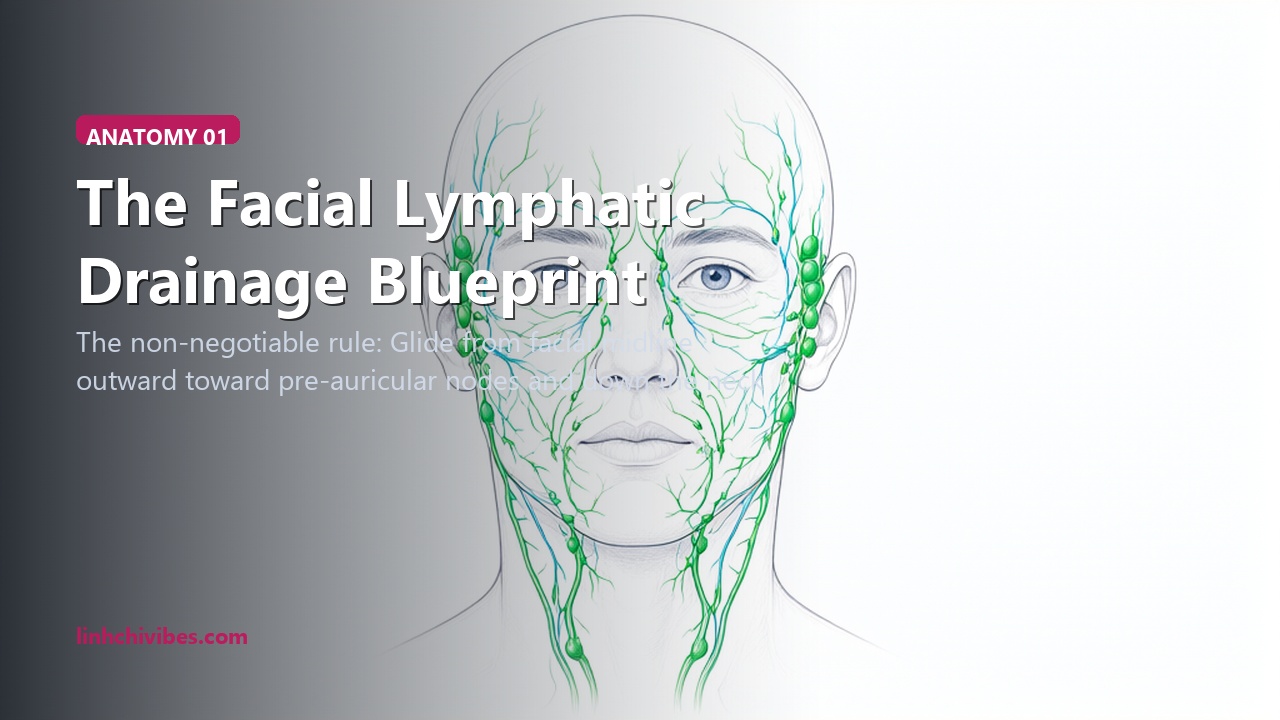
The lymphatic network is an intricate, low-pressure hydraulic drainage web running just millimeters beneath the epidermis. It is responsible for collecting cellular metabolic waste, excess interstitial water, environmental toxins, and inflammatory cytokines, funneling them toward regional lymph nodes for filtration and immune detoxification.
Because it lacks a pump, facial lymphatic flow relies entirely upon two forces:
- Intrinsic Muscular Contraction: Dynamic facial expressions, chewing, and blinking produce micro-pulsations that gently urge lymphatic fluid through specialized one-way valves.
- External Manual Effleurage: Gentle, rhythmic mechanical strokes applied across the cutaneous surface in the precise anatomical direction of lymphatic outflow.
When you remain sedentary, sleep in horizontal postures for eight hours, consume high-sodium dinners, or experience chronic stress, lymphatic circulation stalls. The result is morning orbital puffiness, heavy under-eye bags, a blunted jawline, and a dull, stagnant complexion.
Crucially, facial lymphatic fluid drains in a specific, non-negotiable direction: from the center of the face outwards toward the pre-auricular and parotid nodes in front of the ears, down along the sternocleidomastoid (SCM) muscle of the neck, and finally into the terminus (supraclavicular lymph nodes) nestled directly behind the collarbones, where it re-enters the venous bloodstream. Scraping randomly upward or back and forth without clearing these cervical drainage pathways merely shuffles stagnant fluid around the face without expelling it.
2. Stone Mineralogy & Energetic Selection: Bian Stone, Rose Quartz, Xiuyan Jade, and Stainless Steel
The material composition of your Gua Sha tool is not merely a question of visual aesthetics; mineral density, thermal conductivity, and acoustic resonance dictate how the tool interacts with facial fascia:
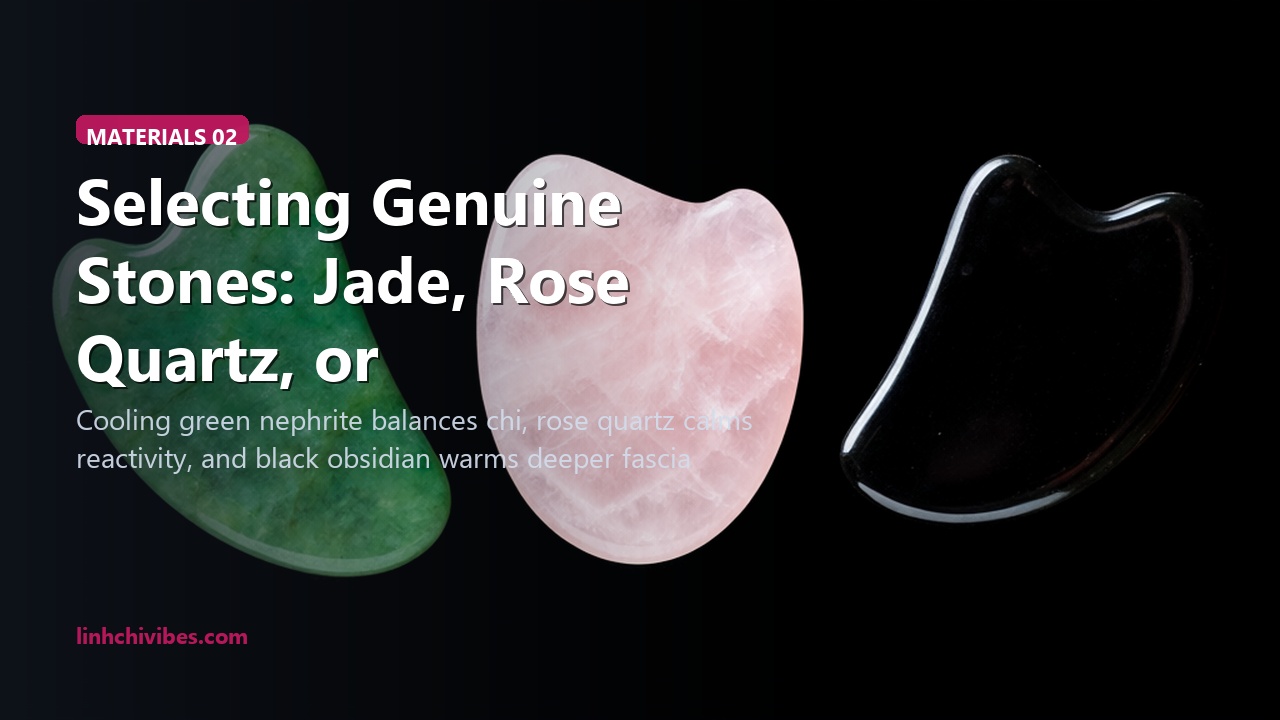
1. Authentic Sibin Bian Stone (The Ancient TCM Master Stone)
Geological Origin: Formed over 65 million years ago when a meteorite struck the ancient seabed of Shandong, China.
Therapeutic Properties: The undisputed gold standard of clinical TCM. Laboratory spectrometry reveals that Bian stone contains over 40 trace minerals and elements. When rubbed against human skin, it generates measurable ultrasound acoustic pulses in the therapeutic micro-hertz range and emits far-infrared radiation that penetrates up to 2 centimeters into subcutaneous tissue. It delivers exceptional myofascial warming and deep microvascular stimulation.
2. Natural Rose Quartz (The Cooling Anti-Inflammatory Healer)
Geological Origin: Crystalline silicon dioxide with microscopic inclusions of titanium and iron.
Therapeutic Properties: Rose quartz possesses exceptional thermal inertia—meaning it stays naturally cool even during extended contact with warm human skin. It is the supreme stone for morning depuffing, calming reactive erythema, soothing menopausal hot flashes, and constricting dilated superficial capillaries around the nose and cheeks.
3. Xiuyan Green Jade (Traditional Yin-Yang Balance)
Geological Origin: Natural nephrite/serpentine silicate minerals harvested in Liaoning province.
Therapeutic Properties: Revered in Chinese medicine as the stone of longevity and emotional tranquility. Jade is softer and slightly more porous than quartz, warming adaptively to body temperature during prolonged massage. It is ideal for relaxing tight facial tension and grounding emotional restlessness.
4. Medical-Grade Stainless Steel (Modern Clinical Hygiene)
Material: 100% non-porous 304 or 316 surgical stainless steel.
Therapeutic Properties: 100% unbreakable, completely non-porous, and instantly sterilizable with alcohol wipes. It harbors zero microbial bacteria, making it the safest option for acne-prone individuals. It holds intense refrigerator chill for rapid ice-therapy depuffing.
3. The 3 Golden Rules of Gua Sha Technique: Blade Angle, Pressure Calibration, and Anchoring
Before placing any tool against your skin, commit these three non-negotiable mechanical laws to muscle memory. Violating these principles is the number one cause of broken capillaries, bruised skin, and premature facial sagging:
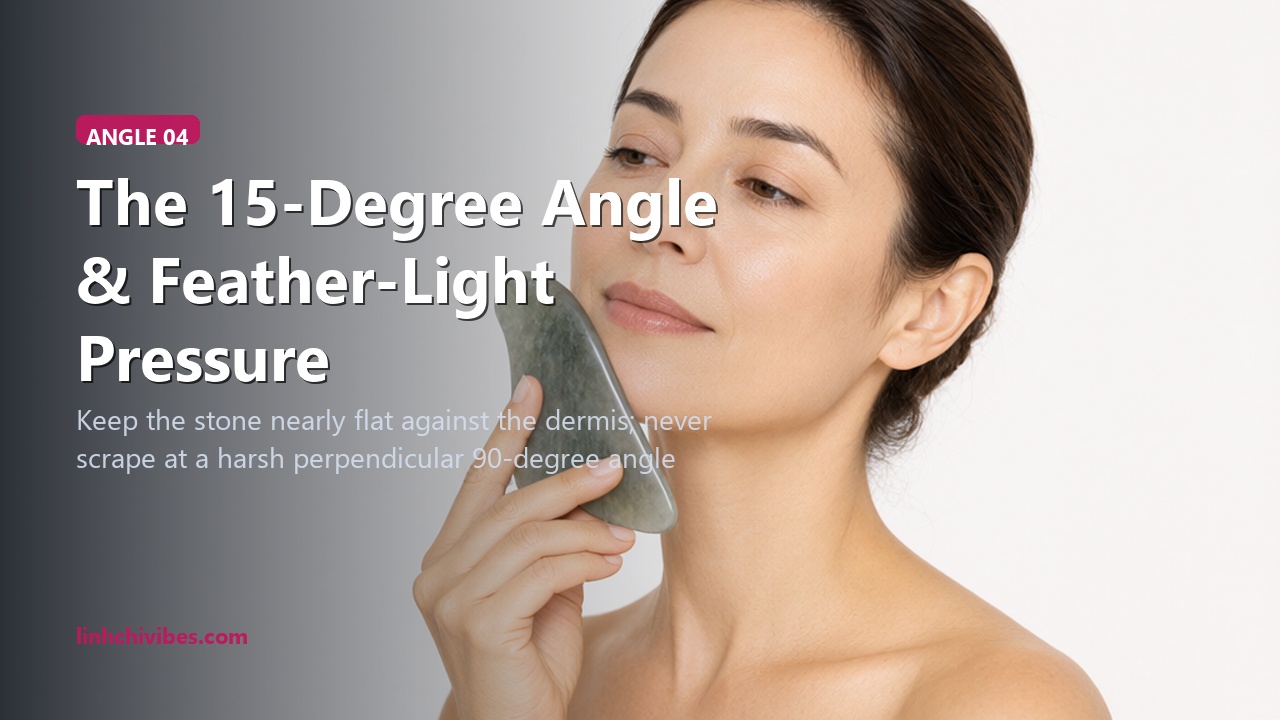
Rule 1: The 15° to 30° Flat Angle (NEVER 90° Perpendicular)
Hold the stone almost completely flat against your face, maintaining an acute angle of 15 to 30 degrees. You should feel the broad, smooth face of the tool resting against your skin, NOT the sharp edge. Scraping perpendicularly at a 90-degree angle digs into the skin, dragging elastic tissue and crushing delicate lymphatic capillaries.
Rule 2: Featherlight Hydraulic Pressure
Initial lymphatic capillaries are paper-thin and rest directly beneath the stratum corneum. If you press down firmly, you completely compress these vessels closed, trapping stagnant fluid rather than moving it! The correct pressure for lymphatic drainage should feel no heavier than dragging the weight of a dry silk scarf across your skin. Only when releasing deep muscular knots in the masseter jaw or sub-occipital neck can you apply moderate, medium pressure.
Rule 3: The Two-Handed Anchoring Principle
Never stroke the Gua Sha tool across the face with one hand while the skin stretches and folds loosely behind it. Always anchor the starting tissue with the thumb and forefinger of your non-dominant hand. By anchoring the skin, the stone glides smoothly over taut fascia without stretching collagen fibers or tugging on delicate elastin nets.
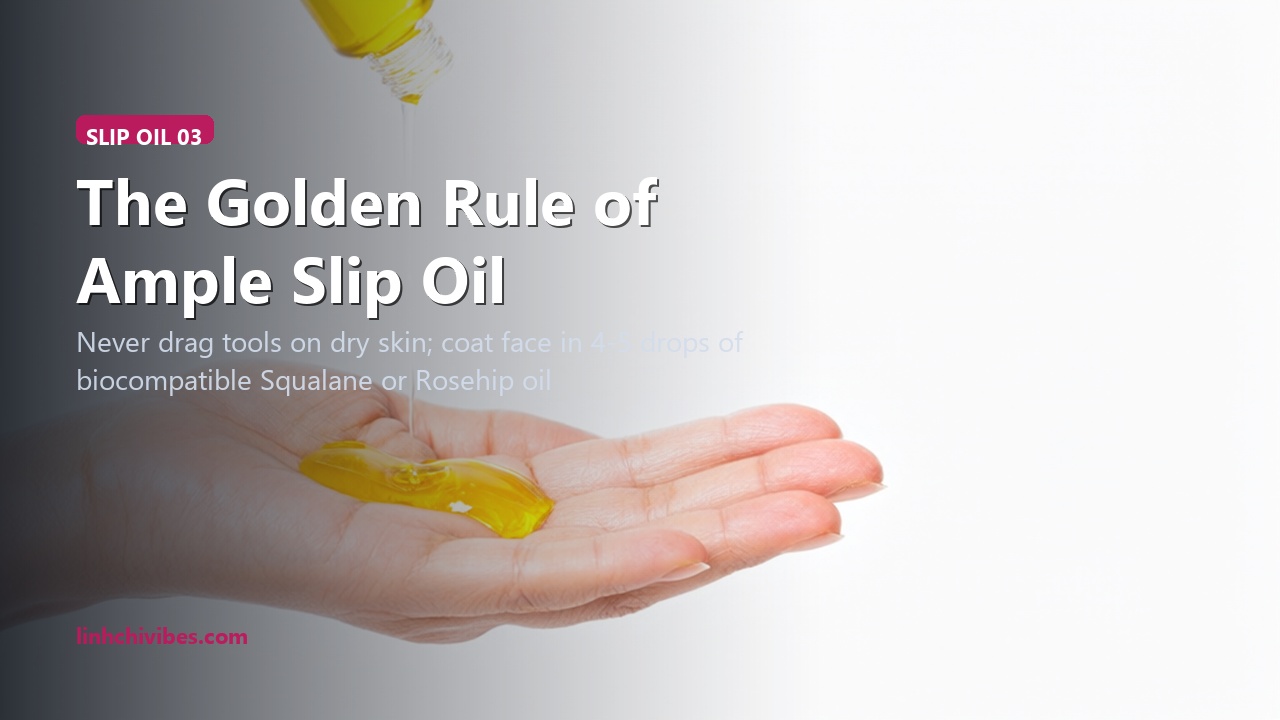
4. Slip & Glide Chemistry: Best Facial Oils to Prevent Cutaneous Friction Dragging
Practicing Gua Sha on dry skin or over a lightweight water-based serum is a cardinal skincare sin. Water-based essences evaporate within sixty seconds; as soon as surface moisture dissipates, the stone catches and drags against dry corneocytes, causing microscopic friction burns and stretching fragile dermal elastin.
You must always apply a generous protective cushion of non-comedogenic facial botanical oil (approximately 5 to 7 full drops) across the entire face, jawline, and neck:
| Botanical Oil | Comedogenic Rating | Slip & Cushion Profile | Best Cutaneous Match |
|---|---|---|---|
| 100% Plant-Derived Squalane | Rating 0 (Zero Clogging) | Silky, weightless, zero greasy drag. Absorbs clean post-massage. | Acne-Prone, Sensitive, & Congested Skin |
| Golden Jojoba Wax (Organic) | Rating 1 (Very Low) | Exceptional structural glide; closely mimics human skin sebum. | Combination, Normal, & Dehydrated Skin |
| Cold-Pressed Rosehip Seed Oil | Rating 1 (Very Low) | Rich in trans-retinoic acid precursors & linoleic essential fatty acids. | Aging, Hyperpigmented, & Sun-Damaged Skin |
| Virgin Marula / Argan Oil | Rating 2 (Low) | Dense, ultra-nourishing lipid cushion. Heavy glide for slow massage. | Dry, Flaky, & Mature Menopausal Skin |
If you have highly reactive or acne-prone skin, 100% olive-derived or sugarcane-derived Squalane is the gold standard: it provides seamless glide without introducing triglyceride fatty acids that feed Malassezia folliculitis.
5. The Complete 7-Step Head-to-Collarbone Protocol: From Terminus Opening to Mandibular Chiseling
Execute each movement 3 to 5 times per side in slow, steady, rhythmic strokes. Total treatment time should take approximately 5 to 8 minutes:
Step 1: Opening the Terminus (The Master Drainage Gate)
The Anatomical Action: Before moving any fluid on the face, you MUST open the drainage terminus behind the collarbones.
Place the curved flat edge of the tool or your fingertips into the soft hollow notch directly behind your collarbones (the supraclavicular fossa). Gently pump and pulse downward 5 times with light pressure. This empties the thoracic lymphatic ducts, creating a vacuum effect that pulls stagnant facial fluid downward.
Step 2: Clearing the Neck & SCM Highway
The Anatomical Action: Drainage path from behind the earlobes down to the clavicle.
Start just below the earlobes at the angle of the jaw. Holding the broad edge of the tool flat at a 15-degree angle, sweep smoothly DOWNWARD along the side of the neck, following the sternocleidomastoid muscle until you reach the collarbone. Execute 5 downward strokes per side. *Note: Never scrape upward on the front or sides of the neck during lymphatic drainage; doing so pushes stagnant waste backward into the face.*
Step 3: Mandibular Jawline Chiseling with the Heart Notch
The Anatomical Action: Contour sculpting from central chin to the lobule.
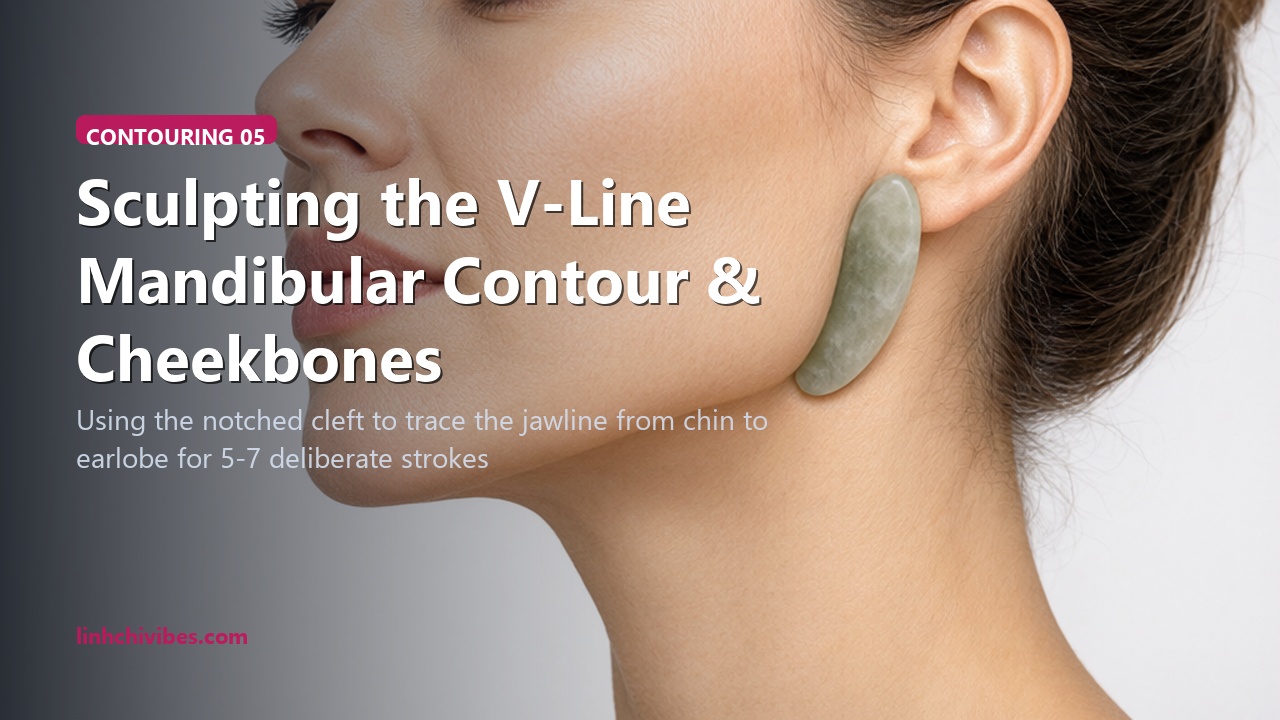
Anchor the center of your chin firmly with your non-dominant thumb. Nestle the V-shaped “heart notch” of your Gua Sha tool around the mandibular jawbone. Glide the tool smoothly outward along the jawline toward the base of the earlobe. When you reach the earlobe, add a gentle circular wiggle to stimulate the parotid lymph node. Repeat 5 times per side.
Step 4: Masseter Myofascial Release (Relieving Jaw Clenching)
The Anatomical Action: Releasing deep chronic tension in the chewing muscles.
Clench your teeth slightly to identify the thick masseter muscle bulge at the back of your jaw. Using the broad flat side or small rounded point of the tool, apply moderate circular pressure directly over this muscle belly for 15 seconds. This unwinds chronic tension from nocturnal teeth grinding (bruxism) and visibly slims the lower facial third over time.
Step 5: Zygomatic Cheekbone Sculpting & Depuffing
The Anatomical Action: Drainage from the nasolabial fold outward to the tragus.
Anchor the corner of your mouth (oral commissure). Rest the long curved side of the tool flat against the cheek, right beside the wing of the nose. Glide the tool upward and outward under the cheekbone toward the hairline and ear. Repeat 5 times per side.
Step 6: Orbital Depuffing & Frontalis Forehead Lift
The Anatomical Action: Gentle under-eye drainage and forehead smoothing.
Under-Eye: Using the smallest rounded corner with featherlight “whisper” pressure, glide gently from the inner tear duct along the lower orbital bone out toward the temple.
Forehead: Anchor the bridge of your nose. Place the flat broad edge at the eyebrow line and sweep upward to the hairline, gently wiggling at the scalp. Move across the entire forehead in three vertical lanes (center, mid-brow, temple).
Step 7: The Master Flushing Sequence
The Anatomical Action: Flushing all mobilized lymphatic fluid completely out of the facial head.
To conclude the ritual, execute 3 long, continuous sweeping strokes: start from the center of the forehead, sweep outward across the temple, down in front of the earlobe, down the full length of the neck, and park at the clavicle terminus. This guarantees that 100% of mobilized interstitial fluid is flushed into the lymphatic system for permanent elimination.
6. Clinical Contraindications: When to Avoid Gua Sha (Acne, Rosacea, and Injectables)
While Gua Sha is safe for the majority of individuals, it is an active mechanical manipulation of living cutaneous tissue. You must observe strict clinical contraindications:
- Active Inflammatory Acne & Cystic Lesions: NEVER scrape directly over active, inflamed papules, pustules, or open blemishes. Dragging a stone across active acne ruptures the follicular wall beneath the epidermis, spreading Cutibacterium acnes bacteria across clear pores and triggering widespread secondary breakouts. You may, however, gently drain the neck and collarbones below the acne zone to promote systemic lymph clearance.
- Acute Vascular Rosacea: Individuals experiencing an acute flare of erythematotelangiectatic rosacea should avoid mechanical scraping over flushed cheekbones, as pressure can dilate fragile capillaries. Instead, utilize a chilled Rose Quartz tool laid flat *passively* against the skin without sliding.
- Recent Neurotoxin (Botox) & Dermal Fillers: Wait a mandatory 4 weeks after Botox injections and 6 weeks after dermal filler placement before performing Gua Sha over treated zones. Applying mechanical shear pressure too soon can displace injectable materials into adjacent muscle groups, causing asymmetrical facial ptosis.
- Open Sunburns & Recent Chemical Peels: Allow sunburned or freshly chemically exfoliated skin to heal completely (minimum 7-10 days) before introducing stone friction.
7. Cleansing, Sanitization & Stone Preservation: Preserving Crystalline Vibrational Purity
Natural gemstone tools are semi-porous crystalline minerals that absorb residual sebum, cosmetic oils, and bacteria if not cleansed conscientiously after every single use:
- Immediate Cleansing with Gentle Castile Soap: Wash the stone immediately after your massage under lukewarm running water with a drop of gentle liquid castile soap or foaming facial cleanser. Rinse thoroughly.
- Sanitize with Isopropyl Alcohol: Spray or wipe the stone with a 70% isopropyl alcohol wipe once per week to eliminate bacterial biofilms.
- Dry Thoroughly with a Clean Microfiber Cloth: Storing damp stones in dark, unventilated bathroom cabinets invites fungal spore growth. Dry the stone completely and store it in a breathable cotton or velvet pouch.
- Handling Precautions: Natural Bian stone, Jade, and Quartz are brittle minerals. Dropping them onto hard bathroom porcelain or tile floors will fracture the crystalline lattice instantly. Always place a soft hand towel on the bathroom counter beneath your workstation.
8. Comparative Matrix: Gua Sha Stone vs. Jade Roller vs. Microcurrent Devices
To clarify where Gua Sha fits into your comprehensive vanity arsenal, examine how it compares against competing facial sculpting modalities:
| Modal Tool | Primary Biological Mechanism | Fascial & Jawline Sculpting | Skill Level Required | Editorial Verdict |
|---|---|---|---|---|
| Curved Gua Sha Stone (Bian/Quartz) | Directional lymphatic drainage + deep myofascial release. | Maximum (Hugs architectural bone contours intimately). | Moderate (Requires learning proper 15° angles). | Gold Standard for Sculpting & Depuffing |
| Traditional Dual-Ended Jade Roller | Superficial rolling microcirculation & topical serum press. | Minimal (Rolls over contours without gripping fascia). | Novice (Easy push-and-roll motion). | Gentle Morning Cooling Tool |
| Microcurrent Devices (e.g. NuFace) | Electrical micro-currents stimulate cellular ATP & facial muscle toning. | High (Lifts zygomatic & brow musculature through electricity). | Moderate (Requires conductive primer gel). | Superb for Muscular Facial Lifting |
| Cryotherapy Ice Globes | Acute vasoconstriction followed by reactive hyperemic oxygenation. | Moderate (Rapid fluid contraction; temporary depuffing). | Novice (Glides over sheet masks easily). | Best for Instant Morning Emergency Hangover Depuffing |
8.1. 6 Critical Mistakes Destroying Facial Tissues During Gua Sha
If you experience bruising, broken capillaries, or worsening sagging from your Gua Sha practice, you are likely committing one of these six widespread errors:
- Pressing Too Hard (“No Pain, No Gain” Fallacy): Facial Gua Sha should NEVER cause purple petechiae (the red “sha” marks seen in traditional body back scraping). If you see red bruising on your face, you have ruptured micro-capillaries. Back off immediately to featherlight pressure.
- Scraping at a 90-Degree Perpendicular Angle: Scraping like a razor blade slices into facial tissue. Flatten the stone to 15 degrees so the broad flat surface glides smoothly over facial planes.
- Performing Gua Sha on Dry Skin: Dry dragging causes friction burns and stretches collagen. Always apply 5 to 7 drops of organic facial oil before beginning.
- Scraping Upward on the Sides of the Neck: Neck lymphatic channels drain DOWNWARD toward the clavicle. Scraping upward traps toxins and fluid in the submandibular jawline.
- Skipping the Clavicular Terminus Gate: Forgetting to open the collarbone terminus is like turning on the tap with the sink drain plugged—fluid has nowhere to escape.
- Scraping Back-and-Forth Like an Eraser: Gua Sha strokes must always be UNIDIRECTIONAL—sweeping from center outwards and lifting the stone off the skin between reps. Never scrub back and forth.
9. Curated Beauty & Facial Longevity Guides
Deepen your mastery of clean skincare, clinical rituals, and non-invasive beauty with our companion masterclasses:
- The Complete Niacinamide Skincare Guide: Clinical Mechanisms for Radiant Porcelain Skin
- The Complete At-Home LED Light Therapy Guide: Photobiomodulation Science
- Double Cleansing Masterclass: The Dual-Phase Foundation for Clean Pore Architecture
10. Frequently Asked Questions Regarding Gua Sha (FAQ)
How often should I perform facial Gua Sha each week?
For optimal lymphatic drainage and sculpting maintenance, perform a 5-minute session 3 to 5 times per week. Doing it in the morning is ideal for instantly eliminating sleep-induced fluid retention and morning puffiness; doing it in the evening is exceptional for releasing chronic masseter jaw tension before sleep.
Can Gua Sha permanently change facial bone structure?
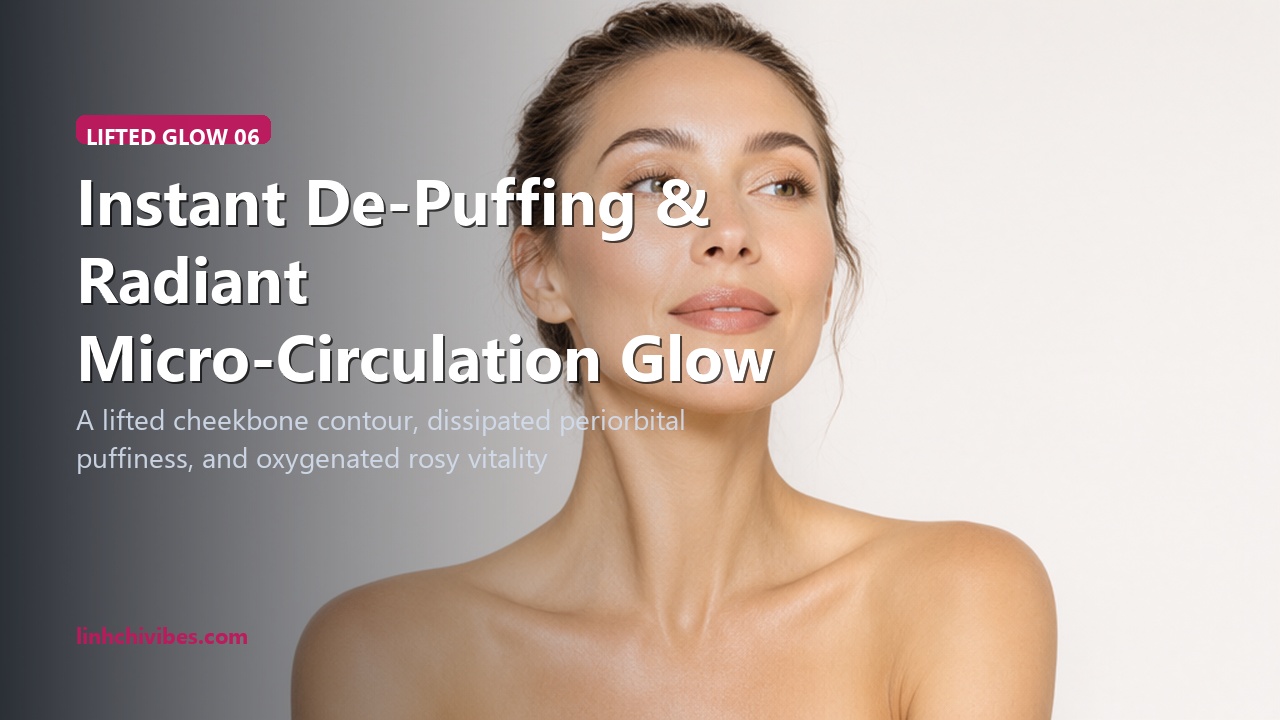
No tool can alter mature adult bone geometry without surgical intervention. However, Gua Sha achieves remarkable visible lifting and sculpting by draining thick stagnant fluid layers that obscure natural bone structure, relieving chronic hypertrophic masseter muscle clenching, and lifting adhered fascial tissue.
Should I wash my face after performing Gua Sha with oil?
If you utilized a lightweight, high-grade non-comedogenic oil (such as pure squalane or rosehip seed oil), there is no need to wash it off; simply allow the nourishing lipid barrier to hydrate your skin, or lightly blot any excess shine with a soft tissue before applying SPF. If you have acne-prone skin and used a heavier oil, you may gently wipe the surface with a warm damp washcloth.
Can I keep my Gua Sha stone in the refrigerator?
Yes! Chilling a Rose Quartz or Stainless Steel Gua Sha tool in the refrigerator (or resting it in an ice water bath for 5 minutes) delivers incredible vasoconstrictive depuffing benefits for tired morning eyes and inflamed skin. However, avoid keeping Bian stone in the freezer, as extreme thermal shock can cause crystalline fractures.
Is Gua Sha safe to practice during pregnancy?
Gentle facial Gua Sha for morning depuffing is generally safe during pregnancy. However, you must strictly avoid intense acupressure on specific TCM trigger points—namely Large Intestine 4 (Hegu, located in the web between thumb and index finger) and Gallbladder 21 (Jianjing, located on top of the shoulder trapezius)—as these points can stimulate uterine contractions. Always maintain gentle, superficial strokes on the face only.
11. Editorial Reflections: Transforming Skincare into a Meditative Somatic Art
In an era defined by fast-paced commercial trends, invasive cosmetic procedures, and frantic digital scrolling, Gua Sha invites us to slow down and reconnect with the living wisdom of our own physical bodies. It is not merely an exercise in facial contouring; it is an intimate somatic practice of listening to your facial tension, honoring your natural architecture, and cultivating quiet mindfulness.
By dedicating five intentional minutes each morning to the rhythmic hydraulic sweeping sequence outlined in this tutorial, you do more than chisel your jawline—you stimulate fresh microcirculation, nourish cellular tissues, and begin your day grounded in calm, centered composure. Treat your face with reverence, glide with featherlight grace, and watch your natural radiance bloom from within.