
Within the clinical taxonomy of dermatological rejuvenation, if physical scrubs are blunt mechanical chisels that risk micro-tearing the epidermis, Chemical Exfoliation with Alpha and Beta Hydroxy Acids (AHAs and BHAs) operates as a precision molecular scalpel.
By systematically severing the microscopic proteinaceous desmosome bridges that bind senescent, dead corneocytes to the stratum corneum, chemical peels restore the youthful 28-day cellular turnover rhythm of biological youth. The result is transformative: stubborn closed comedones dissolve, follicular impactions vanish, textured roughness smoothens into porcelain glass, and dermal fibroblasts are signaled to upregulate fresh collagen networks. Yet, the razor-thin margin between an enviable, lit-from-within radiance and an acute chemical burn, inflammatory post-hyperpigmentation flare, or ruined lipid barrier hinges entirely upon mastering formulation pH, free acid availability, and cautious acclimatization ladders. In this definitive 3,300+ word master compendium, Linh Chi Vibes deconstructs the biophysical mechanics of at-home peeling, ingredient buffering, and clinical safety protocols for every skin type.
*Editorial Disclosure: As an Amazon Associate, Linh Chi Vibes earns from qualifying purchases. Formulations are compared using brand information and published ingredient data; we have not hand-tested them.*
📑 Complete Chemical Peeling Compendium Index
- 1. Cellular Desquamation: The 28-Day Biological Turnover Cycle and the Pathology of Stratum Corneum Thickening
- 2. The Foundational Divergence: Hydrophilic AHAs vs. Lipophilic BHA Mechanics
- 3. Deconstructing the Acid Lineage: Glycolic, Lactic, Mandelic, and Salicylic Profiles
- 4. The Free Acid Value Equation: Why pH 3.0 to 4.0 Dictates Clinical Success or Chemical Trauma
- 5. The Conservative Acclimatization Ladder: Patch-Testing, Weekly Introduction, and Tolerance Scaling
- 6. Clinical Diagnosis: Discerning Benign Micro-Comedone Purging from Contact Dermatitis Breakouts
- 7. Post-Acid Barrier Restoration: Panthenol B5, Madecassoside, and Lamellar Ceramides
- 8. Non-Negotiable Photoprotection: Safeguarding Immature Keratinocytes with Broad-Spectrum SPF 50+
- 8.1. Active Incompatibilities: Skin Cycling with Retinoids, Pure L-Ascorbic Acid, and Mechanical Tools
- 8.2. Clinical Evaluation of Top 4 Benchmark At-Home Peeling Formulations
- 8.3. Comprehensive Comparative Matrix: AHA vs. BHA vs. PHA Molecular Characteristics
- 8.4. 6 Detrimental Peeling Blunders Inducing Permanent Scarring and Hyper-Reactivity
- 9. Curated Skincare Compendiums & In-Depth Clinical Readings
- 10. Frequently Asked Questions Regarding Chemical Exfoliation (FAQ)
- 11. Final Editorial Verdict from the Beauty Desk of Linh Chi Vibes
1. Cellular Desquamation: The 28-Day Biological Turnover Cycle
The human epidermis is a self-renewing epithelium. In the basal layer (Stratum Basale), keratinocyte stem cells undergo mitotic division. As daughter cells ascend through the spinous and granular layers, they manufacture structural keratin, synthesize lamellar lipid bodies, and eventually transition into flattened, anucleated corneocytes within the outermost stratum corneum. In a healthy twenty-year-old, this complete desquamation cycle spans approximately 28 days.
Corneocytes are mechanically welded together by specialized multiprotein complexes called corneodesmosomes (anchored by desmoglein-1, desmocollin-1, and corneodesmosin). Under normal physiology, endogenous kallikrein serine proteases progressively dissolve these welds at the skin surface, permitting imperceptible microscopic shedding.
However, with advancing age, chronic UV photodamage, and environmental pollution, protease enzymes become inactivated, while stratum corneum lipid matrices oxidize. The turnover cycle sluggishly expands to 45 or even 60 days. Retained corneocytes pile up into an irregular, compacted hyper-keratotic shell, causing the face to appear dull, muddy, and leathery while trapping follicular sebum to foster acne. Chemical peeling artificially supplies the acidic enzymatic conditions needed to sever these stubborn desmosome glues, restoring youthful cellular kinetics.
2. Hydrophilic AHAs vs. Lipophilic BHA Mechanics
Achieving glass skin requires choosing the exact molecular pathway suited to your dermal architecture:
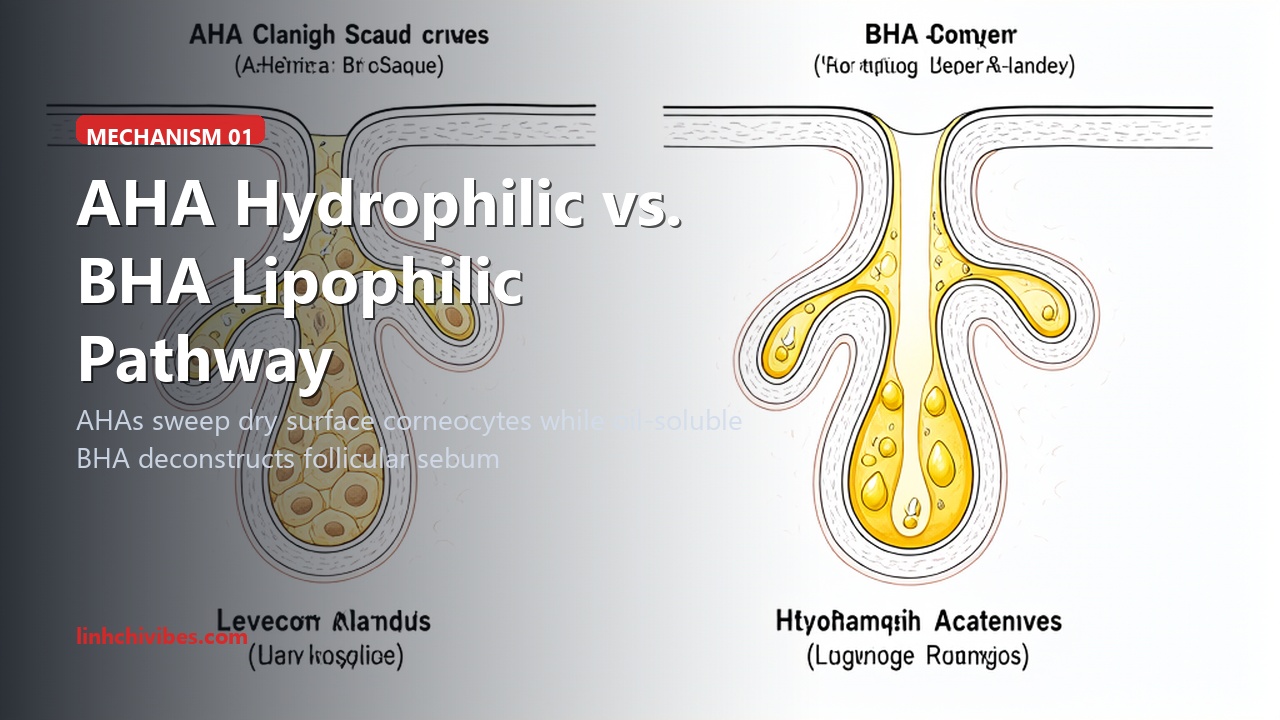
💧 ALPHA HYDROXY ACIDS (AHAs) – HYDROPHILIC
– Solvency: Water-soluble carboxylic acids derived from natural botanical and dairy sugars.
– Mechanism: Target calcium-dependent cell adhesion molecules on the skin surface. Stimulate dermal glycosaminoglycans (GAGs) and collagen while functioning as natural humectants that draw moisture into newly revealed keratinocytes.
– Primary Indications: Parched, sun-damaged, hyperpigmented, or aging complexions exhibiting rough surface texture and fine lines.
🛢️ BETA HYDROXY ACID (BHA) – LIPOPHILIC
– Solvency: Oil-soluble aromatic carboxylic acid (Salicylic Acid) derived from willow bark.
– Mechanism: Seamlessly penetrates the hydrophobic sebum barrier of the pilosebaceous unit. Dissolves intra-follicular impactions, eliminates blackheads and micro-comedones, while delivering aspirin-like anti-inflammatory soothing to dilated capillaries.
– Primary Indications: Oily, congested, acne-prone skin, enlarged pores, and persistent strawberry texture on the nose and chin.
3. Deconstructing the Acid Lineage: Molecular Weights
Within the hydroxy acid family, molecular weight dictates the speed of trans-epidermal penetration and corresponding irritation potential:
- Glycolic Acid (AHA – 76 Daltons): Sourced from sugarcane, possessing the smallest molecular footprint. It penetrates the stratum corneum with unmatched speed, delivering rapid dermal collagen induction and dark spot correction, but carries the highest potential for stinging and transient redness on reactive skin.
- Lactic Acid (AHA – 90 Daltons): Sourced from sour milk, larger than glycolic. Penetrates more deliberately and forms part of the skin’s natural moisturizing factor (NMF), leaving the epidermal barrier plump and hydrated post-peel.
- Mandelic Acid (AHA – 152 Daltons): Derived from bitter almonds, boasting an aromatic ring and large molecular radius. It penetrates twice as slowly as glycolic acid, making it the supreme choice for Fitzpatrick phototypes IV-VI prone to post-inflammatory hyperpigmentation, or those suffering from rosacea.
- Salicylic Acid (BHA – 138 Daltons): Lipophilic structure allows it to target the follicular duct directly without irritating surrounding dry epidermal tissue.
4. The Free Acid Value: Why pH 3.0 to 4.0 Dictates Efficacy
A standard consumer trap is judging chemical exfoliants solely by the concentration percentage stamped on the box (e.g., “10% AHA”). In reality, the biological potency is governed by the Henderson-Hasselbalch equation and Free Acid Value (FAV):
🔬 The pKa Dissociation Constant Window:
Glycolic acid has a pKa of 3.83, while Salicylic acid has a pKa of 2.97. The pKa represents the exact pH at which 50% of the acid exists in its active, un-ionized “free acid” form capable of penetrating cellular membranes.
– If formula pH is above 4.5: The majority of acid molecules dissociate into inert conjugate salts. A “10% Glycolic Acid” product buffered to pH 5.0 delivers less than 2% free bio-active acid—virtually useless for clinical desquamation.
– The Optimal Therapeutic Window (pH 3.2 – 3.8): Balances sufficient free acid availability (40% to 70%) to break down desmosomes safely without triggering corrosive chemical burns.
– If formula pH falls below 3.0: Highly acidic proton surges induce rapid epidermal coagulation, blistering, and severe post-inflammatory scarring unless neutralized by a trained medical professional within minutes.
5. The Conservative Acclimatization Ladder
Chemical peeling is a marathon of biological conditioning. Never dive into high-potency daily acids without preparing your acid mantle through this disciplined 4-phase protocol:
- Phase 1 – The 72-Hour Jawline Patch Test: Apply a dime-sized amount of product to the sub-mandibular jawline behind the earlobe for 3 consecutive evenings. If zero persistent edema or pruritus develops, proceed to facial introduction.
- Phase 2 – Single Weekly Exposure (Weeks 1 to 3): Apply once weekly (e.g., Wednesday evening) onto thoroughly cleansed, completely dry skin. Follow after 20 minutes with a comforting lipid barrier moisturizer. Observe how your skin responds over the subsequent 48 hours.
- Phase 3 – Bi-Weekly Progression (Weeks 4 to 8): If skin demonstrates total clinical tolerance with zero flaking or tightness, advance frequency to twice weekly (e.g., Tuesday and Friday evenings).
- Phase 4 – Maintenance Cadence: For daily leave-on BHA (2%), 2 to 3 times weekly is optimal for maintaining clear pores. For rinse-off AHA peels (15% to 30%), limit application strictly to once every 10 to 14 days.
6. Clinical Diagnosis: Purging vs. Inflammatory Breakouts
Experiencing blemishes after introducing a new chemical exfoliant triggers immediate panic. Accurately distinguishing between Physiological Purging and Allergic Contact Dermatitis is crucial to managing your regimen:
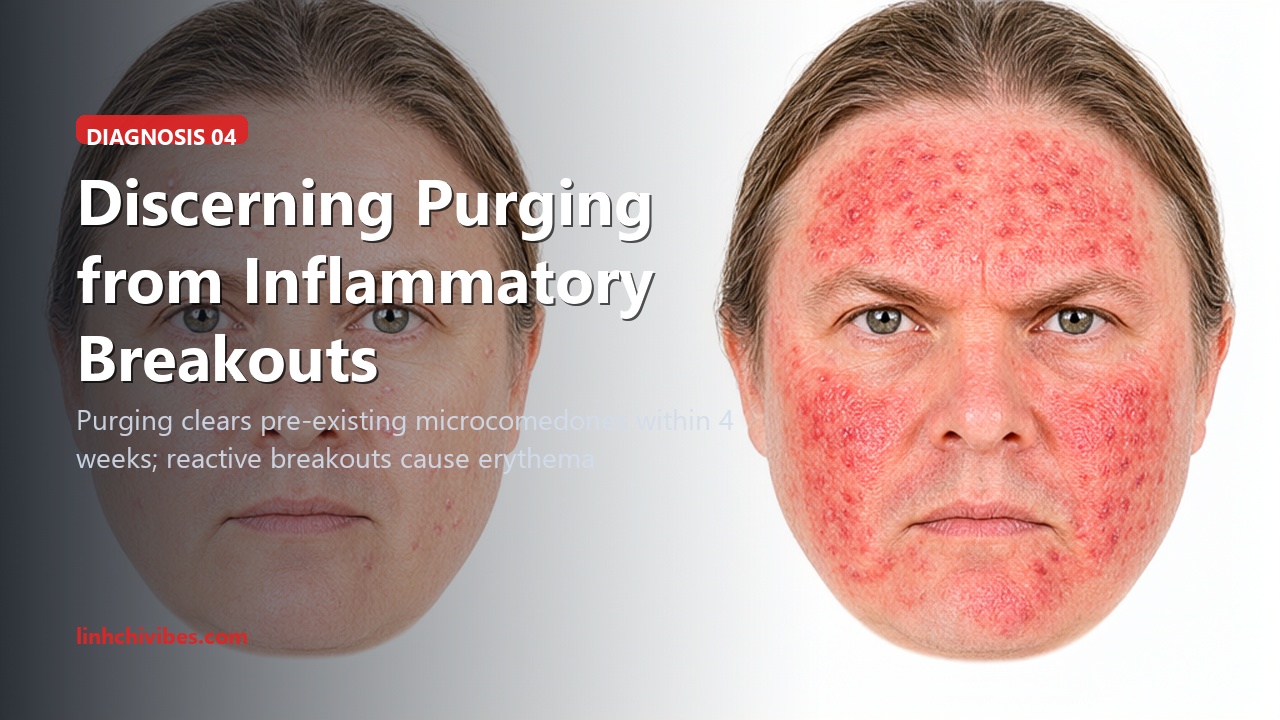
| Diagnostic Parameter | Biological Purging (Cellular Acceleration) | Reactive Breakout (Contact Dermatitis) |
|---|---|---|
| Anatomical Distribution | Occurs strictly in pre-existing congested zones (nose, chin, central forehead) | Erupts across uncharacteristic areas (lateral cheeks, neck, temple margins) |
| Lesion Morphology | Small whiteheads and micro-comedones that mature and resolve within 48-72 hours | Deep itchy papules, erythematous hives, burning sensation with no comedone core |
| Natural Duration | Subsides completely within 4 to 6 weeks as deep micro-comedone reserves clear | Persists and escalates in severity until the offending product is discontinued |
| Intervention Strategy | Maintain routine; bolster barrier hydration with Panthenol and Ceramides | Immediately cease acid application; initiate emergency barrier recovery protocol |
7. Post-Acid Barrier Restoration
Exfoliating away dead stratum corneum temporarily strips the mechanical shield protecting viable basal cells. Replenishing physiological lipids is mandatory to prevent trans-epidermal water loss (TEWL):
- Panthenol (Pro-Vitamin B5): Quenches post-acid stinging within minutes, accelerating epithelial re-epithelialization and restoring elasticity. Pair with soothing Niacinamide serums on non-peel evenings.
- Centella Asiatica (Cica / Madecassoside): Potent triterpenoid saponins rapidly extinguish inflammatory cytokines, protecting micro-capillaries from sustained dilation.
- Multi-Lamellar Ceramide Complex: Bio-identical ceramides (NP, AP, EOP) and free fatty acids reconstruct the intercellular lipid matrix, sealing in moisture and locking out allergens.
8. Non-Negotiable Broad-Spectrum SPF 50+ Photoprotection
This is the cardinal commandment of clinical dermatology: If you cannot commit to daily broad-spectrum sunscreen application, you have no business using chemical peels!
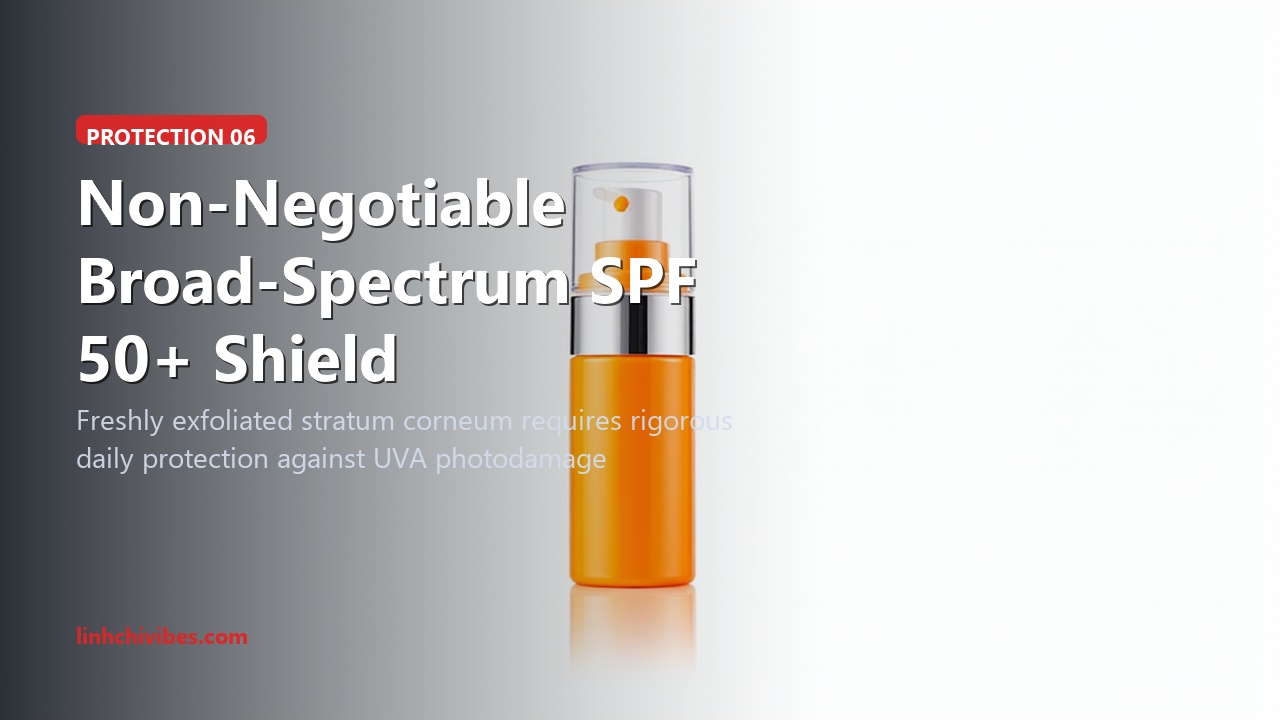
Stripping the stratum corneum lowers cutaneous minimal erythema dose (MED) by up to 50%, leaving newly exposed keratinocytes defenseless against UVA radiation. Without broad-spectrum photoprotection, melanocytes over-produce melanin to defend cell nuclei, culminating in severe rebound Post-Inflammatory Hyperpigmentation (PIH) that can take months to resolve. Apply an ample nickel-sized dollop of broad-spectrum SPF 50+ PA++++ every morning without exception.
8.1. Active Incompatibilities: Skin Cycling Architecture
Stacking high-potency actives simultaneously is a leading cause of barrier destruction. Adopt a deliberate 4-night Skin Cycling framework:
- Night 1 (Exfoliation): Cleanse with a gentle oil like in our master double cleansing protocol, pat dry, apply AHA/BHA chemical peel, wait 20 minutes, follow with barrier moisturizer.
- Night 2 (Retinoid): Apply encapsulated Retinol or Tretinoin to stimulate deep cellular renewal without competing acid pH interference.
- Nights 3 & 4 (Recovery & Barrier Reconstruction): Pure restorative indulgence: Hyaluronic Acid, Panthenol, Ceramides, and Squalane. Rest your skin to consolidate collagen gains.
8.2. Clinical Evaluation of Leading At-Home Peeling Solutions
1. Paula’s Choice Skin Perfecting 2% BHA Liquid Exfoliant
– Formula Profile: 2% Salicylic Acid buffered to pH 3.5–3.9 in a methylpropanediol and green tea extract base.
– Performance: The global holy grail for blackhead dissolution and pore refinement. Leaves an initial slight sheen that absorbs quickly.
– Clinical Verdict: Exceptional daily-to-alternate-day treatment for congested oily and combination T-zones.
2. The Ordinary AHA 30% + BHA 2% Peeling Solution
– Formula Profile: High-potency blend of Glycolic, Lactic, Tartaric, and Citric acids with 2% Salicylic acid at pH 3.6, colored with Tasmanian pepperberry.
– Performance: Intense rinse-off mask delivering dramatic glass-skin resurfacing within 10 minutes.
– Clinical Verdict: Formidable efficacy, but strictly reserved for experienced acid veterans. Never leave on beyond 10 minutes.
3. Sunday Riley Good Genes All-In-One Lactic Acid Treatment
– Formula Profile: Purified pharmaceutical-grade Lactic Acid blended with Licorice root, Lemongrass, and Prickly Pear extract.
– Performance: Instant radiant plumpness and gentle surface desquamation without aggressive peeling or flaking.
– Clinical Verdict: The ultimate luxury AHA for dry, sensitive, or mature complexions seeking instant glow.
8.3. Comprehensive Comparative Matrix: AHA vs. BHA vs. PHA
| Acid Class | Molecular Size | Depth of Action | Irritation Index | Best Skin Match |
|---|---|---|---|---|
| Alpha Hydroxy (AHA) | Small to Medium (76 – 152 Da) | Stratum corneum & upper epidermis | Moderate to High (tingling common) | Dry, rough, sun-damaged, dull skin |
| Beta Hydroxy (BHA) | Lipophilic (138 Da) | Deep follicular infundibulum (pores) | Low to Moderate (anti-inflammatory) | Oily, acne-prone, blackhead-heavy skin |
| Polyhydroxy (PHA) | Very Large (Gluconolactone 178 Da) | Superficial stratum corneum only | Negligible (ultra-gentle humectant) | Eczema, rosacea, post-procedure recovery |
8.4. 6 Detrimental Peeling Blunders to Avoid
⚠️ Eliminate these high-risk habits:
- Daily application of high-strength exfoliants: Daily use strips the stratum corneum entirely, producing plastic-like tight skin with exposed capillary telangiectasias.
- Combining chemical acids with physical exfoliating tools: Using spinning cleansing brushes or abrasive scrubs over freshly applied acids shreds epithelial tissue.
- Applying acids to the delicate periorbital zone: Eyelid skin is paper-thin and lacks sebaceous glands; acid exposure provokes severe chemical burns and premature periorbital wrinkling.
- Ordering medical-grade 50%-70% peeling solutions online: TCA and high-strength glycolic peels require precise neutralizing timers. At-home misuse causes permanent disfiguring scars.
- Foregoing daily broad-spectrum SPF 50+: Exposing freshly exfoliated skin to solar UV rays inevitably provokes dark post-inflammatory hyperpigmentation.
- Ignoring aspirin allergies: Salicylic Acid shares chemical homology with acetylsalicylic acid (aspirin); those with aspirin allergies can trigger severe anaphylactic reactions.
8.5. The Cellular Biochemistry of Keratolysis: Protein Denaturation & Epidermolysis
To master chemical peeling safely, one must understand how chemical agents interact with epidermal proteins on a sub-cellular level. Chemical peels are fundamentally classified by their biological depth of tissue necrosis:
- Very Superficial Peels (Stratum Corneum Only): Formulated with low-percentage AHAs (5%-10%) or BHA (1%-2%) at pH 3.5. These agents induce gentle corneocyte discohesion without causing cellular necrosis. They dissolve desmosomal intercellular cement, promoting natural accelerated desquamation with zero visible peeling or down-time.
- Superficial Peels (Epidermal Epidermolysis): Concentrated AHAs (20%-30%) or Salicylic Acid (20%-30%) at pH 3.0. These formulations penetrate through the granular layer, stimulating localized cell detachment and prompting noticeable micro-flaking over 3 to 5 days, accompanied by significant pro-collagen release in the papillary dermis.
- Medium to Deep Peels (Protein Coagulation): Medical-grade Trichloroacetic Acid (TCA 35%+) or Phenol solutions that penetrate into the reticular dermis. These cause immediate keratocoagulation—manifested visually as clinical “frosting” (a chalky white protein precipitation). These are strictly in-office surgical procedures that must never be attempted at home under any circumstances.
8.6. The Emergency Protocol for Over-Exfoliation: Calming Acute Erythema
If you inadvertently over-exfoliate—leaving an acid on too long or applying an aggressive product over an already compromised barrier—initiate this clinical 4-step emergency salvage protocol immediately:
🚨 4-Step Barrier Rescue Protocol:
- Step 1 – Immediate Neutralization: Douse the face with copious cold water or a chilled physiological saline compress for 10 full minutes to dilute residual acid and lower tissue temperature.
- Step 2 – Eliminate All Actives: Immediately halt all retinoids, vitamin C, chemical acids, and fragrances for a minimum of 14 days.
- Step 3 – Apply a Non-Nano Zinc Oxide Barrier Paste: Apply a thick layer of a therapeutic cica-balm containing 5% Panthenol and Zinc Oxide (such as La Roche-Posay Cicaplast Baume B5+). Zinc oxide provides physical antimicrobial protection while dampening mast-cell histamine release.
- Step 4 – Slug with Pure Plant Squalane: At night, seal the soothing cream beneath 3 drops of pure plant squalane to prevent trans-epidermal moisture evaporation while the basal layer regenerates.
❓ Can chemical peels cause scarring or permanent hypopigmentation?
Standard over-the-counter home chemical exfoliants (AHA under 10%, BHA 2% formulated at pH 3.5+) do not penetrate deeply enough to destroy melanocyte stem cells or induce dermal scarring. However, picking or forcibly peeling off flaking skin, using illicit high-percentage salon acids at home, or exposing peeling skin to harsh sunlight can indeed provoke permanent post-inflammatory hyperpigmentation or uneven skin texture. Always allow desquamating skin to shed naturally without mechanical picking.
❓ Can I use BHA if I am allergic to aspirin?
No, absolutely not. Salicylic acid (BHA) is chemically related to acetylsalicylic acid (the active ingredient in aspirin). Individuals with diagnosed aspirin allergies, salicylate sensitivities, or aspirin-exacerbated respiratory disease (AERD) must strictly avoid Salicylic Acid products, as transdermal absorption can trigger cross-reactive contact hives, facial swelling, or asthma attacks. Substitute with Mandelic Acid or Polyhydroxy Acids (PHAs) instead.
8.8. The Henderson-Hasselbalch Equation: Free Acid Value (FAV) vs. Labeled Formulation Percentage
The most dangerous trap in consumer chemical exfoliation is assuming that a product with “10% Glycolic Acid” on the front label is automatically stronger or more effective than a formula stating “7% Glycolic Acid.” In cosmetic chemistry and evidence-based dermatology, the total concentration percentage is largely meaningless without knowing the formulation’s exact pH and Free Acid Value (FAV).
This biochemical reality is dictated by the Henderson-Hasselbalch Equation:
pH = pKa + log([A-] / [HA])
- The pKa Constant of Organic Acids: Every chemical acid has an innate dissociation constant (pKa). For Glycolic Acid, the pKa is approximately 3.83; for Lactic Acid, it is 3.86; for Salicylic Acid, it is 2.97. When the formulation pH equals the pKa, precisely 50% of the acid exists in its active, un-neutralized free acid state (HA) capable of penetrating cellular lipid membranes, while 50% exists as inactive dissociated salt ions ([A-]).
- The Free Acid Discrepancy in Commercial Serums: If a laboratory formulates a 10% Glycolic Acid serum buffered to a high pH of 4.4 to prevent customer tingling complaints, less than 20% of the acid remains bio-available as free acid—meaning the skin receives only roughly 2% of actual exfoliating power! Conversely, an unbuffered 7% Glycolic Acid serum formulated at a clinically precise pH of 3.4 delivers over 70% free acid—yielding an effective free acid potency of nearly 5%, making it vastly more powerful and clinically transformative.
- Chemical Neutralization Kinetics: Understanding acid kinetics also clarifies post-peel safety. While BHA (Salicylic Acid) is self-neutralizing as it binds to epidermal lipids, high-strength AHA peels (such as 20%+ Glycolic Acid treatments) are NOT self-neutralizing. They continue dissolving desmosome protein bridges indefinitely until physically neutralized. Formulating an emergency neutralizer (one tablespoon of sodium bicarbonate dissolved in two cups of cold water) halts the chemical reaction instantly upon contact, guaranteeing total protection against inadvertent chemical burns.
Always look beyond front-label percentage marketing: demand transparency regarding pH levels and prioritize brands that formulate strictly within the therapeutic pKa window of 3.4 to 3.8.
9. Curated Skincare Compendiums & In-Depth Clinical Readings
10. Frequently Asked Questions Regarding Chemical Peels (FAQ)
❓ How long before chemical exfoliation clears stubborn blackheads?
Surface smoothness improves within 24 hours of the first application. However, dissolving dense, oxidized sebum plugs embedded in follicular canals requires consistent 2% Salicylic Acid usage for 4 to 6 weeks. Complete pore diameter refinement and normalized sebum flow demand 8 to 12 weeks of sustained application.
❓ Should I rinse off my AHA/BHA serum or leave it on overnight?
Daily liquid toners and serums formulated at standard concentrations (AHA under 10%, BHA 2%) are designed as leave-on treatments. Simply apply to clean dry skin, wait 15 to 20 minutes for pH equilibrium, and proceed with moisturizer. Only intensive clinical masks (such as 30% AHA peels) require strict rinse-off neutralizing after 10 minutes.
❓ Is a mild tingling sensation normal during acid application?
A brief, faint tingling sensation lasting 60 to 90 seconds is completely normal, reflecting the physiological pH difference between the acid solution and skin surface. However, if tingling escalates into intense, throbbing burning, persistent erythema, or hives, neutralize and rinse the product off immediately with cool water.
❓ Can I use chemical exfoliants during summer months?
Yes, but with heightened sun discipline. While BHA actually possesses mild photoprotective properties, AHAs significantly increase UV sensitivity. During peak summer, limit AHA use to once weekly in the evening, wear broad-brimmed sun hats, and diligently reapply broad-spectrum SPF 50+ every two hours when outdoors.
11. Final Editorial Verdict from Linh Chi Vibes
Chemical peeling is an extraordinary testament to the power of molecular biology applied to aesthetic medicine. When performed with reverence for the acid mantle, conservative patience, and rigorous sun protection, AHA and BHA exfoliation safely sheds the dullness of the past—revealing an immaculate, resilient, glass-skin canvas glowing with authentic cellular vitality.

Pingback: Mastering Double Cleansing for Clear Glowing Skin - Linh Chi Vibes