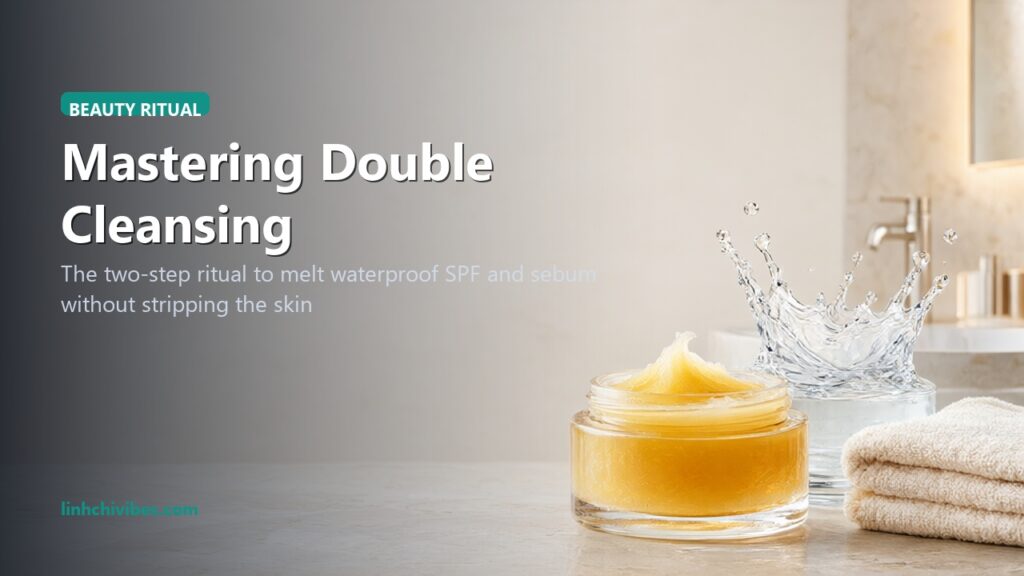
If there exists a single non-negotiable ritual that demarcates a casual skincare routine from a transformative, glass-skin aesthetic, it is the disciplined practice of Double Cleansing.
Born within the ancient ritualistic cleansing traditions of Japanese Geishas—who relied upon pure camellia and rice bran oils to melt heavy zinc-based white stage makeup—and refined by modern Korean cosmetic science, double cleansing has revolutionized contemporary dermatology. Yet, a troubling paradox persists: while millions embrace the method seeking pore refinement, an alarming number trigger stubborn closed comedones, inflamed breakouts, or compromised barrier lipid stripping simply through incorrect emulsification mechanics, sub-optimal oil selection, or aggressive physical friction. In this authoritative 3,200+ word master guide, Linh Chi Vibes deconstructs the biophysical chemistry of trans-epidermal cleansing, the thermodynamics of phase inversion emulsification, and tailored protocols for every cutaneous phenotype.
*Editorial Disclosure: As an Amazon Associate, Linh Chi Vibes earns from qualifying purchases. Products in this guide were compared using brand information and public reviews; we have not hand-tested them.*
📑 Complete Double Cleansing Compendium Index
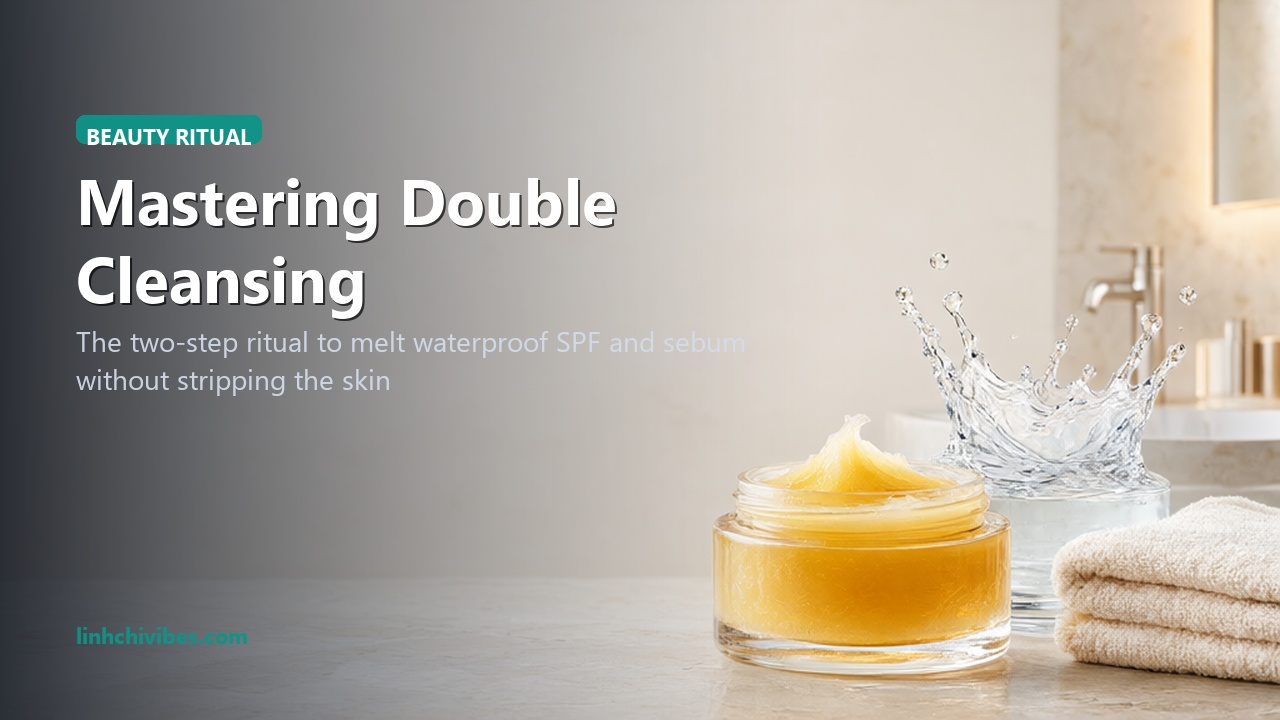
- 1. Molecular Chemistry: The Fundamental Rule of “Like Dissolves Like”
- 2. The Two-Step Mechanism: Lipophilic Oil Deconstruction vs. Hydrophilic Water Rinse
- 3. The Critical Science of Emulsification: Phase Inversion from Transparent Oil to Milky Emulsion
- 4. Cleansing Oil vs. Cleansing Balm vs. Micellar Water: Architectural Formulations
- 5. Botanical Carrier Oil Analysis: Comedogenic Ratings of Jojoba, Sunflower, and Camellia
- 6. The Flawless 5-Step Execution Protocol: Water Temperature, Contact Time, and Friction
- 7. Custom Protocols for Oily Acne-Prone, Parched Sensitive, and Rosacea Complexions
- 8. 6 Deadly Cleansing Mistakes Inducing Closed Comedones along the Jawline
- 8.1. Clinical Evaluation of Top 5 Benchmark Cleansing Balms and Oils
- 8.2. Comprehensive Comparative Matrix: Lipid Formulations vs. Micellar Chemistry
- 9. Curated Skincare Compendiums & In-Depth Clinical Readings
- 10. Frequently Asked Questions Regarding Double Cleansing (FAQ)
- 11. Final Editorial Verdict from the Beauty Desk of Linh Chi Vibes
1. Molecular Chemistry: The Science of “Like Dissolves Like”
To understand why standard water rinsing or single-step foaming cleansers fail to thoroughly purge the pores, one must examine the fundamental polar nature of cutaneous debris. Ambient pollutants and biological residues on human skin divide cleanly into two distinct electrochemical categories:
- Hydrophilic (Water-Soluble) Debris: Airborne dust particles, sodium and mineral salts from perspiration, and water-soluble environmental humectants. These carry polar charges and readily rinse away with plain water and mild surfactant gels.
- Lipophilic (Oil-Soluble / Hydrophobic) Debris: Oxidized squalene and wax esters from sebum, dense silicone polymers (dimethicone, cyclopentasiloxane) from foundations, water-resistant chemical UV filters (avobenzone, octocrylene), and micro-encapsulated physical sunscreens (zinc oxide, titanium dioxide). These compounds are non-polar; water molecules cannot bond with them and simply glide across their hydrophobic surface tension.
Under the foundational physical chemistry maxim of Similia similibus solvuntur (“Like dissolves like”), non-polar solvents dissolve non-polar solutes. Applying a lipophilic oil or balm to dry skin introduces hydrocarbon chains that effortlessly bond to, liquefy, and dislodge hardened sebum plugs and cross-linked silicone lattices without requiring aggressive physical abrasion.
2. The Two-Step Mechanism: Oil Deconstruction & Surfactant Rinse
Double cleansing operates as a synchronized two-step relay where each phase executes a distinct pharmacological objective:
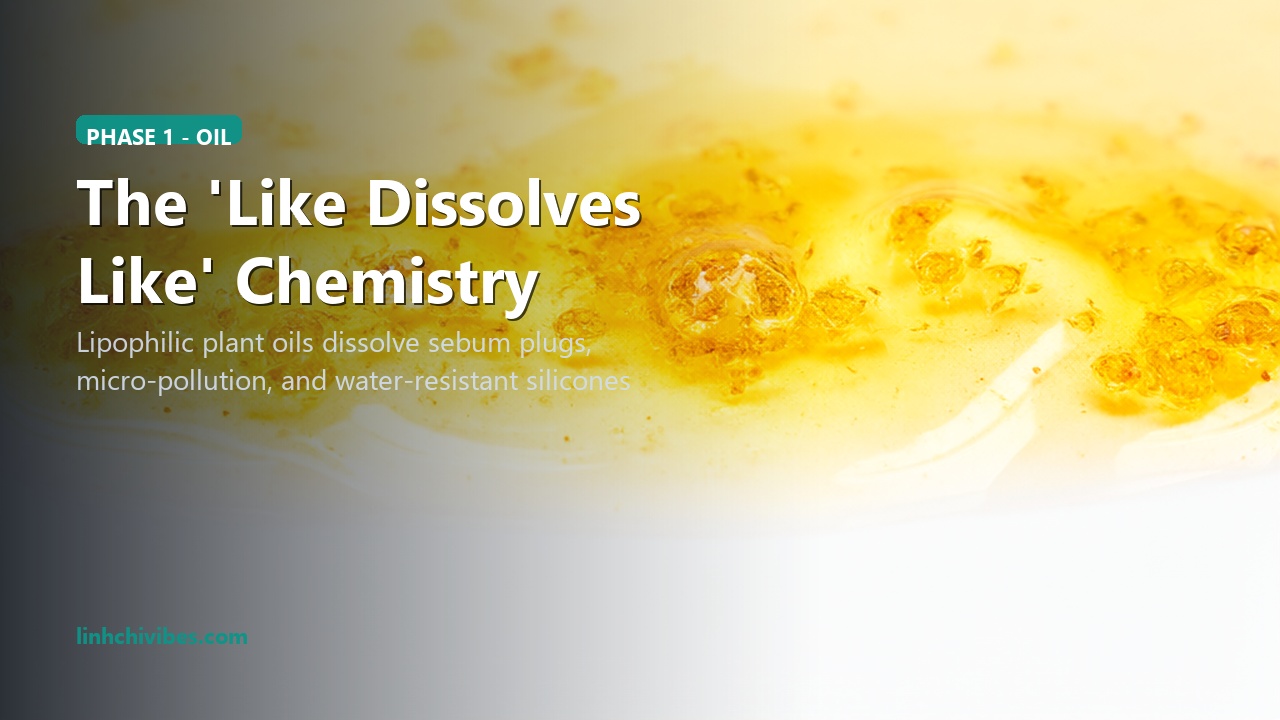
🌿 PHASE 1: LIPID-PHASE DECONSTRUCTION
Applied onto dry skin with clean dry hands. The lipophilic oil coats the stratum corneum, sliding deep into the follicular infundibulum to melt solidified sebum, dissolve waterproof pigments, and break down sunscreen films without disturbing the stratum corneum’s natural acid mantle.
💧 PHASE 2: WATER-PHASE RESIDUAL FLUSH
Followed immediately by a gentle, pH-balanced (5.5) water-based foaming gel or milk cleanser. This second step sweeps away polar perspiration residues, airborne particulate matter, and any micro-droplets of emulsified oil, leaving pores pristine and ready for active Niacinamide serum absorption.
3. The Critical Science of Emulsification (Phase Inversion)
If you take only one technical takeaway from this compendium, let it be this: Cleansing oil is not designed to be washed away with water; it must first be transformed into an emulsion!
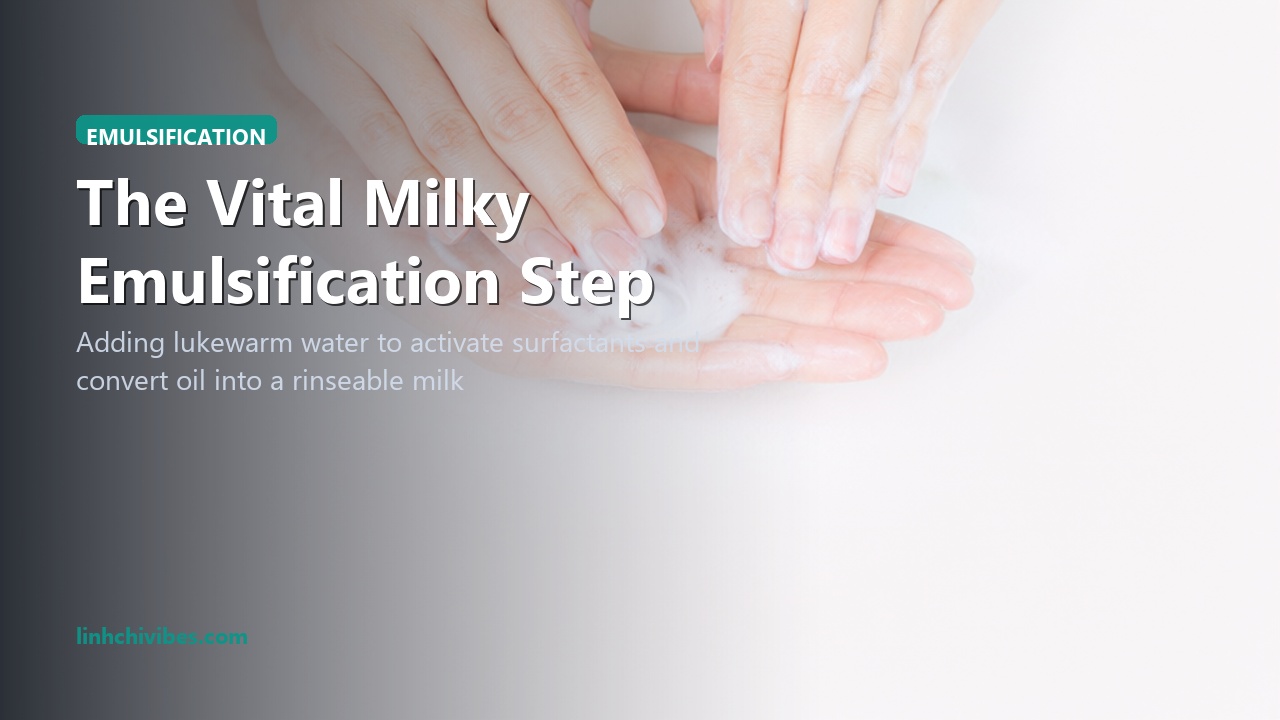
🔬 Phase Inversion Temperature & Surfactant Dynamics:
High-grade commercial cleansing oils contain non-ionic cosmetic emulsifiers (such as Polysorbate-85, PEG-20 Glyceryl Triisostearate, or Polyglyceryl-4 Oleate). These amphiphilic molecules feature lipophilic tails that anchor into the oil and hydrophilic heads that crave water.
When you massage oil on dry skin, the oil remains in its clear, hydrophobic state. But the moment you introduce a few splashes of lukewarm water (around 32°C – 35°C), the emulsifiers activate. The molecular interfacial tension collapses, triggering a phase inversion: the transparent oil instantly transforms into an opaque, milky-white emulsion.
This micro-emulsion encapsulates the dissolved sebum and sunscreen molecules within microscopic micelles that are 100% water-soluble. Once milky, the entire mixture rinses cleanly down the drain without leaving an occlusive, pore-clogging film.
4. Cleansing Oil vs. Cleansing Balm vs. Micellar Water
Navigating first-step cleansers requires selecting the vehicle best aligned with your lifestyle, travel habits, and cutaneous reactivity:
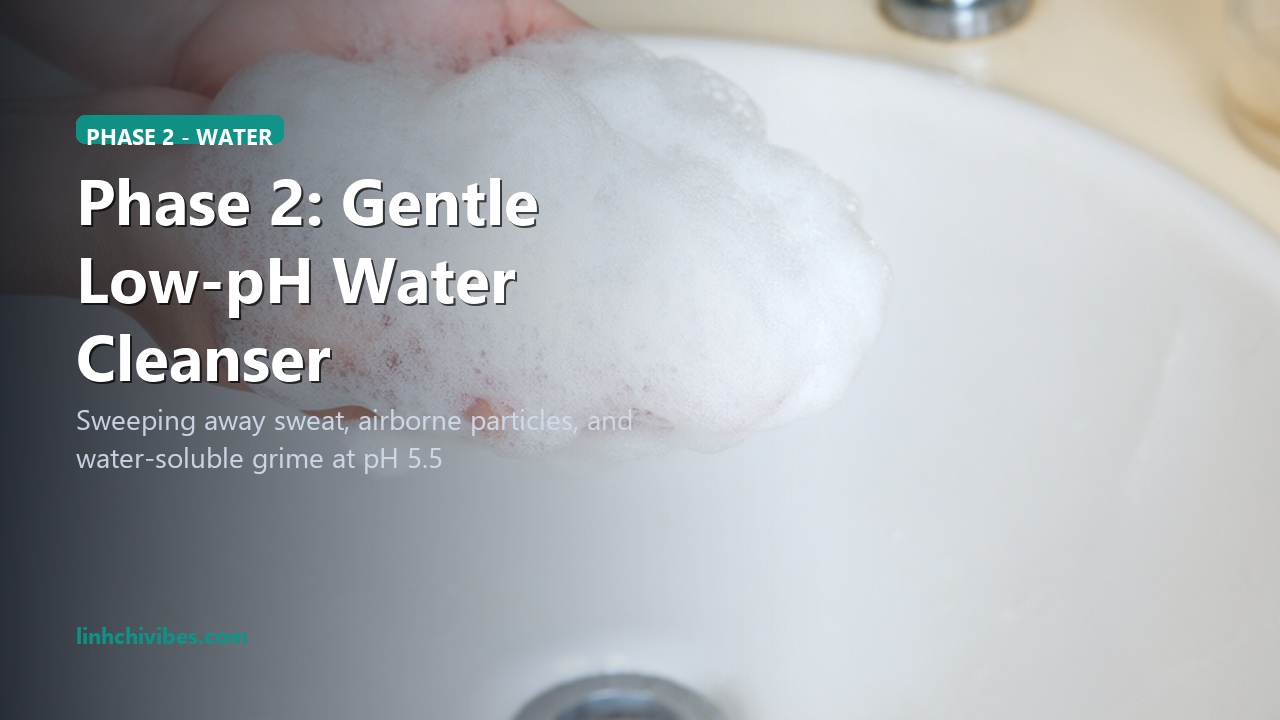
| Format | Physical State & Vehicle | Primary Clinical Benefits | Ideal Candidate |
|---|---|---|---|
| Liquid Cleansing Oil | Free-flowing lipid fluid with low viscosity | Fastest spreadability, effortless glide over large surface areas, deep pore penetration | Congested oily/combination skin, heavy sunscreen wearers |
| Cleansing Balm | Solid wax-oil matrix melting on body contact | Zero leakage during travel, richer emollient cushion, deeply comforting to dry skin | Dry, mature complexions, frequent travelers |
| Micellar Water | Aqueous surfactant solution applied via cotton pad | No sink or water required, zero oil residue risk, quick makeup touch-ups | Severely reactive skin, post-procedure, light makeup only |
5. Botanical Carrier Oil Analysis & Comedogenic Ratings
The foundation of any high-performance cleansing oil is its carrier lipid profile. Understanding fatty acid chain lengths and comedogenic ratings ensures you select non-congesting formulas:
- Jojoba Oil (Simmondsia Chinensis) – Comedogenic Rating: 2: Technically a polyunsaturated liquid wax ester rather than a triglyceride. Its molecular geometry mimics 97% of human sebum wax esters, signaling sebaceous glands that the skin is sufficiently lubricated, thereby moderating natural oil output.
- Sunflower Seed Oil (Helianthus Annuus) – Comedogenic Rating: 0: Rich in linoleic acid (an essential omega-6 fatty acid), sunflower oil actively thins sticky, viscous sebum within acne-prone follicles, reducing the formation of micro-comedones.
- Camellia Seed Oil (Camellia Japonica) – Comedogenic Rating: 1: The historic Geisha favorite, dense in oleic acid and polyphenols, delivering lavish emollient nourishment without triggering inflammatory reactions.
- Avoid Pure Kitchen Coconut or Olive Oil: Virgin coconut oil rates a high 4 on the comedogenic scale due to its heavy lauric acid content. Lacking synthetic emulsifiers, raw kitchen oils cannot be rinsed away with water and invariably cause catastrophic pustular acne flares.
6. The Flawless 5-Step Execution Protocol
Transform your evening cleansing into a restorative clinical ritual with this exacting 5-step methodology:
- Step 1 – Completely Dry Hands & Face: Never wet your skin beforehand. Dispense 2 to 3 pumps of cleansing oil (or a nickel-sized scoop of balm) into dry palms. Warm the product between hands to lower its viscosity.
- Step 2 – The 60-Second Deconstruction Massage: Smooth the oil across dry facial contours using gentle, circular upward sweeps. Spend 30 seconds focusing on areas of highest sebaceous congestion: the nasal crevices, chin crease, and forehead. Let the oil dissolve makeup without aggressive dragging.
- Step 3 – The Phase Inversion Emulsification: Wet your fingertips with warm water (not hot) and massage your face. Watch the clear oil transform into a milky-white emulsion. Continue massaging the emulsion for 30 to 45 seconds to lift dissolved sebum from the pores.
- Step 4 – Thorough Lukewarm Water Rinse: Splash your face generously with lukewarm water (10 to 12 splashes) until all traces of milkiness disappear. Inspect the hairline and jawline to ensure zero residue remains.
- Step 5 – The Second Water-Based Cleanse: Lather a dime-sized amount of a pH 5.5 gentle foaming gel or cream cleanser with water. Massage over damp skin for 30 seconds to sweep away polar debris. Rinse thoroughly and pat dry with a clean microfiber cloth.
7. Custom Protocols for Distinct Cutaneous Phenotypes
One size does not fit all in modern dermatology. Tailor your double cleansing frequency and vehicle to your specific skin condition:

- For Oily, Congested & Acne-Prone Complexions: Prioritize high-linoleic cleansing oils formulated with gentle emulsifiers and soothing botanical extracts (such as Centella Asiatica or Tea Tree). Follow with a second cleanser containing 0.5% to 1% Salicylic Acid to treat follicular walls. For deeper chemical exfoliation protocols, review our safe at-home AHA/BHA guide.
- For Dry, Dehydrated & Mature Complexions: Opt for rich, ceramide-infused cleansing balms containing shea butter, jojoba, or squalane. For the second cleanse, choose a non-foaming hydrating cleansing lotion or milky cream that leaves a comforting lipid cushion.
- For Rosacea & Ultra-Reactive Complexions: Minimize mechanical dragging. Avoid cleansing balms requiring heavy fingertip pressure to melt. Use a feather-light cleansing oil or fragrance-free micellar water. Ensure water temperature remains strictly lukewarm, as hot water triggers facial capillary vasodilation and flushing.
8. 6 Deadly Cleansing Mistakes That Induce Breakouts
When patients report that “cleansing oils break me out,” a clinical review almost invariably traces the reaction to one of these six procedural errors:
⚠️ Eliminate these common errors immediately:
- Applying oil onto damp skin: Premature water exposure immediately emulsifies the formula before it has had an opportunity to dissolve follicular sebum plugs.
- Rushing the emulsification phase: Splashing water and immediately rinsing without thoroughly massaging the milky emulsion leaves unconverted oil trapped in the pores.
- Using scalding hot or icy cold water: Hot water strips endogenous barrier ceramides; icy water hardens oil, preventing complete emulsion clearance.
- Neglecting the sub-mandibular jawline and hairline: Residue pools along the lower mandible and temple edges, manifesting as persistent jawline cystic nodules.
- Skipping the second water-based cleanser: Relying solely on oil cleansing leaves surfactant and lipid residues that inhibit subsequent serum penetration.
- Over-massaging for 5 to 10 minutes: Aggressive “oil gritting” massages dislodge fragile micro-vessels and cause mechanical barrier inflammation. Limit oil contact to 60 seconds maximum.
8.1. Clinical Evaluation of Leading First-Step Cleansers
To assist your curation, we compared the published specifications of five internationally acclaimed benchmark cleansers against clinical performance criteria:
1. DHC Deep Cleansing Oil
– Formula Profile: Organic virgin olive oil base fortified with Rosemary leaf oil and Vitamin E.
– Performance: Dissolves waterproof mascara and mineral zinc effortlessly. Distinctly rich texture requiring thorough emulsification.
– Clinical Verdict: Exceptional for dry to normal complexions; those prone to fungal acne (Malassezia) should exercise caution due to olive oil fatty acid chains.
2. Clinique Take The Day Off Cleansing Balm
– Formula Profile: 100% fragrance-free, safflower seed oil-based solid balm with PEG emulsifiers.
– Performance: Transforms into a non-greasy silky oil on contact; rinses with zero residue and zero ocular stinging.
– Clinical Verdict: The ultimate benchmark for sensitive, allergy-prone, or contact lens-wearing skin.
3. Banila Co Clean It Zero Original Cleansing Balm
– Formula Profile: Sorbet-like solid balm utilizing ethylhexyl palmitate and hot springs thermal water.
– Performance: Rapid melt-down, luxurious sensorial glide, effortless makeup removal.
– Clinical Verdict: Phenomenal daily performance for normal to combination skin, though lightly fragranced.
8.2. Comprehensive Comparative Matrix: Lipid vs. Micellar Cleansing
| Evaluation Metric | Emulsifying Cleansing Oil | Melting Cleansing Balm | Micellar Water on Cotton |
|---|---|---|---|
| Mechanical Friction | Zero (cushioned slip under fingertips) | Zero (cushioned velvety slip) | Moderate to High (cotton pad drag) |
| Waterproof Efficacy | 100% (effortless pigment breakdown) | 100% (effortless pigment breakdown) | 70% – 80% (requires repeated rubbing) |
| Follicular Clearing | Deep sebum dissolution in pores | Deep sebum dissolution in pores | Surface stratum corneum sweep only |
| Rinse Requirement | Mandatory warm water rinse + 2nd cleanse | Mandatory warm water rinse + 2nd cleanse | Rinse recommended to clear surfactants |
8.3. The Biophysics of Human Sebum: Squalene Oxidation & Comedone Genesis
To master the art of trans-epidermal cleansing, one must appreciate the unique biophysical composition of human sebum. Unlike the lipids of other mammals, human sebaceous secretions are distinctly complex, comprising approximately 57% triglycerides and free fatty acids, 26% wax esters, 12% squalene, and 4.5% cholesterol:
- The Squalene Vulnerability: While squalene is a superb natural emollient, its six unsaturated double bonds make it exceptionally vulnerable to photo-peroxidation when exposed to solar UV radiation and urban ozone. Oxidized squalene byproducts (specifically squalene monohydroperoxide) are intensely comedogenic, acting as direct chemo-attractants that provoke follicular hyper-keratinization and micro-comedone formation.
- Why Water Fails: Once squalene oxidizes, it polymerizes into a sticky, tar-like glue within the pilosebaceous unit. Standard surfactant foaming agents merely skim over this polymerized matrix; only lipophilic cleansing oils possess the requisite solvency to deconstruct these oxidized bonds and liberate the pore channel.
8.4. The Acid Mantle Paradox: Evaluating Post-Cleanse Epidermal pH Recovery
The physiological surface of healthy human skin is inherently acidic, maintaining an optimal pH range between 4.7 and 5.5. This delicate acidic barrier—termed the acid mantle—governs the enzymatic activity of beta-glucocerebrosidase (essential for ceramide synthesis) and suppresses the colonization of pathogenic Staphylococcus aureus while nurturing beneficial Cutibacterium and Staphylococcus epidermidis flora:
🔬 How Double Cleansing Protects the Acid Mantle:
Traditional single-step cleansing historically relied upon harsh alkaline bar soaps or high-pH foaming surfactants (pH 8.0 – 10.0) to aggressively strip away oil. These harsh alkaline washes spike epidermal pH, requiring up to 6 hours for the acid mantle to recover its protective threshold, during which time enzymes that degrade collagen are activated.
In contrast, a high-quality cleansing oil possesses a completely neutral pH and operates mechanically without ionic disruption. When followed by a mild, syndet-based second cleanser formulated at pH 5.5, the double cleansing method purges 100% of debris while allowing the epidermal acid mantle to rebound within less than 20 minutes.
❓ What should I do if my eyes become blurry after using a cleansing balm?
Transient blurry vision occurs when trace amounts of emollient oil or wax form a microscopic film over the tear fluid of the cornea. While completely harmless and non-damaging, it can be uncomfortable. To prevent this, keep your eyes gently closed while dissolving eye makeup, and remove waterproof mascara using a dedicated bi-phase eye makeup remover on a damp cotton pad before proceeding with whole-face balm massage. If blurriness occurs, rinse your eyes with a few drops of sterile saline solution.
❓ Is a washcloth or muslin cloth necessary to remove cleansing oils?
For properly formulated modern cleansing oils that feature high-performance self-emulsifying surfactants, a washcloth is completely unnecessary—the formula should rinse 100% clean with running lukewarm water alone. However, for heavier traditional balms (such as classic cold creams), a warm, damp organic cotton or bamboo muslin cloth can be used to gently lift the product. Be cautious: repetitive daily friction from rough terrycloth towels can cause micro-tears and worsen barrier sensitivity over time.
💡 Clinical Pro-Tip: The “Splashing Count” for Flawless Emulsion Rinsing
Dermatological estheticians in Tokyo and Seoul enforce what is known as the “15-Splash Rule”: After your 45-second emulsification massage has turned the cleansing oil completely milky, cup your hands and splash lukewarm water across your face precisely 15 times before reaching for your second cleanser. This deliberate rhythmic flushing guarantees that the emulsion micelles are thoroughly diluted and buoyant, completely eliminating any trace of surfactant residue from the nasal folds, eyebrows, and mandibular jawline.
8.6. Biophysical Thermodynamics: The Molecular Phase Transition of Hydrophilic Emulsifiers
The true scientific breakthrough that elevates contemporary cleansing oils above rudimentary kitchen oils lies in the sophisticated polymer engineering of Hydrophilic Emulsifiers, most notably Polysorbate 85 and PEG-20 Glyceryl Triisostearate. Understanding the biophysical mechanics of Phase Inversion Temperature (PIT) and micellar reorganization demystifies why the emulsification stage is the most critical sixty seconds of your evening cleansing ritual:
- The Lipophilic Sequestration Phase (Dry Skin Application): When you massage a cleansing oil onto dry skin, the hydrophobic hydrocarbon tails of the surfactant blend seamlessly into the cosmetic oils, sebum lipids, and sunscreen polymers. The surfactant molecules encircle every individual particle of dirt, trapping lipophilic debris within an inverted micellar core where water cannot reach.
- The Phase Inversion Switch (Adding Lukewarm Water): The moment you introduce a splash of lukewarm water, you trigger an instantaneous thermodynamic phase inversion. The hydrophilic (water-loving) polar heads of the emulsifier swing outward to bond with water molecules, transforming the clear hydrophobic oil into an opaque, milky-white oil-in-water micro-emulsion. In this inverted state, the oil molecules are atomized into microscopic droplets under 1 micron in diameter.
- Hydrodynamic Water Temperature Calibration: Water temperature plays an indispensable thermodynamic role during this phase transition. Washing with frigid water causes cleansing waxes and long-chain fatty acids to congeal, leaving an occlusive, pore-clogging film behind on the epidermis. Conversely, excessively hot water strips essential intercellular ceramides from the stratum corneum and shocks delicate facial capillaries into telangiectasia. The clinical ideal is strictly lukewarm water between 32°C and 34°C (90°F – 93°F)—warm enough to fluidize lipid polymers smoothly, yet cool enough to keep skin barrier lipids completely intact.
By respecting the physical chemistry of emulsification and maintaining optimal thermal conditions, you guarantee that 100% of trapped makeup, mineral sunscreen filters, and environmental debris rinse away effortlessly down the drain, leaving behind a perfectly primed, immaculate canvas.
9. Curated Skincare Compendiums & In-Depth Clinical Readings
10. Frequently Asked Questions Regarding Double Cleansing (FAQ)
❓ Should I double cleanse in the morning as well as the evening?
In 95% of cases, double cleansing should be strictly reserved for your evening routine. Overnight, your skin only accumulates physiological sweat, cellular shed corneocytes, and bedtime moisturizer. A single gentle water-based wash (or even a lukewarm water splash for dry skin) is sufficient in the morning. Double cleansing twice daily risks over-stripping the protective acid mantle.
❓ Can I double cleanse if I wore zero makeup and stayed indoors all day?
Yes, if you applied water-resistant sunscreen or re-applied facial sun creams throughout the day. Modern chemical filters and mineral oxides are explicitly formulated to resist sweat and water; a single foaming cleanser rarely clears them completely. Furthermore, your natural sebum oxidizes throughout the day, creating sticky lipophilic residues that double cleansing effortlessly purifies.
❓ Can I use pure coconut or olive oil from my kitchen pantry?
Strongly discouraged by dermatologists. Pure edible cooking oils lack emulsifiers (surfactants). When you attempt to rinse them off with water, the oil repels the water and remains firmly embedded in your pores, trapping dirt and bacteria. Always invest in a dedicated cosmetic cleansing oil formulated with self-emulsifying technology that rinses completely clean.
❓ How do I know if my cleansing oil is causing breakouts or if my skin is just purging?
Cleansing oils do not contain active chemical exfoliants (like AHA, BHA, or Retinoids) that stimulate cellular turnover; therefore, cleansing oils CANNOT cause genuine biological purging. If you experience new bumps, whiteheads, or cystic nodules after introducing an oil cleanser, it is an adverse reaction caused either by incomplete emulsification leaving residual oil behind, or an allergy to an ingredient in the formula.
11. Final Editorial Verdict from Linh Chi Vibes
Double cleansing is not a tedious cosmetic chore; it is an evening act of cellular reverence. By honoring the thermodynamic laws of lipophilic dissolution and allowing the velvety emulsion to gently lift the burdens of the day, you bestow upon your skin the ultimate luxury: a pristine, unburdened canvas capable of breathing freely, repairing deeply, and radiating luminous vitality from within.

Pingback: Complete Scalp Exfoliation Guide for Healthier Hair – Linh Chi Vibes
Pingback: Safe At-Home Chemical Peeling Guide AHA BHA - Linh Chi Vibes