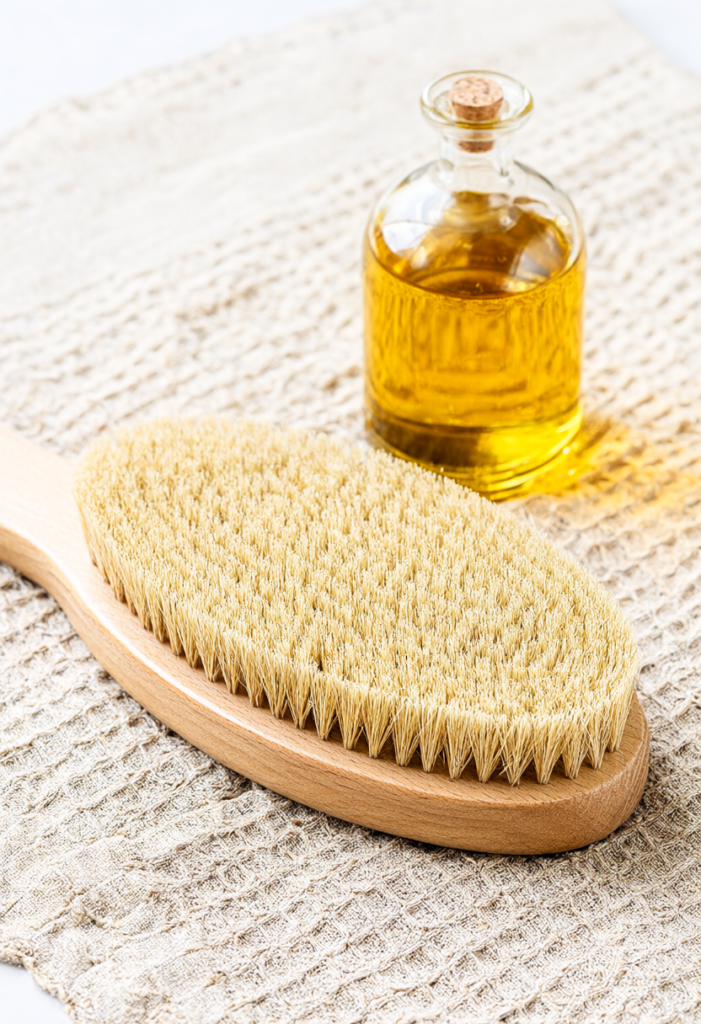
“The cardiovascular system has a muscular pump—the heart—pulsing blood through our arteries. The lymphatic system has no pump. It relies entirely on muscular contraction, breath, and external friction. Dry brushing is the ultimate manual flush for cellular stagnation.”
In our modern sedentary work patterns—sitting through 6-hour video conferences, transatlantic flights, and studio broadcasts—interstitial fluid naturally pools in the lower extremities and subcutaneous tissue. The consequence is swollen ankles, dull skin texture, and sluggish immune response. Dry Brushing (Garshana in Ayurvedic medicine) is an ancient, tactile physical therapy that mechanically awakens the lymphatic vasculature and releases restricted superficial fascia.
1. The Anatomy of Lymphatic Architecture
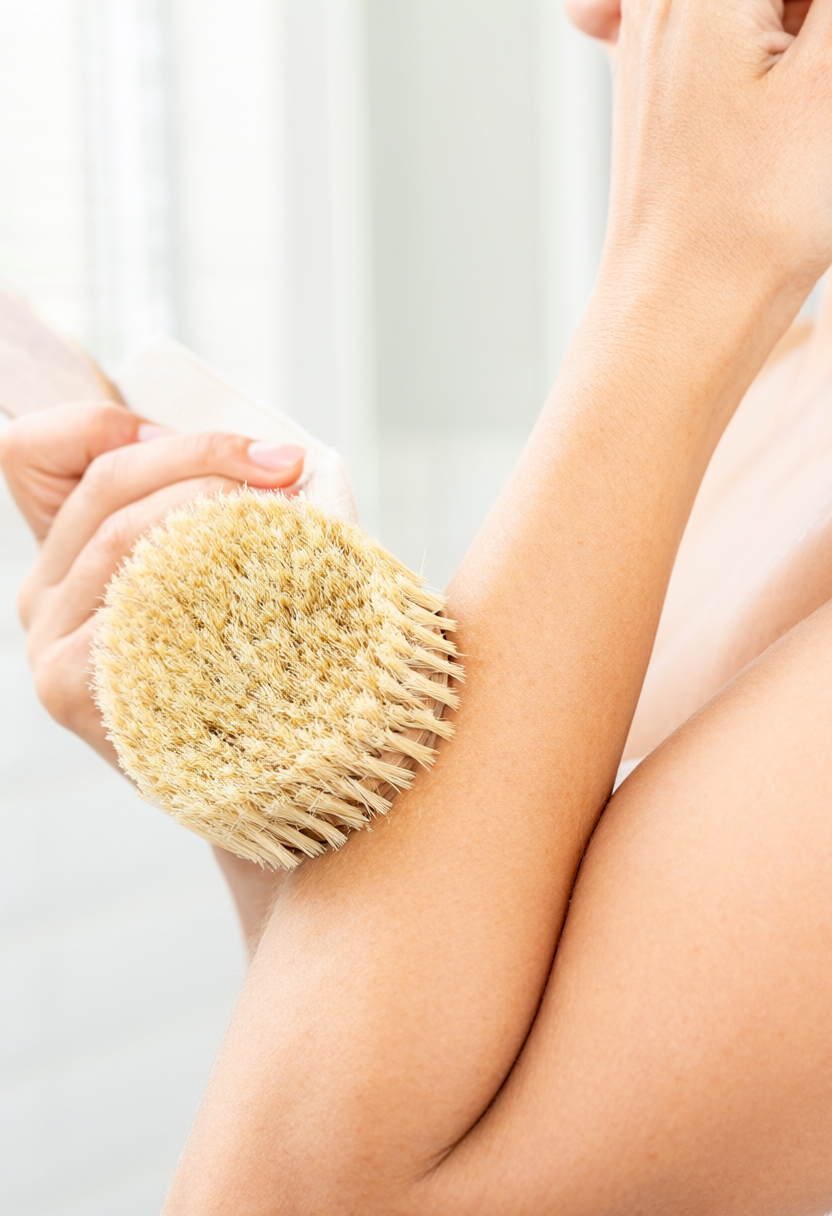 natural boar bristle dry body brush along the arm toward the heart’s lymphatic centers” style=”border-radius: 12px; box-shadow: 0 4px 20px rgba(0,0,0,0.12); max-width: 100%; height: auto;” />
Never brush directly over active eczema patches, psoriasis plaques, open wounds, or broken capillaries. For keratosis pilaris (strawberry skin on the upper arms), use an ultra-soft natural bristle with featherlight pressure no more than twice a week, followed immediately by a 10% urea or lactic acid body cream in the shower.
How should the natural bristles be sanitized?
Wash your dry brush every two weeks using warm water and a few drops of antibacterial tea tree liquid soap, taking care not to submerge the wooden handle in water. Allow the brush to air-dry face down on a clean towel in a well-ventilated, sunny area.

