
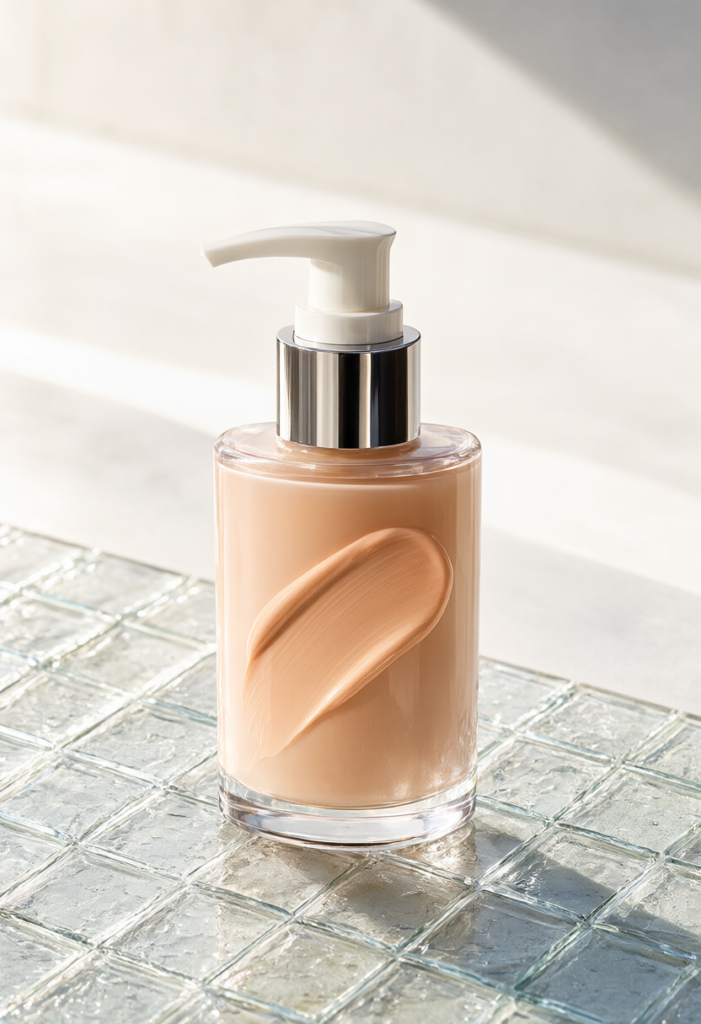
“Sitting in front of three 4K monitors and high-wattage LED studio lighting for 10 hours a day causes more stubborn hyperpigmentation than a weekend at the beach. If your sunscreen is stark white, you are defenseless against High-Energy Visible light.”
For decades, photoprotection was framed strictly around UVA and UVB radiation (290nm to 400nm wavelengths). However, groundbreaking photobiological research published in the Journal of Investigative Dermatology revealed that High-Energy Visible (HEV) Blue Light (400nm to 500nm)—emitted in massive quantities by digital monitors, smartphones, and studio LEDs—penetrates deeper into the dermis than UVA. It generates reactive oxygen species (ROS), degrades collagen, and induces intense, persistent hyperpigmentation, especially in Fitzpatrick skin types III through VI.
The Blindspot of Traditional White Sunscreens
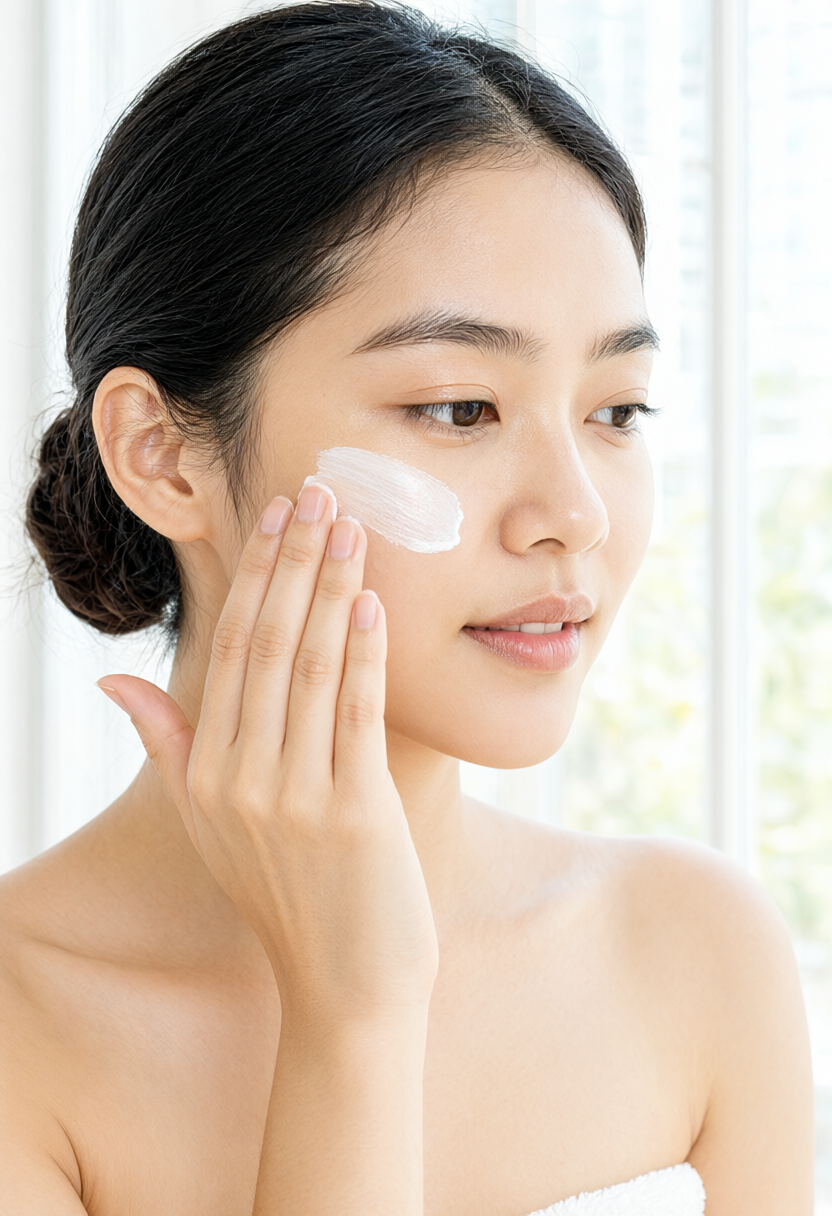
Blue light glasses protect the retina and prevent suppression of pineal melatonin synthesis, but they only cover the immediate ocular aperture. The delicate periorbital skin, crow’s feet region, and cheeks remain completely exposed to HEV photons. Always apply tinted mineral SPF up to the orbital bone.
Does computer screen “Night Shift” mode eliminate the need for HEV skincare?
Activating warm color modes reduces blue spectrum emission by approximately 40% to 60%, which is beneficial for circadian rhythm. However, it does not eliminate HEV emissions entirely, nor does it protect against daylight through office windows or overhead fluorescent studio lighting.

